




Free written scope consultation - allowances, timeline, and change-order rules on paper before a single trade is scheduled
Styles & brands we work with
- Kitchen remodeling
- Bathroom remodeling
- Home additions & ADU
- Roofing
- Windows & doors
- Driveway & pavers
- Fence
See the difference
 Before
 After
 Before
 After
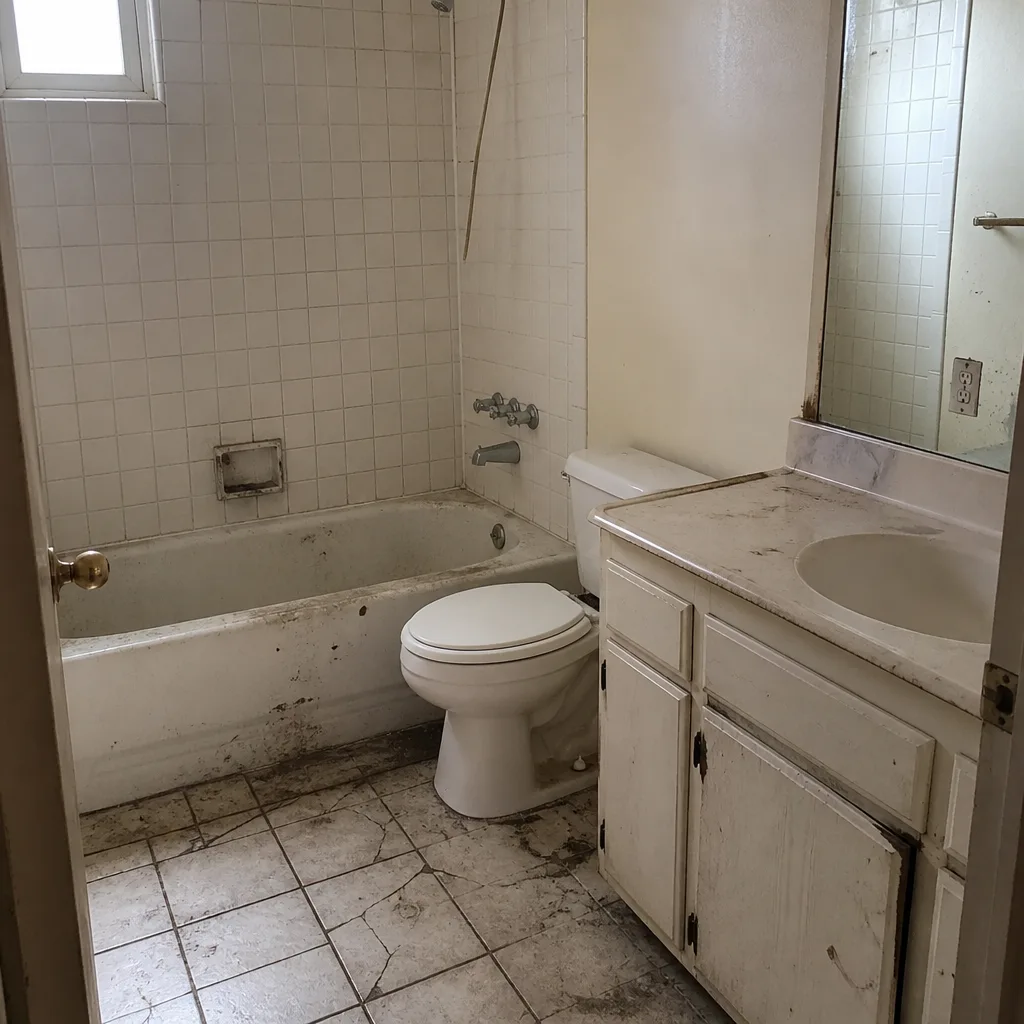 Before
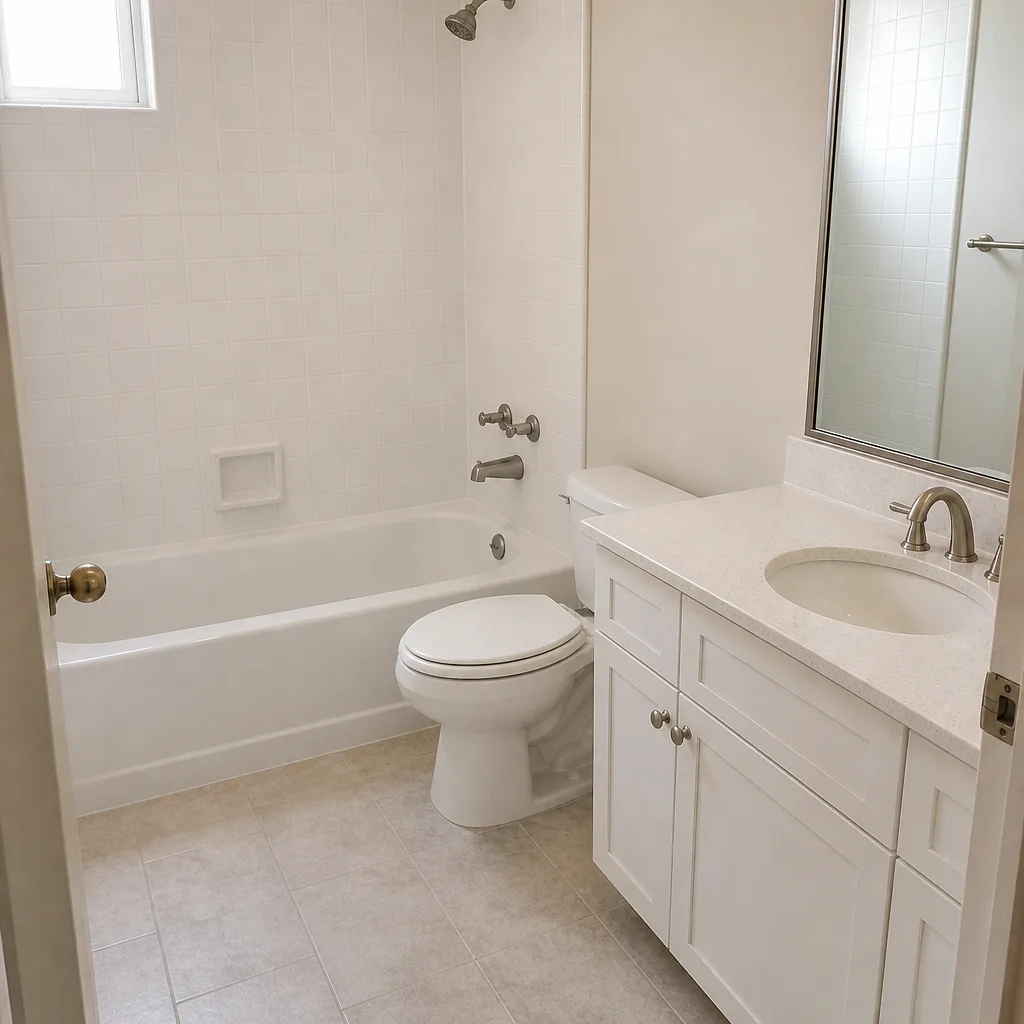 After
If you find a water stain on the ceiling of your Newport Beach home and start looking directly above it on the roof, you’ll spend an afternoon looking in the wrong place. Corroded flashing leaks travel horizontally along roof sheathing and rafters, sometimes 10 feet or more before they drip. Start at the flashing, not the stain. In marine-air environments like ours, most leaks don’t originate in the open field of the roof at all – they start at the metal-to-shingle and metal-to-wall transitions that take the worst of the salt air. That single reordering of the search is the difference between an hour and a weekend. If you’d rather skip the ladder work entirely, call (833) 749-3967 and a live person will pick up, any hour.
Why the stain is rarely below the leak in Newport Beach
Standard leak-finding advice says to trace uphill from the stain. On a lot of roofs that works fine. On Newport Beach roofs, it frequently doesn’t, and here’s why: the persistent salt air and morning marine layer accelerate corrosion of every metal fastener and flashing piece on the roof. When flashing corrodes, it doesn’t always open into a clean vertical gap. It opens along the edge, water creeps under it, then runs sideways across the sheathing and along a rafter until it finds a low point. That low point might be 8 to 15 feet from where the water actually got in.
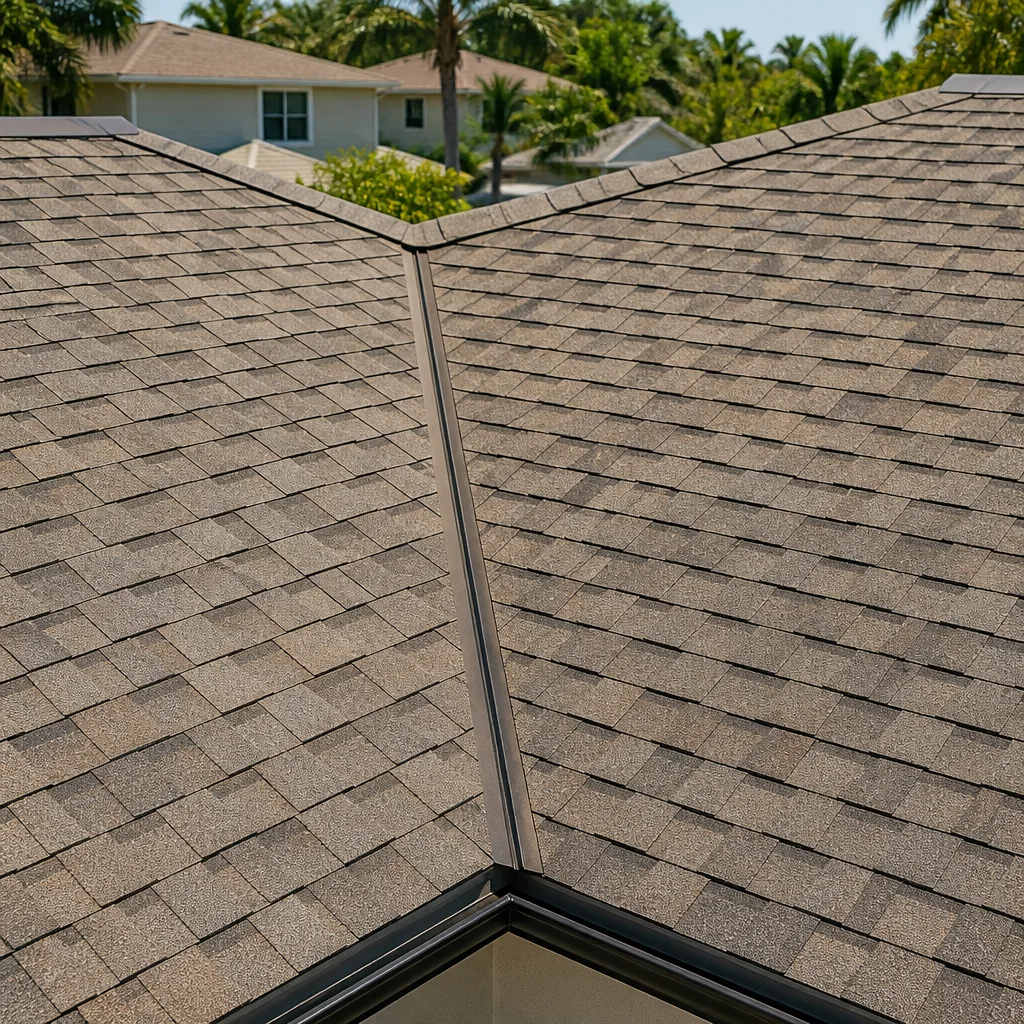
So the search order matters. Before you look at the field of the roof at all, walk every transition point and look for rust bleed and gaps:
- Step flashing where a chimney meets the roof plane – the number one suspect in salt-air conditions
- The flashing collar and frame around every skylight
- Dormer-to-wall and dormer-to-roof joints
- Headwall and sidewall flashing at the roofline
- Pipe boots and vent penetrations, where rubber boots crack and metal collars rust
- There isn’t one entry point – and the stain won’t tell you which one it is
Corroded step flashing around a chimney, skylight, or dormer is the leading leak source in marine-air environments, before anything else gets considered. If you see rust streaks running down from under a flashing lip, you’ve found your likely origin, and the stain 12 feet away suddenly makes sense.

Single-wall construction changes where you look entirely
Newport Beach’s housing stock includes mid-century single-wall and post-and-beam homes on the peninsula’s bay side, plus 1960s ranch homes and original 1920s-40s cottages on Balboa Island. In single-wall construction, there’s no cavity between interior and exterior wall surfaces the way there is in a conventionally framed house. That changes the diagnostic entirely.
Water that enters at a flashing point on a single-wall home can run down inside the wall assembly instead of across the ceiling. What you see inside often isn’t a ceiling stain at all. It’s a damp baseboard, a soft floor edge, or discoloration low on a wall. Homeowners call us about floor damage when the actual problem is 15 feet up and 20 feet over. If your leak evidence shows up low, don’t rule out the roof – check the flashing anyway.
The marine layer hides slow leaks from visual inspection
Here’s a detail that generic guides miss completely. Newport Beach’s daily marine layer wets the roof deck nearly every morning. A slow leak through a micro-fracture in flashing or a hairline gap can be actively wetting the sheathing every single morning and dries out before you climb up to look. You inspect a dry, perfectly normal-looking roof at 2 PM and conclude there’s no leak. There is. You just missed the window.
That’s why a moisture meter on the sheathing from the attic is more reliable than visual inspection in our conditions. The meter reads retained moisture even when the surface feels dry. In our experience, the combination of a moisture meter reading and a close look at the transition points finds the source faster than any amount of visual tracing from the ceiling stain.
What professional leak diagnosis and repair typically run in Newport Beach
| Service | Typical Range |
|---|---|
| Roof repair (leak diagnosis, flashing repair, patching) | $400 – $1,800 |
| Tile roof repair | $600 – $2,500 |
| Roof replacement | $8,000 – $20,000 |
| Metal roof installation | $15,000 – $40,000 |
Most single-flashing repairs land in the lower end of that repair band. A full re-roof only makes sense when the deck or the shingles themselves are at the end of their life – and we’ll tell you plainly which situation you’re in. Upfront pricing, no surprises: the number you see is the number you pay. Every job is covered by our 730-Day Done Right Promise, built to last and backed in writing. When a fastener or flashing has to be replaced, we use stainless steel hardware and marine-grade detailing, and we work with GAF and Owens Corning systems on full replacements so the waterproofing holds up to the salt air the way it should.
On Balboa Island, check the structure before you blame the flashing
Many original Balboa Island cottages sit on wood pilings, and plenty of those pilings have never been updated. A shifting piling changes the roof plane geometry. That movement opens gaps at the ridge and hips that look exactly like flashing failures but aren’t. If the leak appears at a ridge or hip line on an older island cottage, check whether the home has any foundation settling history before anyone gets on the roof to redo flashing that was never the problem. Re-flashing a roof that’s moving underneath you is money spent on the wrong fix.
This is also where the local construction reality intersects. Newport Beach’s harborfront and blufftop homes have to satisfy California Coastal Commission coastal development permit conditions plus the city’s Bayfront and Oceanfront zoning overlays, and even a room addition can trigger a coastal erosion study. Roofing work on those properties carries its own considerations. The point for leak-finding is simpler: our housing stock is varied and old, the metal is fighting salt air every day, and the usual shortcut of “look above the stain” gets you nowhere on a good chunk of it.
When to stop looking and call
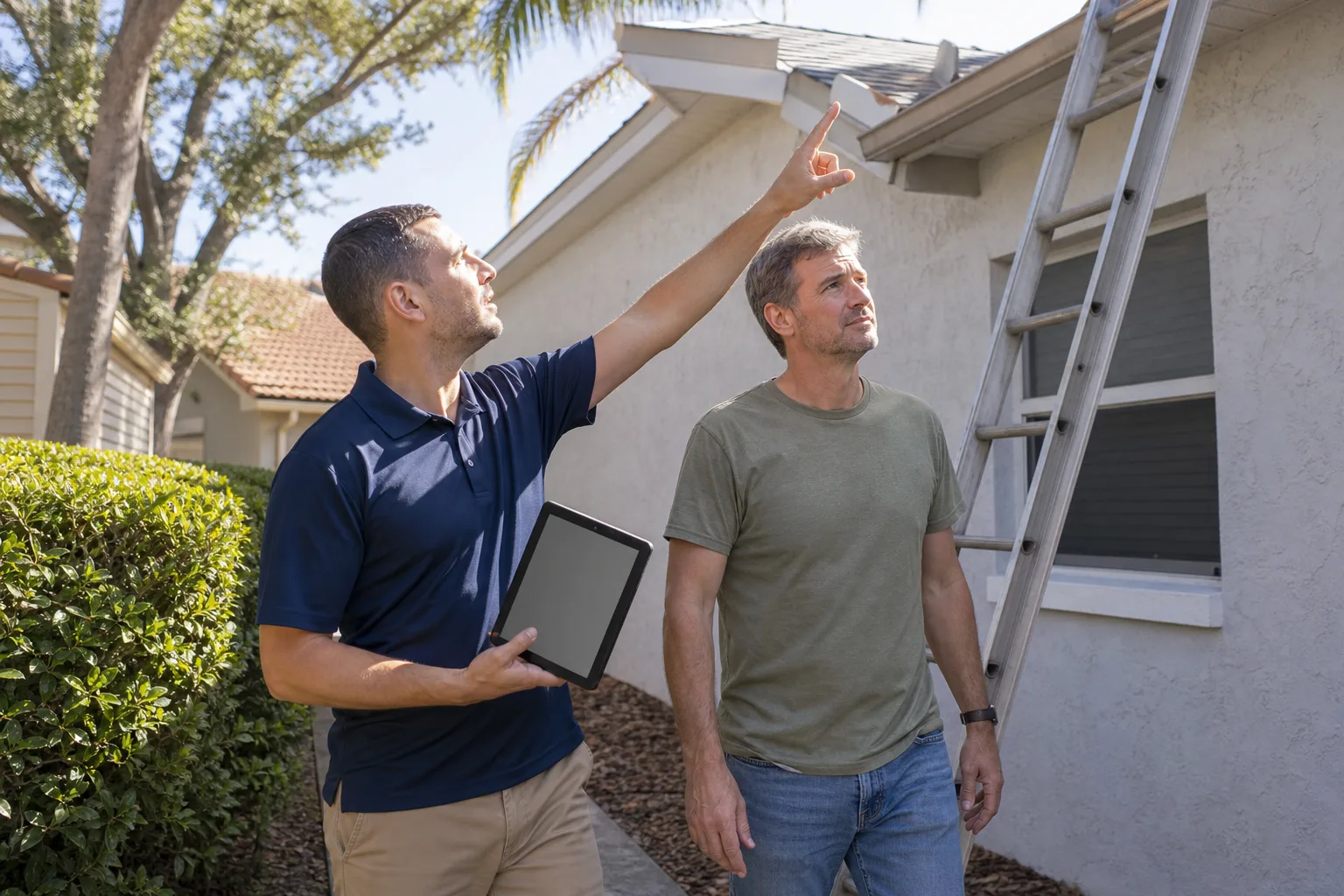
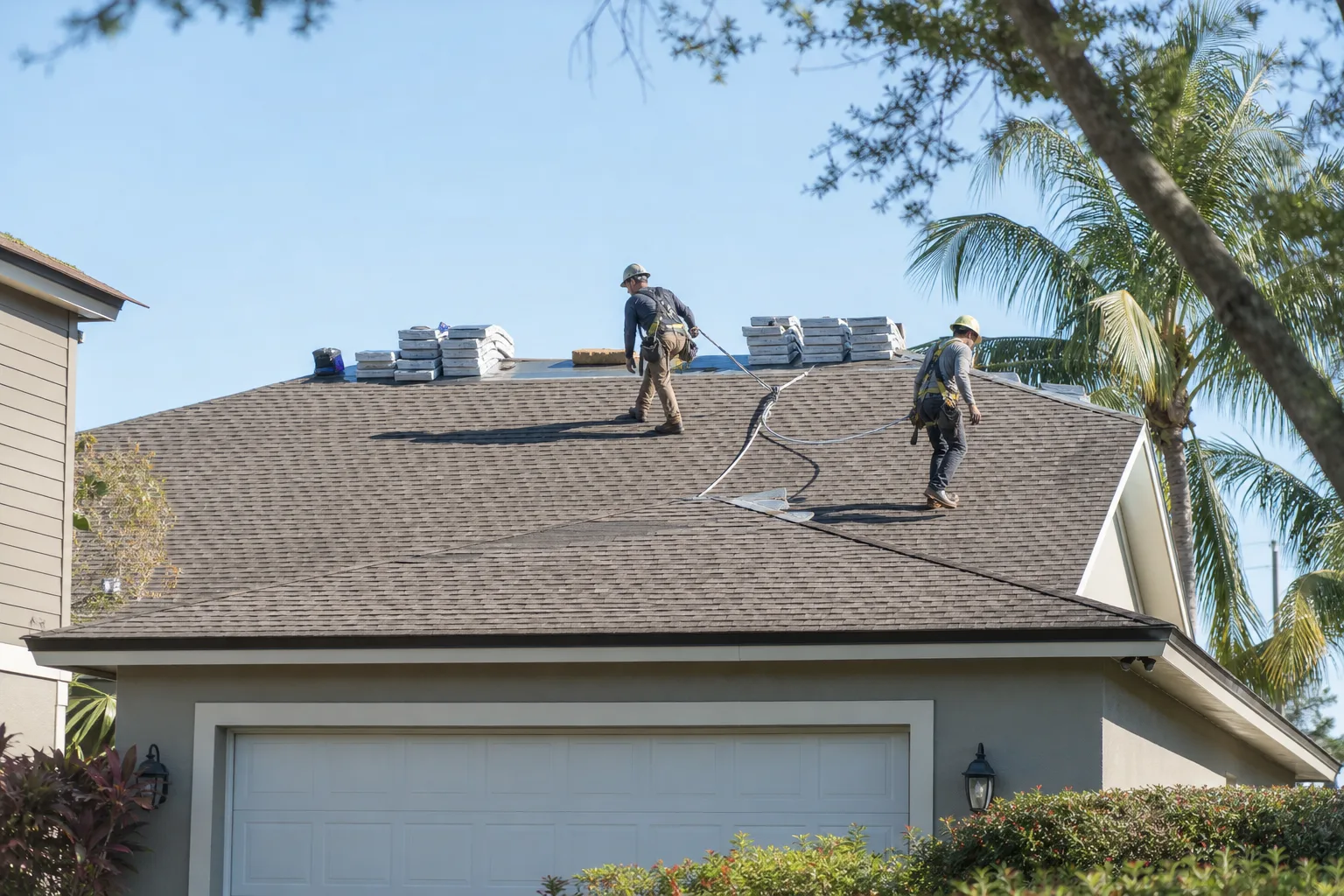
Roof work involves height, ladders, and often fragile tile or aged shingles underfoot. There’s real injury risk in climbing a wet marine-layer roof to inspect flashing, and walking on certain roof types can crack tiles that were fine. If you’ve checked the accessible transition points from the ground or with binoculars and the meter still reads moisture with no obvious source, that’s your cue to stop. The Roofing team can handle the diagnosis with the right tools and a moisture meter, and tell you honestly whether your symptoms sound like a patch job or a diagnostic inspection before you schedule anything.
For the broader picture on how we approach roofing and the rest of the home, start with our home page or the Newport Beach service area page. If a leak has already turned into a bigger interior repair, our bathroom remodeling and kitchen remodeling teams deal with the water damage fallout all the time, and our windows and doors crew handles the skylight and window flashing that leaks love to find. For homes on the water, our home additions and ADU work follows the same coastal code path.
Key takeaways
- Start at the flashing, not the stain – corroded flashing migrates water 8-15 feet sideways before it drips.
- On single-wall homes and Balboa Island cottages, leak evidence often shows up low (baseboard, floor edge) rather than on the ceiling.
- The marine layer wets the deck every morning, so a moisture meter from the attic beats a 2 PM visual inspection.
- Check for foundation settling before re-flashing a ridge or hip on an older island cottage.
- Roof repair in Newport Beach typically runs $400-$1,800; only consider replacement when the shingles or deck are actually worn out.
FAQs
Start at the flashing points – around chimneys, skylights, dormers, walls, and pipe boots – before you look at the open field of the roof. In marine-air conditions, corroded flashing is the leading cause and water travels sideways, so the stain on your ceiling is usually not under the entry point. Check for rust bleed and gaps at every metal-to-shingle and metal-to-wall transition, then use a moisture meter from the attic to confirm. If you can’t pin it down, call (833) 749-3967 for a no-pressure assessment – a live person answers any hour.
Because flashing leaks run horizontally along the sheathing and rafters before they drip, often 8 to 15 feet from the entry point. Salt-air corrosion opens flashing along its edge rather than into a clean gap, so water creeps underneath and travels sideways. That means you should trace from the flashing, not upward from the stain. Call (833) 749-3967 if the source stays hidden – estimates are free.
Roof repair in Newport Beach typically runs $400 to $1,800 for diagnosis, flashing repair, and patching; tile roof repair runs $600 to $2,500. A full roof replacement runs $8,000 to $20,000, and that only makes sense when the shingles or deck are worn out. We quote upfront so the number you see is the number you pay. Call (833) 749-3967 for an exact quote – estimates are free.
Yes – on older island cottages sitting on wood pilings, a shifting piling changes the roof plane and opens gaps at the ridge and hip that look exactly like flashing failures. Check for foundation settling history before anyone re-flashes the roof. Our technicians have up to 12 years of experience reading these structural movement patterns. Call (833) 749-3967 and we’ll help you sort out whether it’s a flashing job or a structural one.
If you’d rather have it looked at, Groundwork Construction Co. of Newport Beach offers a no-pressure assessment in Newport Beach – call (833) 749-3967. Background-checked, uniformed technicians, live people answering around the clock, and a 730-Day Done Right Promise on every job. From foundation to finish line.
Written by the team at Groundwork Construction Co. of Newport Beach, serving Newport Beach, CA.