Free written scope consultation - allowances, timeline, and change-order rules on paper before a single trade is scheduled
Styles & brands we work with
- Kitchen remodeling
- Bathroom remodeling
- Home additions & ADU
- Roofing
- Windows & doors
- Driveway & pavers
- Fence
See the difference
 Before
 After
 Before
 After
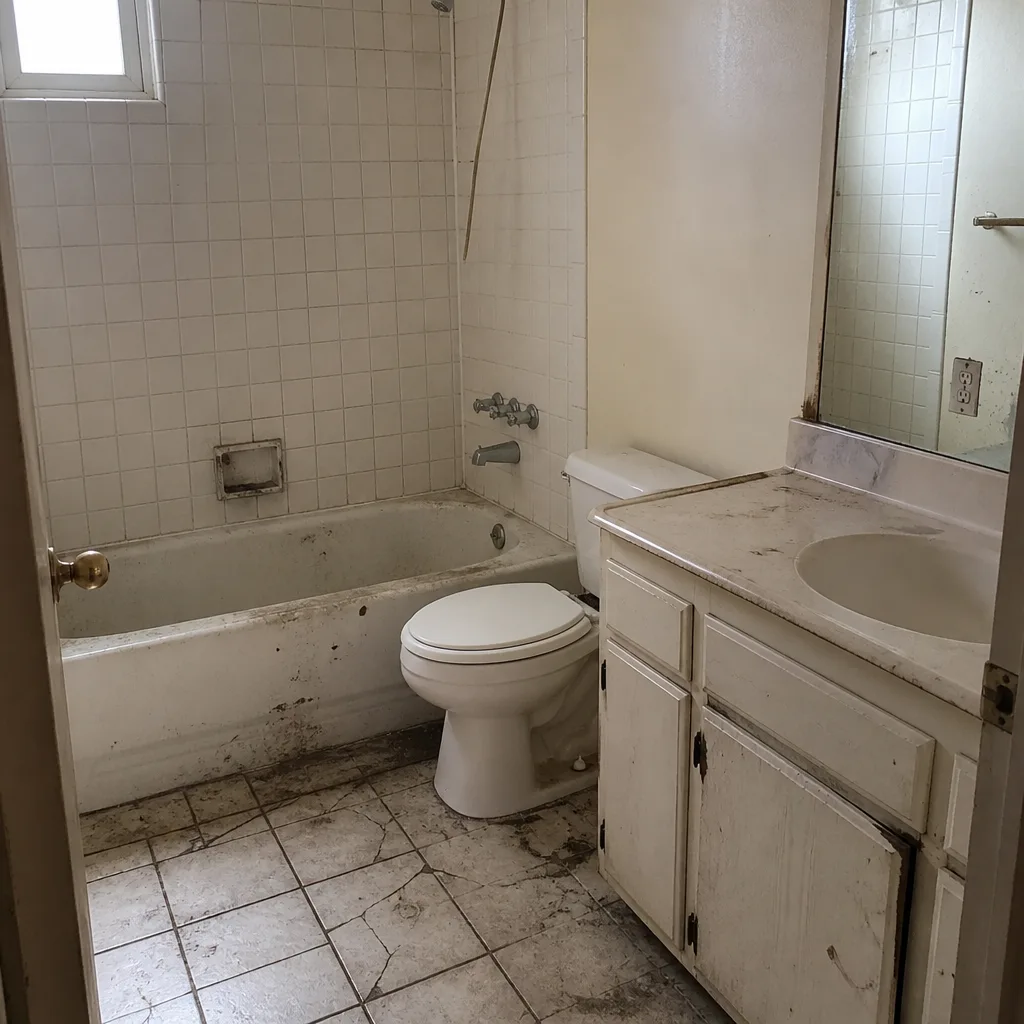 Before
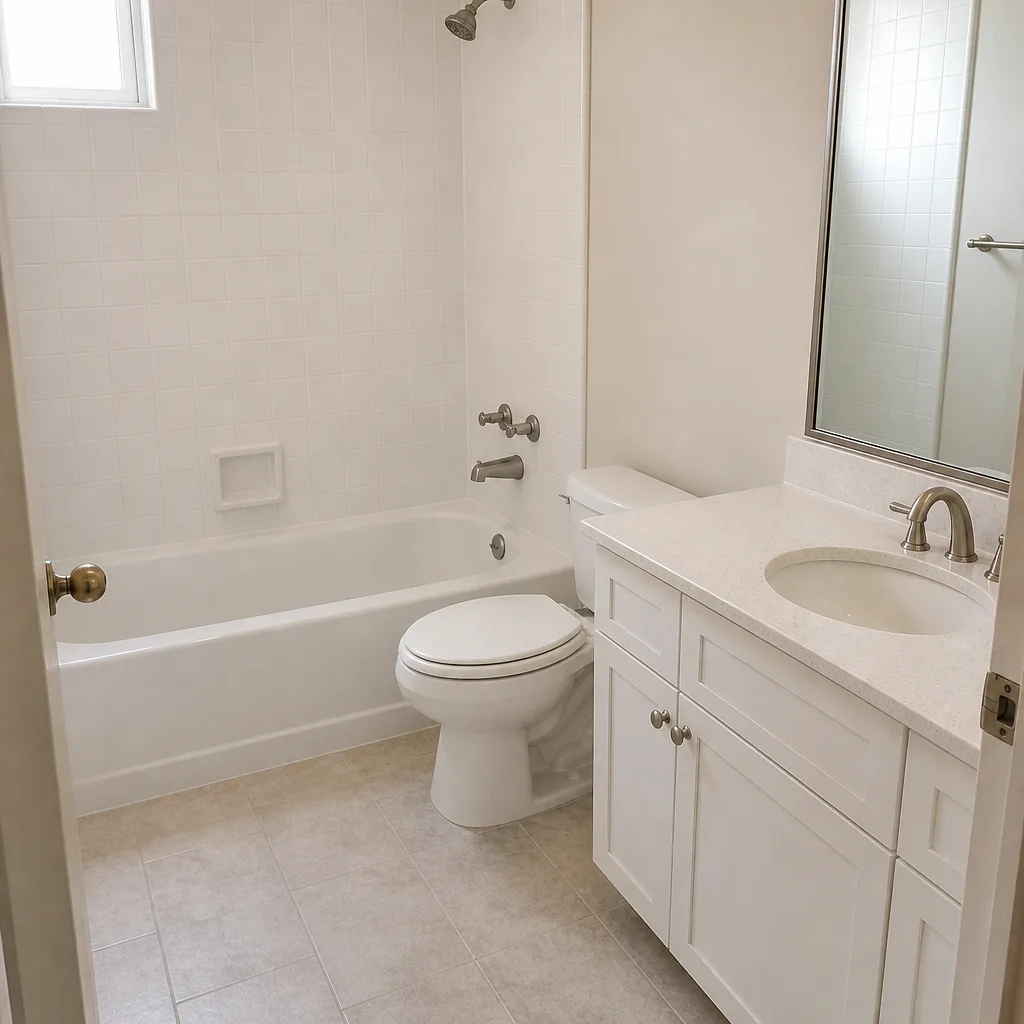 After
Asphalt vs. Concrete Driveway in Newport Beach: Which One Actually Survives the Salt Air?
Choose concrete over asphalt for a Newport Beach driveway unless your lot has a tight budget and easy access for annual maintenance – and even then, specify an upgraded concrete mix rather than defaulting to asphalt. The reason has little to do with looks. Within a mile of the Pacific, salt air and the morning marine layer attack both materials in ways that desert-climate guides never explain, and the winner comes down to how each surface is specified and installed. Call (833) 749-3967 and we’ll walk your driveway before you commit to either.
Key Takeaways
- Asphalt in Newport Beach needs sealing every 1-2 years, not the 3-5 years quoted in national guides, because marine-layer moisture cycling oxidizes the binder faster.
- Standard 3,000 PSI concrete with plain #3 rebar starts showing rust staining and spalling within a decade on the coast – upgrading the spec closes that gap.
- Base compaction matters more than the surface material on the peninsula’s older bay-side homes, where asphalt often sits over poorly compacted subgrade.
Why This Isn’t a Simple Cost Comparison Near the Water
Inland, asphalt vs. concrete is mostly a budget and lifespan question. Out here, it’s a corrosion question wearing a paving question’s clothes. The salt air that eats metal fasteners on a bayfront deck does the same thing to the steel inside a driveway. It just takes longer and happens under your feet where you can’t see it.
The result is that both materials have a hidden weak spot in Newport Beach, and the smart move is choosing the material whose weak spot you can actually design around. Concrete’s weak spot can be engineered out with the right mix and reinforcing. Asphalt’s weak spot – binder oxidation accelerated by constant moisture cycling – can only be slowed with repeated sealing. That’s the whole decision in two sentences, and it’s why we rarely recommend asphalt for a coastal Newport Beach address.
The Cost You See vs. the Cost You Live With
Upfront, asphalt looks cheaper. Over a decade on the coast, it usually isn’t, because the sealing cycle runs twice as often as the national average. Here’s how the installed numbers shake out for Newport Beach, with the maintenance reality attached:
| Material | Installed Range | Sealing Cycle (Coastal) | Cost Per Seal |
|---|---|---|---|
| Asphalt paving | $3,500-$9,000 | Every 1-2 years | $400-$800 |
| Concrete (standard) | $4,500-$12,000 | Penetrating sealer, ~5 years | $250-$700 |
| Concrete (upgraded coastal spec) | $4,500-$12,000 plus spec | Penetrating sealer, ~5 years | $250-$700 |
| Pavers | $7,000-$18,000 | None required | – |
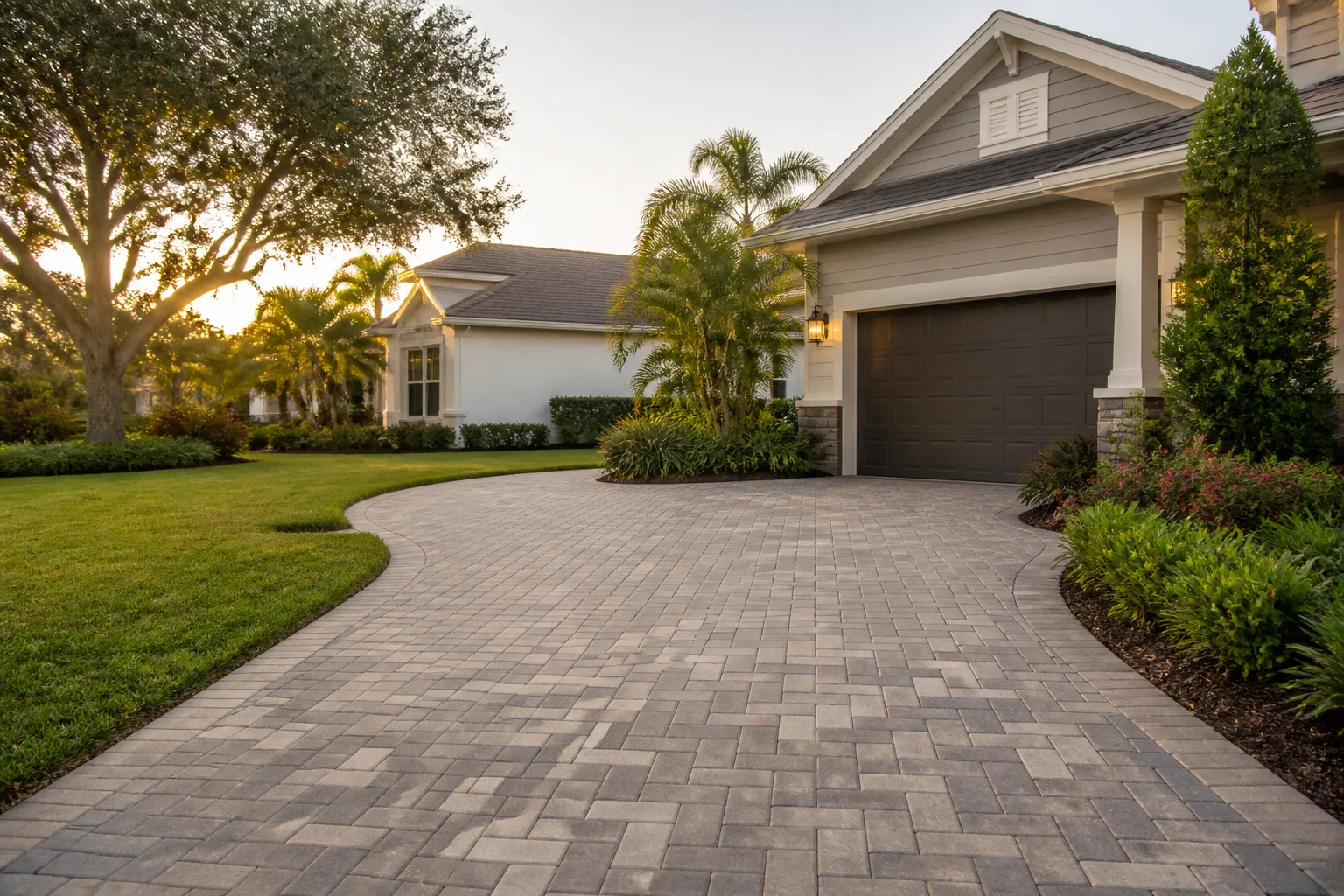
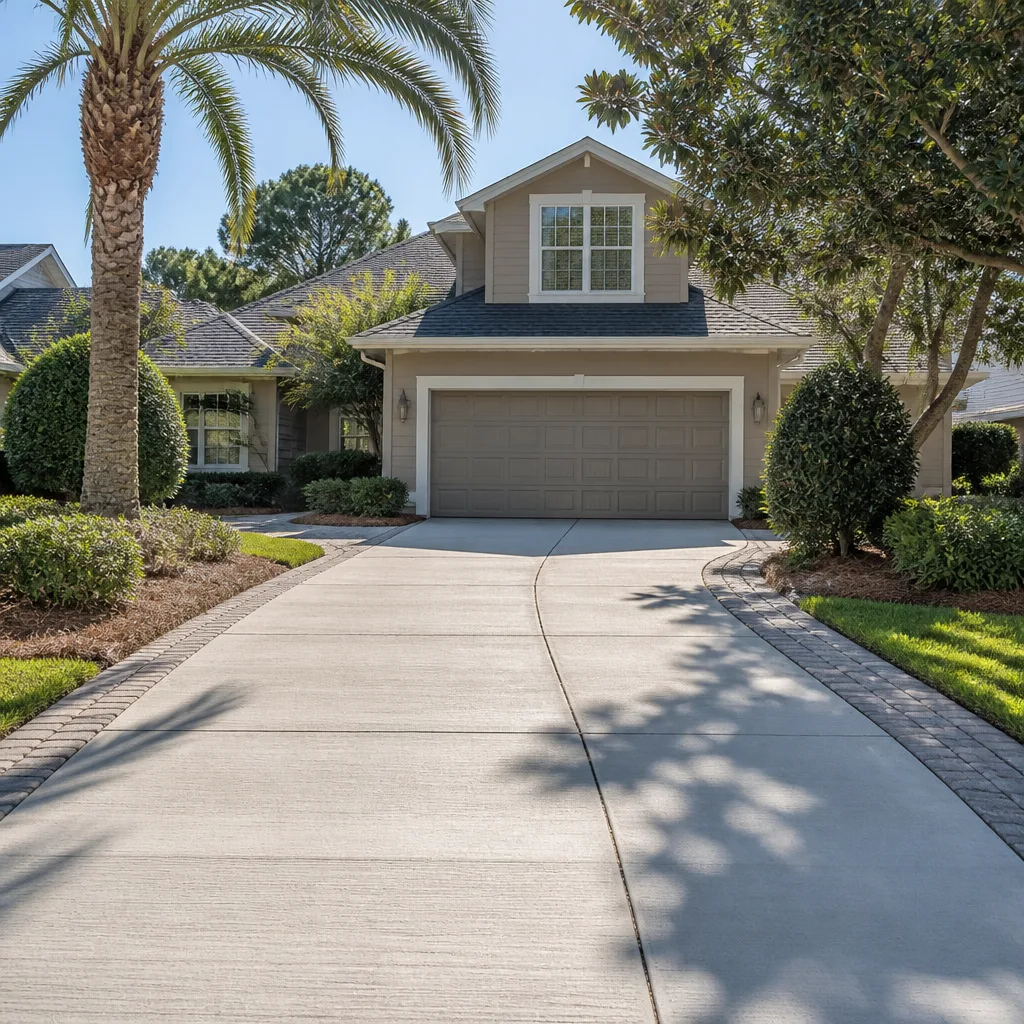
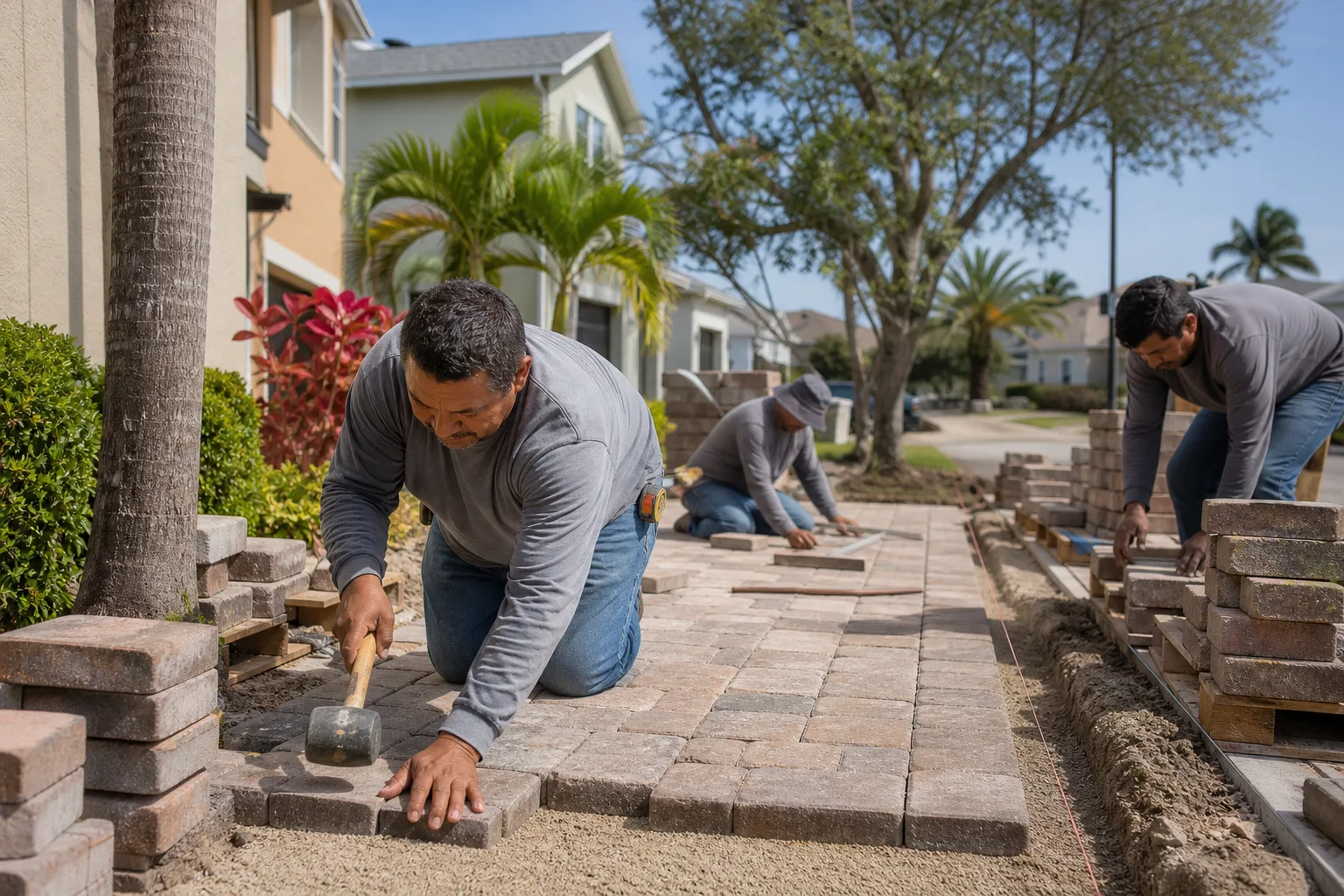
Run the asphalt math over ten years and the $400-$800 sealing cycles stack up fast – often $2,400 to $4,000 in maintenance alone before you factor in crack filling. Meanwhile, a properly specified concrete driveway sealed once every five years asks for far less. Our Driveway & Pavers in Newport Beach page goes deeper on the paver option if you want a surface that skips sealing entirely, and it’s the route many coastal homeowners land on once they see the lifetime numbers.
The Concrete Chloride Problem – and the Spec That Fixes It
Here’s what the national how-to guides skip. Standard residential concrete poured at 3,000 PSI with ordinary #3 rebar performs fine inland. In Newport Beach, chloride from salt air penetrates the surface, reaches the steel, and starts the corrosion cycle. You see the result as rust staining bleeding through the slab, then as spalling – chunks of the surface popping off as the expanding rust pushes outward. On an unprotected slab, that clock can start within a decade.
The fix is a specification upgrade that costs a fraction of a replacement:
- Pour at 4,000 PSI instead of 3,000 for a denser, less permeable surface.
- Use epoxy-coated rebar or fiber-reinforced concrete instead of bare #3 rebar to break the corrosion path.
- Apply a penetrating silane sealer, not a film-forming coating, so moisture vapor can still escape while chlorides stay out.
That combination is what we specify in writing before a Newport Beach pour. It’s also the difference between a slab that lasts decades near the water and one that’s showing its age before the mortgage is half paid. We don’t hand you a bid that says “concrete, installed” and leave the important decisions to whatever was on hand that week.
Where the Base Matters More Than the Surface
On the peninsula’s bay side, a lot of 1960s ranch homes have original asphalt driveways sitting over subgrade that was never compacted to modern standards. If you tear that out and pour concrete on top without fixing the base, the new slab is a guaranteed early failure – it will crack and settle no matter how good the concrete is. We catch this in the pre-job site assessment, and if the subgrade needs work, you hear about it before we pour, not after. The same salt-air logic that calls for stainless hardware on a bayfront remodel applies underneath your tires. Base prep is where a cheap bid and a right bid part ways.
On Balboa Island, where many original 1920s-40s cottages sit on wood pilings, coastal construction carries its own set of surprises – and the salt-air material standards that flow from the Coastal Commission’s permit conditions touch everything from rooflines to exterior coatings. Driveway work on the island frequently runs into narrow access and tide-aware scheduling. We plan around that rather than discovering it on pour day.
Permits, Drainage, and the 10% Rule
Before either material goes down, the square footage itself can trigger a review. A driveway that pushes a lot’s impervious surface past a threshold can require drainage compliance review under Newport Beach’s MS4 stormwater permit conditions. Asphalt and concrete handle that differently depending on how water sheets off and where it’s directed. We flag it early because a surprise drainage review stalls a project faster than any material shortage.
Common Scenarios We See in Newport Beach
Most driveway decisions here fall into a handful of patterns:
- Bay-side 1960s ranch with original asphalt: the asphalt is near the end of its life and the base needs compaction work before anything new goes down. Concrete with the coastal spec is usually the call.
- Dover Shores estate with a long approach: appearance and durability both matter, and pavers or upgraded concrete both hold up well against salt air.
- Second home or investment property: low-maintenance wins, since nobody’s around to arrange annual asphalt sealing.
- Inland-adjacent property on a tighter budget: asphalt is defensible, but plan on sealing every 1-2 years and budget for it as a real recurring cost.
Whichever way you go, we write the exact PSI, rebar type, and sealer into the contract before the job starts, so you know what you’re getting rather than what was available. Our technicians bring up to 12 years of experience to the prep work that determines whether a driveway lasts. Everything we install is backed by the 730-Day Done Right Promise – if it’s not done right, we make it right – and our calls are answered by a live person, 24/7, so you’re never stuck waiting until Monday when a question comes up.
If you’re weighing a full replacement or a fresh paver patio to match, our Driveway & Pavers service covers the whole scope. When the surface meets your front walk, some homeowners pair the job with fence installation in Newport Beach using brands like Master Halco or Ameristar to tie the front elevation together. We handle projects from foundation to finish line, so one crew coordinates the driveway, the walkway, and the fence rather than three separate contractors leaving gaps in the schedule.
FAQs
Asphalt is cheaper upfront, but concrete usually costs less over ten years on the coast because asphalt needs sealing every 1-2 years here versus every 3-5 inland. A $3,500-$9,000 asphalt job can rack up $2,400-$4,000 in sealing over a decade, while a concrete driveway in the $4,500-$12,000 range is sealed roughly every five years. Call (833) 749-3967 for a free estimate on either.
Every 1-2 years, not the 3-5 years you’ll see in most online guides. The marine layer’s constant moisture cycling and salt-air oxidation break down the asphalt binder faster than dry inland heat does, so sealing isn’t optional here if you want the surface to last. Each cycle runs $400-$800. Call (833) 749-3967 and we’ll assess whether your existing asphalt is worth sealing or replacing.
Standard 3,000 PSI concrete with bare #3 rebar can develop rust staining and spalling within a decade on the coast, which is what looks like “salt damage.” The fix is a spec upgrade: 4,000 PSI concrete, epoxy-coated or fiber-reinforced rebar, and a penetrating silane sealer. That combination is what we put in writing for Newport Beach pours. Call (833) 749-3967 for a no-pressure assessment.
Yes – call (833) 749-3967 and we’ll schedule an assessment. We check base compaction, measure impervious surface against drainage review thresholds, and give you a straight answer on asphalt vs. concrete for your specific lot. The estimate and design consult are free, and if you go over $10,000 you qualify for $1,000 off, with 0% financing for 18 months available.
If you’d rather have it looked at, Groundwork Construction Co. of Newport Beach offers a no-pressure assessment in Newport Beach – call (833) 749-3967. We check the base, flag any drainage review concerns, and put the exact concrete or asphalt spec in writing before you spend a dollar.
Written by the team at Groundwork Construction Co. of Newport Beach, serving Newport Beach, CA.