Last updated November 17, 2026

Free written scope consultation - allowances, timeline, and change-order rules on paper before a single trade is scheduled
The Complete Driveway & Pavers Guide for Newport Beach Homeowners
The same paver that holds up flawlessly in Riverside will shift, stain, and spall within two seasons in Newport Beach, and the difference comes down to what’s happening six inches below your driveway surface, not above it. We’ve pulled up driveways on Balboa Island that looked flawless on top and were sitting on a base that had been quietly losing compaction since the day it went in. This guide explains why that happens here, what the City of Newport Beach actually requires, what real paver work costs on the peninsula and in the back bay neighborhoods, and which materials survive salt air and which quietly fall apart. If you’re budgeting a driveway paver project in Newport Beach, the next 15 minutes will save you thousands.
Quick Answer
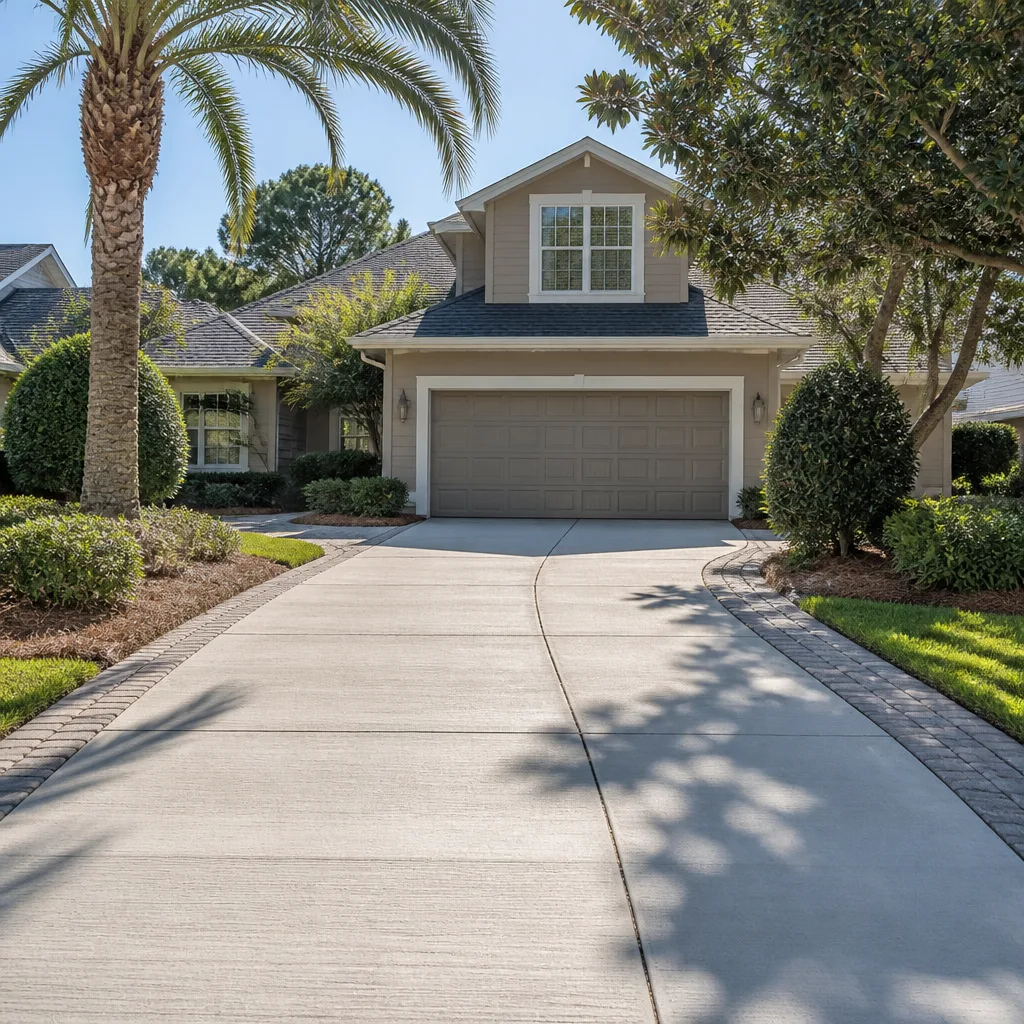
Driveway paver installation in Newport Beach typically runs $18 to $32 per square foot for the project, or roughly $11,000 to $26,000 for a standard two-car driveway, with coastal soil conditions, salt-air-rated materials, HOA design review, and City of Newport Beach permits all adding line items that inland guides never mention. The single biggest predictor of how a paver driveway ages here is base preparation, not the paver you pick off a showroom display.
Styles & brands we work with
- Kitchen remodeling
- Bathroom remodeling
- Home additions & ADU
- Roofing
- Windows & doors
- Driveway & pavers
- Fence
Table of Contents
- Why Newport Beach Driveways Fail Faster Than Inland Driveways
- Base Compaction: The Six Inches That Decide Everything
- Paver Materials That Survive Salt Air and UV Bleaching
- HOA and City of Newport Beach Permits: What Triggers Review
- Permeable Pavers and Newport Beach’s Stormwater Rules
- What Driveway Pavers Actually Cost in Newport Beach
- The Installation Process, Step by Step
- Keeping a Coastal Driveway in Shape
Why Newport Beach Driveways Fail Faster Than Inland Driveways
Newport Beach sits on a mix of marine sediment, dredged fill, and native sandy loam, and that substrate behaves nothing like the decomposed granite and clay soils most paver guides were written around. On Balboa Island and parts of Lido Isle, much of the ground under your driveway is fill placed decades ago, and fill settles unevenly. On the bluff-top streets above Corona del Mar and along Dover Shores, you get expansive soils that swell with winter moisture and shrink hard in summer. That cycle is what cracks pavers and opens joints.
Then there’s the salt. Airborne chloride accelerates the breakdown of certain cementitious joint sands and finishes, and the marine layer keeps surfaces damp far longer than the sun would suggest. We routinely see efflorescence (that white chalky bloom) on driveways installed with the wrong jointing material, and it’s not a cleaning problem. It’s a material selection problem.
Thermal cycling matters too. Newport Beach is mild, but a driveway in direct afternoon sun on the west side of a coastal property can swing 40 degrees between the surface and shaded edges. Pavers need room to move. Rigid installation methods that work inland will telegraph every one of those movements into your visible surface.
What this means for you, practically:
- Base depth and compaction standards have to be engineered for your specific soil, not a generic spec sheet.
- Joint sand must be polymeric and rated for coastal exposure, or you’ll be refilling joints annually.
- Edge restraint has to be anchored into something stable, not just bedded onto sand.
- Drainage has to be planned before the first paver goes down, because retrofitting it is expensive.
Base Compaction: The Six Inches That Decide Everything
Most paver failures we diagnose in Newport Beach are base failures. The paver itself is almost never the problem. Under a residential driveway, the compacted aggregate base needs to be deeper than what an inland installer would use, because the native soil here moves more and drains differently.
Here’s the practical sequence we use, and it matters that these steps happen in order:
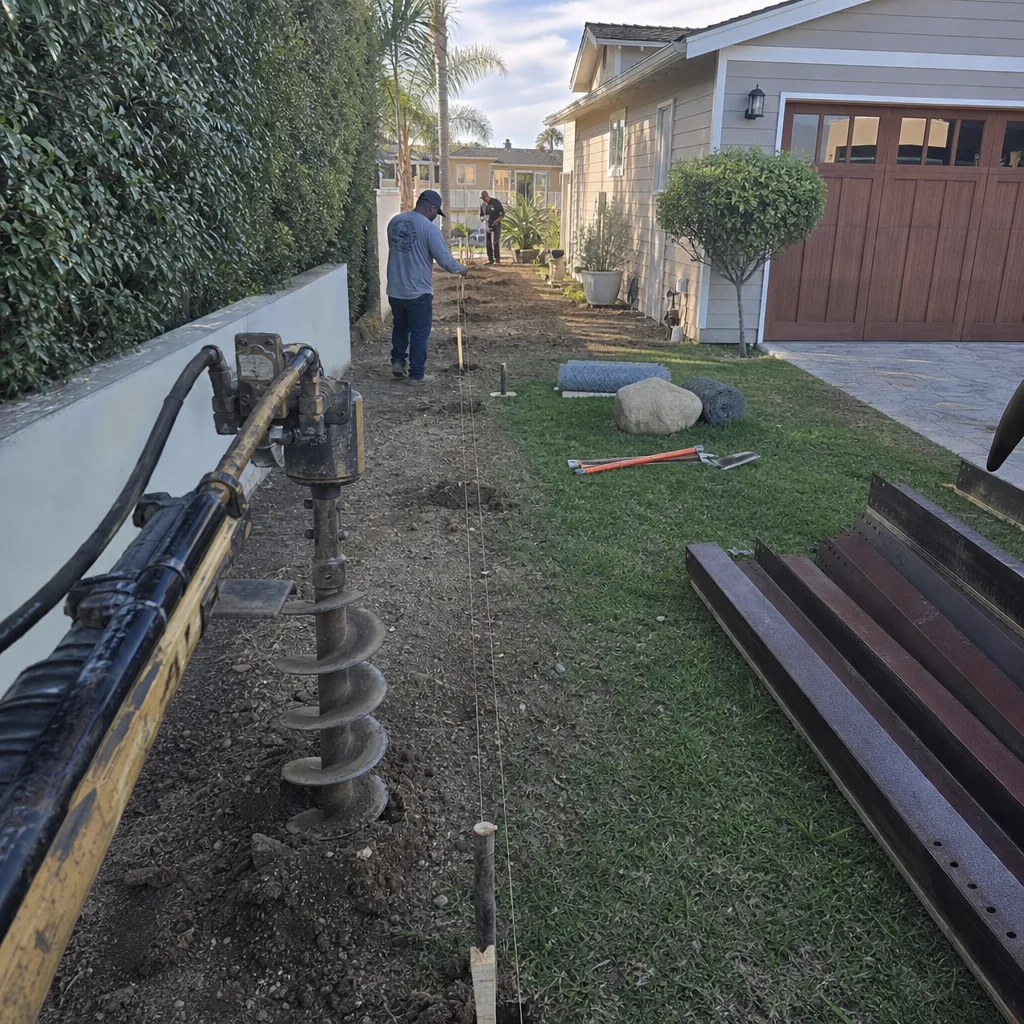
- Excavate to native soil and evaluate it. We probe the subgrade by hand and check what’s actually under the old surface. On peninsula properties this often turns up old concrete slabs, tree roots, or fill that was never compacted.
- Compact the subgrade itself. This step gets skipped constantly by rushed crews. It’s the foundation underneath the foundation.
- Install and compact base in lifts. Base goes in 2 to 3 inch lifts, each compacted with a plate compactor before the next lift. Dumping 8 inches at once and running a compactor over the top leaves loose material in the middle.
- Verify with a laser or straightedge. Slope away from the garage should be 1.5 to 2 percent. On a Newport Beach driveway that meets a street with a crown or a storm drain, the transition has to be checked against the actual curb, not a plan.
- Bed the pavers and install edge restraint. Setting bed is thin. The restraint is what keeps the field from creeping, and on coastal grades it gets anchored into the compacted base and sometimes into the adjacent hardscape.
- Polymeric joint sand and compaction pass. Sand goes in, pavers get a final compaction pass, sand gets topped off. This is the step that determines whether you’re fighting weeds and ants for the next decade.
In our experience, the base work is 60 percent of a driveway’s lifespan and about 25 percent of the visual punch. Homeowners notice the pavers. The driveway notices the base. This is also true of our Driveway & Pavers service in Newport Beach whether the project is a full replacement or a repair of a failing section.
Paver Materials That Survive Salt Air and UV Bleaching
Not every paver sold in Southern California belongs on a Newport Beach driveway. Salt air, intense reflected light off the water, and the constant damp-and-dry cycle of the marine layer stress materials in ways an inland installation never tests. Here’s the honest assessment of what holds up.
- Concrete pavers with integral pigment. The most common choice, and for good reason. Modern concrete pavers from established manufacturers are dense, consistent, and hold color well. Look for a manufacturer with a written statement about salt and efflorescence resistance. Cheap pavers with surface-applied color will fade visibly within three to four years on a west-facing driveway.
- Clay and porcelain pavers. Very stable in coastal conditions, immune to efflorescence, and hold color permanently. The tradeoff is cost and a slightly more limited style range. Porcelain is the standout on shaded north-facing slopes where concrete pavers tend to stay wet longest.
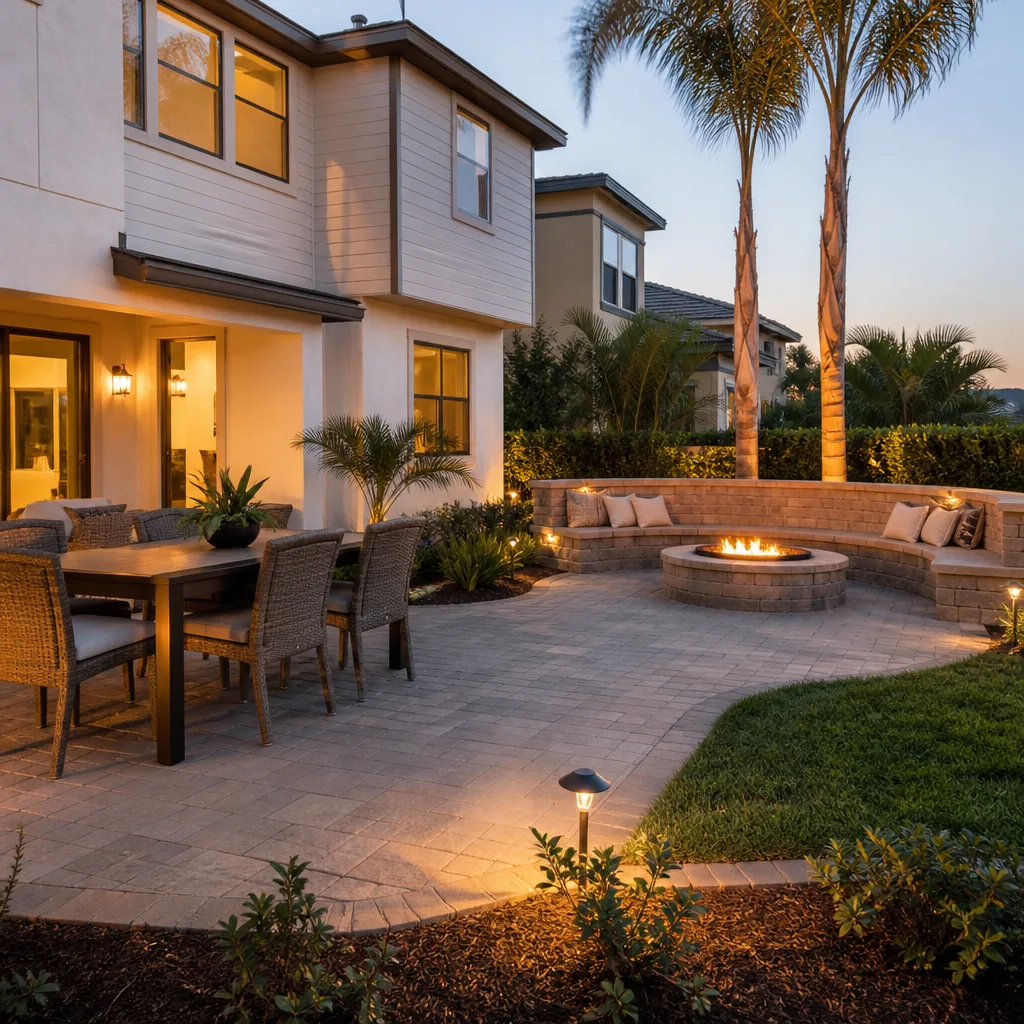
- Natural stone. Travertine, bluestone, and limestone can look spectacular on a Newport Beach property, but stone selection matters more than most installers admit. Some limestone grades absorb salt and spall after a few winters. This is where a brand like Belgard’s stone-look systems can be a smart middle path, giving you the aesthetic without the freeze-thaw and salt vulnerability of untreated stone.
Two material details that get overlooked:
First, joint sand. Polymeric sand formulated for coastal climates resists washout and salt erosion. Standard sand will need annual topping. We’ve seen driveways where the paver choice was perfect and the joint sand choice undid all of it.
Second, sealant. A breathable penetrating sealer helps on driveways in sun-exposed positions and reduces staining from the iron in Newport Beach’s soil. But sealing a driveway that’s still releasing moisture will trap that moisture and cause more damage than no sealer. It has to be done at the right time, in the right conditions, on a properly cured surface. Any contractor who seals on installation day is cutting a corner you’ll pay for later.
HOA and City of Newport Beach Permits: What Triggers Review
Here’s a question we field constantly: does replacing my driveway require a permit? The answer in Newport Beach depends on whether the work is a repair or a replacement, and whether the footprint, drainage, or grading changes.
A straightforward repair that restores the existing surface without changing the outline or slope usually doesn’t trigger a full building permit. A full replacement that involves new base, new slope, or any change to where water discharges almost always involves city review, and if your property sits in a flood zone or a designated coastal or stormwater management area, there’s an additional layer.
Then there’s the HOA. Newport Beach has a large number of HOAs, and their design review requirements are often stricter than the city’s. Some associations specify paver color palettes, restrict certain finishes, require matching the neighboring driveways, or limit how much of your frontage can be hardscape. If you install a driveway your HOA didn’t approve, the association can require you to remove it at your cost. That’s an expensive mistake and it happens.
What to line up before work starts:
- Pull your HOA’s architectural guidelines and confirm whether driveway replacement requires an approval application.
- Confirm with the City of Newport Beach whether your project needs a building permit, a grading permit, or both. Drainage changes are the usual trigger.
- Get the HOA approval in writing before you order materials. Material lead times on specialty pavers can run 4 to 8 weeks.
- Confirm the drainage plan, especially if your driveway slopes toward the street, toward a neighbor, or toward an existing drain.
When we quote a driveway in Newport Beach, permit and HOA coordination are part of the scope, not an add-on. The same is true on related exterior work like fence installation in Newport Beach, where the same HOA review questions come up.
Permeable Pavers and Newport Beach’s Stormwater Rules
Permeable paver systems have moved from a niche option to a real consideration on a lot of Newport Beach projects, and for good reason. The city sits on a coastal watershed where runoff from impervious surfaces flows toward sensitive bays, channels, and the ocean. As stormwater management standards tighten, projects that increase impervious coverage face more scrutiny and, in some areas, more requirement.
What this means practically: a permeable paver system uses open-graded base material and wider joints so water infiltrates through the surface and into the ground rather than sheeting off into the storm drain. On a Newport Beach property, that has three appealing effects:
- It reduces the runoff that carries oil, antifreeze, and lawn chemicals into the bay.
- It can satisfy an HOA or city requirement that a replacement driveway manage its own drainage.
- It slows water before it reaches a property that already has drainage problems, which is common on lots with tight setbacks or flat grade transitions.
The catch is that permeable systems are not a drop-in substitute. The base has to be engineered to infiltrate and store water, which is different from a standard compacted base. The native soil needs adequate permeability, and on clay-heavy lots or lots on fill, the design has to account for that. Get the design right and a permeable driveway performs like a standard driveway. Get it wrong and you’ve built an expensive sponge.
If your property has a drainage easement, discharges to a bay or channel, or you’re considering a larger hardscape project alongside an addition, permeable options are worth discussing early. That’s also true on home additions and ADU projects in Newport Beach, where new impervious surface can trigger the same runoff questions.
What Driveway Pavers Actually Cost in Newport Beach
California-wide cost averages are a poor fit for Newport Beach, and homeowners who budget off a national average get blindsided. Here are realistic line-item ranges for Newport Beach conditions, including base work, materials, and coordination.
- Base preparation, excavation, and disposal of old surface: $4 to $8 per square foot. Higher on peninsula properties with limited access, old slabs to remove, or tree roots.
- Paver material and installation (standard concrete pavers): $9 to $14 per square foot.
- Paver material and installation (premium concrete or porcelain): $14 to $20 per square foot.
- Edge restraint and polymeric joint sand: $1.50 to $3 per square foot.
- Permeable system upgrade: adds $3 to $7 per square foot over a standard system.
- Permit and HOA coordination: varies, but budget $500 to $2,500 for the design and application work that comes before installation.
Total installed cost for a standard two-car Newport Beach driveway, roughly 600 to 800 square feet:
- Standard concrete pavers: $11,000 to $18,000, all-in.
- Premium concrete or porcelain pavers: $17,000 to $26,000, all-in.
- Natural stone or high-end system: $26,000 to $40,000 and up, depending on material and access challenges.
Those ranges shift with three factors that are uniquely local. Access is the big one: on Balboa Island, parts of the peninsula, and narrow streets around Corona del Mar, equipment has to be staged and materials moved by hand, which adds labor. Second, if you’re replacing a failing driveway you may find surprises under it, like old slabs, undocumented utilities, or uncompacted fill. Third, HOA requirements to match a specific palette can narrow your material options and raise cost.
Upfront pricing means we put a line-item number in front of you before work starts, and the number you see is the number you pay. Projects over $10,000 get $1,000 off, and 0% financing for 18 months is available on qualifying projects, which takes some of the sting out of budgeting a premium driveway. And the work is covered by the 730-Day Done Right Promise.
The Installation Process, Step by Step
Here’s what a full driveway replacement looks like on a Newport Beach property, timeline and all. Every project is different, but this is the typical sequence.
- Site visit and measurement. We walk the property, check the existing surface, check grade and drainage, and confirm where water needs to go. We measure access constraints.
- HOA and permit coordination. Design review submission and city permit application, as required. This can take weeks, and it’s the part other installers skip.
- Materials selection and ordering. Choosing pavers, joint sand, edge restraint, and sealer. Ordering once the design is approved. Lead times for specialty pavers can run 4 to 8 weeks.
- Demolition and removal. Removing the old surface and haul-away. On tight-access streets, this is where extra labor shows up.
- Subgrade evaluation. Inspecting what’s under the old driveway and addressing soft spots, old slabs, or fill.
- Base installation. Excavating, compacting the subgrade, installing base in compacted lifts, verifying slope.
- Paver installation. Setting course, cutting edges, installing edge restraint.
- Joint sand and finishing. Polymeric sand, compaction, cleanup.
- Curing and sealer (when specified). Typically applied after the driveway has had weeks to settle and release moisture.
For a typical two-car driveway, the installation itself runs three to six working days, and the full timeline from first visit to finished driveway runs four to ten weeks once you factor in material lead time and HOA/permitting. If a contractor tells you they can start and finish inside two weeks, they’re either skipping the HOA process, ordering stock materials that may not fit the design, or rushing the base. None of those end well on a Newport Beach lot.
Keeping a Coastal Driveway in Shape
A well-built Newport Beach driveway doesn’t need much, but a little maintenance goes a long way in this climate. Here’s what actually matters.
- Top off joint sand annually. Even polymeric sand thins over time. A topper keeps weeds and ants out and prevents pavers from shifting.
- Rinse salt and grime regularly. Salt buildup on the surface is mostly cosmetic, but regular light rinsing keeps it from penetrating and staining.
- Clean oil and rust promptly. Newport Beach soils can carry iron, and it stains. Quick cleanup matters more than harsh chemicals.
- Inspect and re-sand joints after winter rains. Even well-drained driveways see joint erosion from heavy winter storms, especially on slopes.
- Reapply sealer every 3 to 5 years. Penetrating sealer is a maintenance item, not a one-time installation step. On a shaded north-facing driveway, it may not need resealing at all.
- Watch for rocker pavers. If a paver rocks underfoot, it means the base underneath it has shifted. Catching a single rocker early is cheap. Catching it late is not.
One habit that isn’t talked about enough: avoid pressure washing at high pressure. It strips joint sand and, on some pavers, drives sand and water into joints that shouldn’t get wet. Low-pressure rinsing with a fan tip is plenty.
Common Mistakes to Avoid
- Pulling a national average into your Newport Beach budget. A quick glance at a “cost of pavers in California” page gives you a midpoint around $15 per square foot, which is below the real Newport Beach all-in number even for basic concrete pavers. Budget local, not statewide.
- Skipping the HOA approval. We’ve seen a homeowner replace a driveway with a beautifully installed paver pattern that didn’t match the association’s palette, then have the HOA require removal. Confirm approval in writing before ordering materials.
- Underbuilding the base for coastal soil. The six inches under the paver matter more than the paver. A contractor who runs a single compaction pass over an 8-inch dump is setting you up for settlement within two years.
- Choosing cheap pavers for a west-facing driveway. Surface-colored pavers look great in the showroom and fade or effloresce within a few seasons of marine layer and direct UV. Look for integral pigment and a manufacturer statement about salt exposure.
- Ignoring drainage until installation day. Where the water goes has to be decided before the first paver goes down. Retrofitting drainage under a finished driveway starts with ripping the driveway back up.
- Sealing too early. Sealer applied before the driveway has stabilized traps moisture and causes joint damage and spalling. Sealing belongs weeks or months after installation, not hours.
- Not coordinating with other exterior work. If a fence, gate, or landscape project is close on the timeline, sequencing it with your driveway project saves real money compared to doing them separately. We regularly pair driveway work with fence installation for this reason.
See the difference
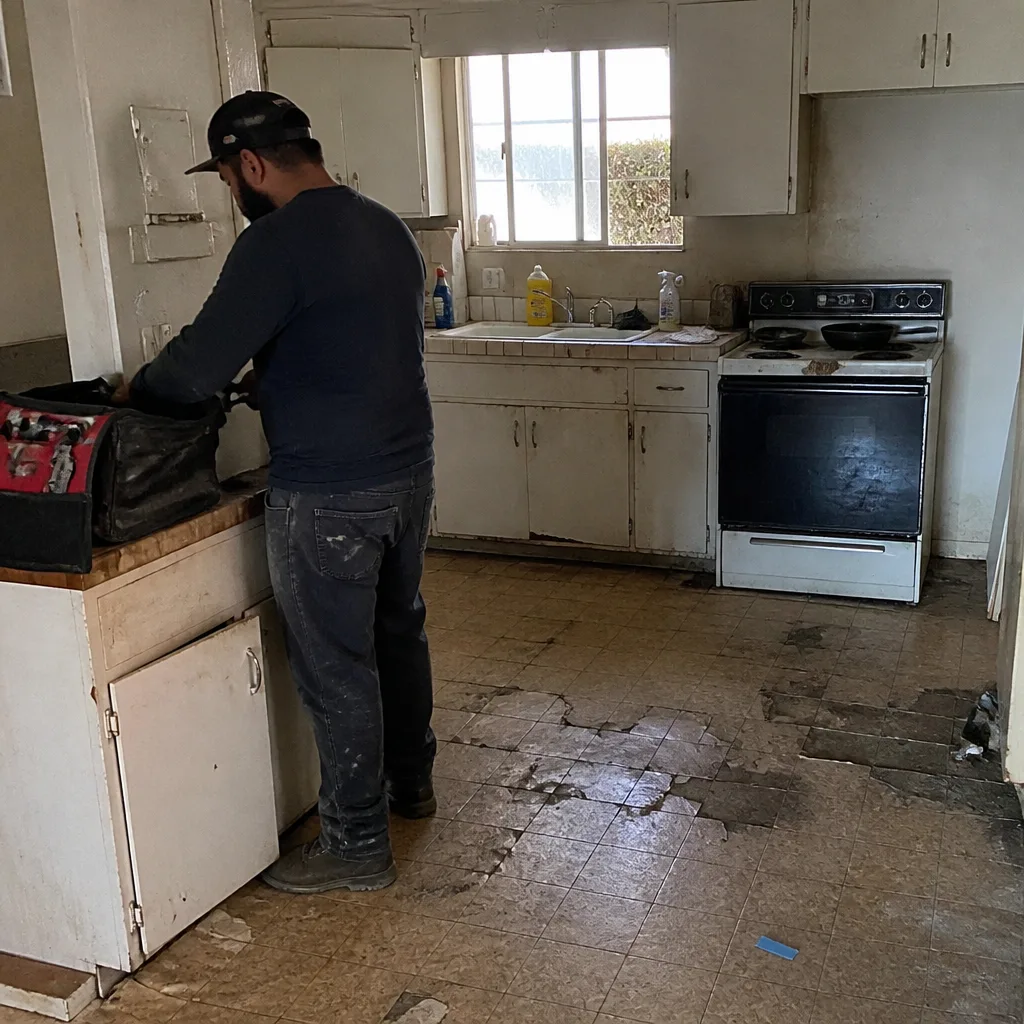 Before
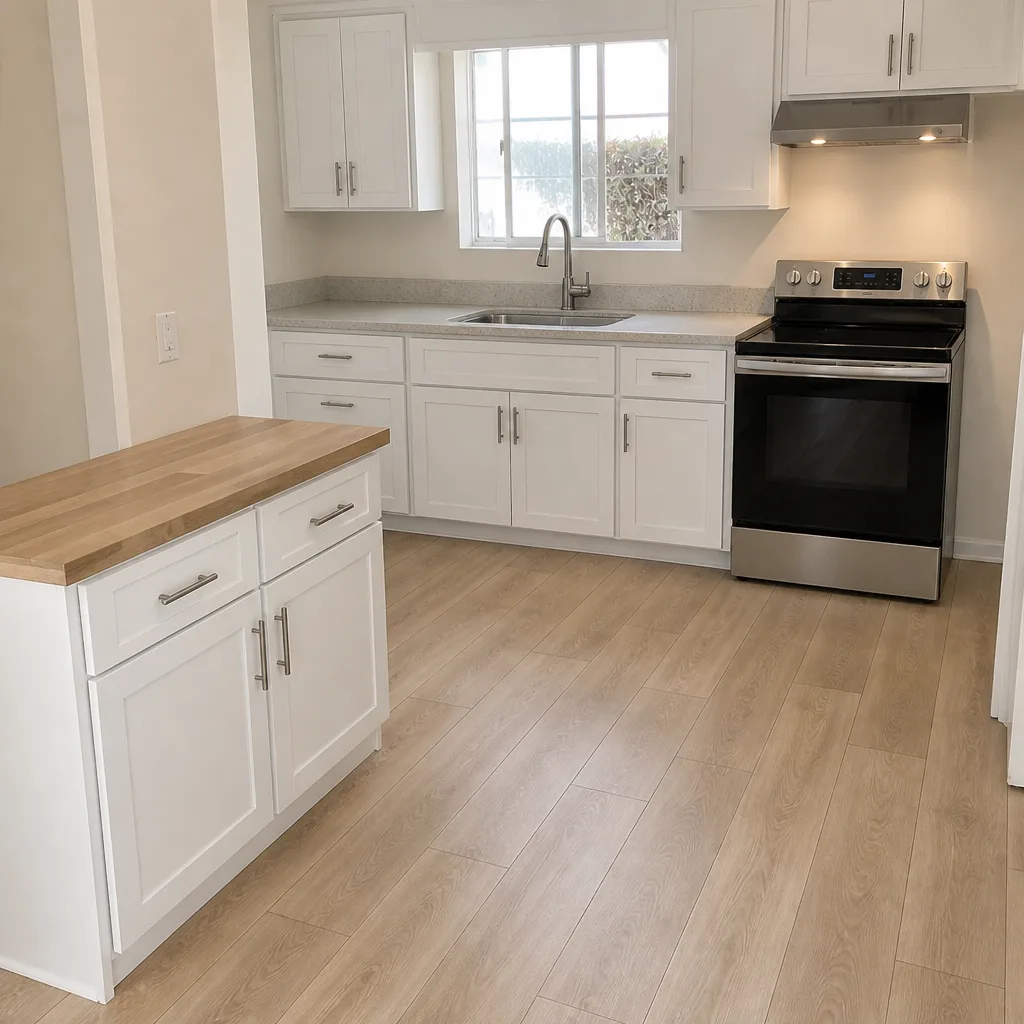 After
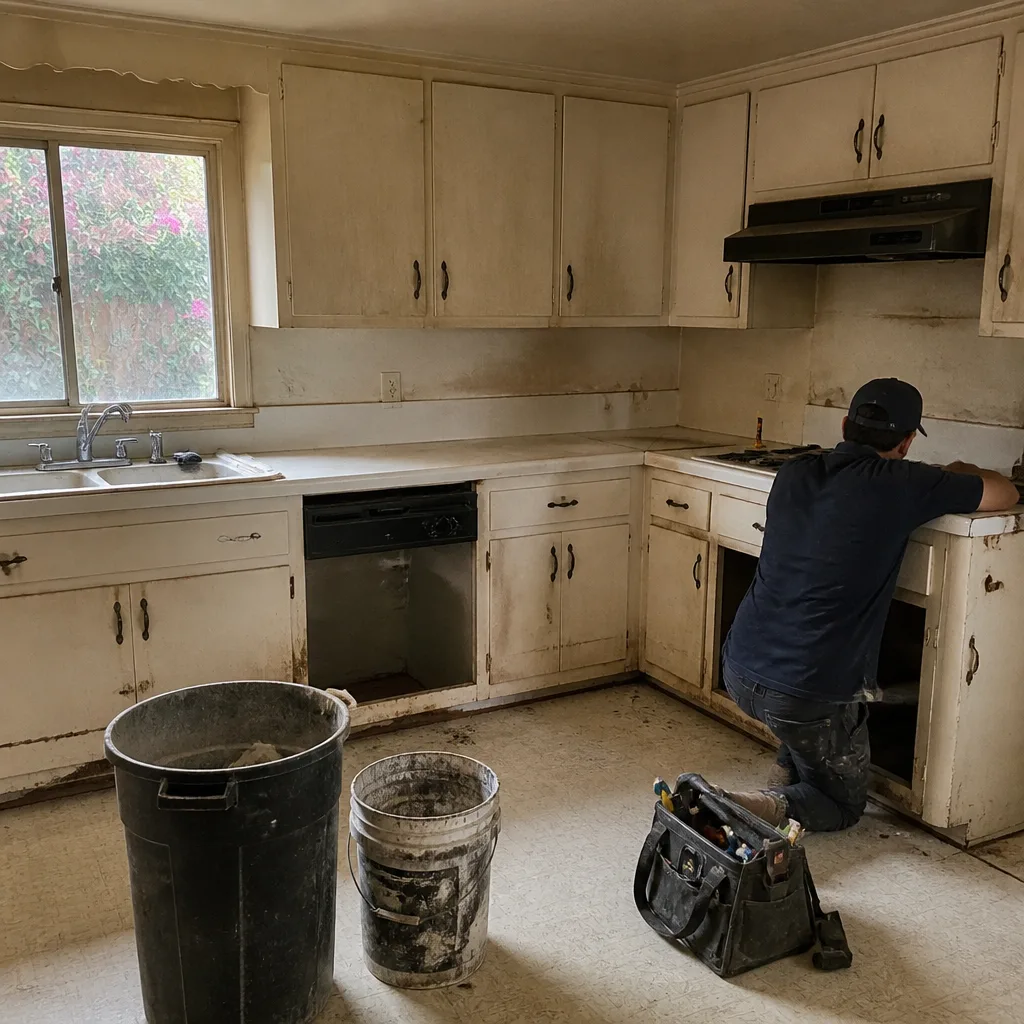 Before
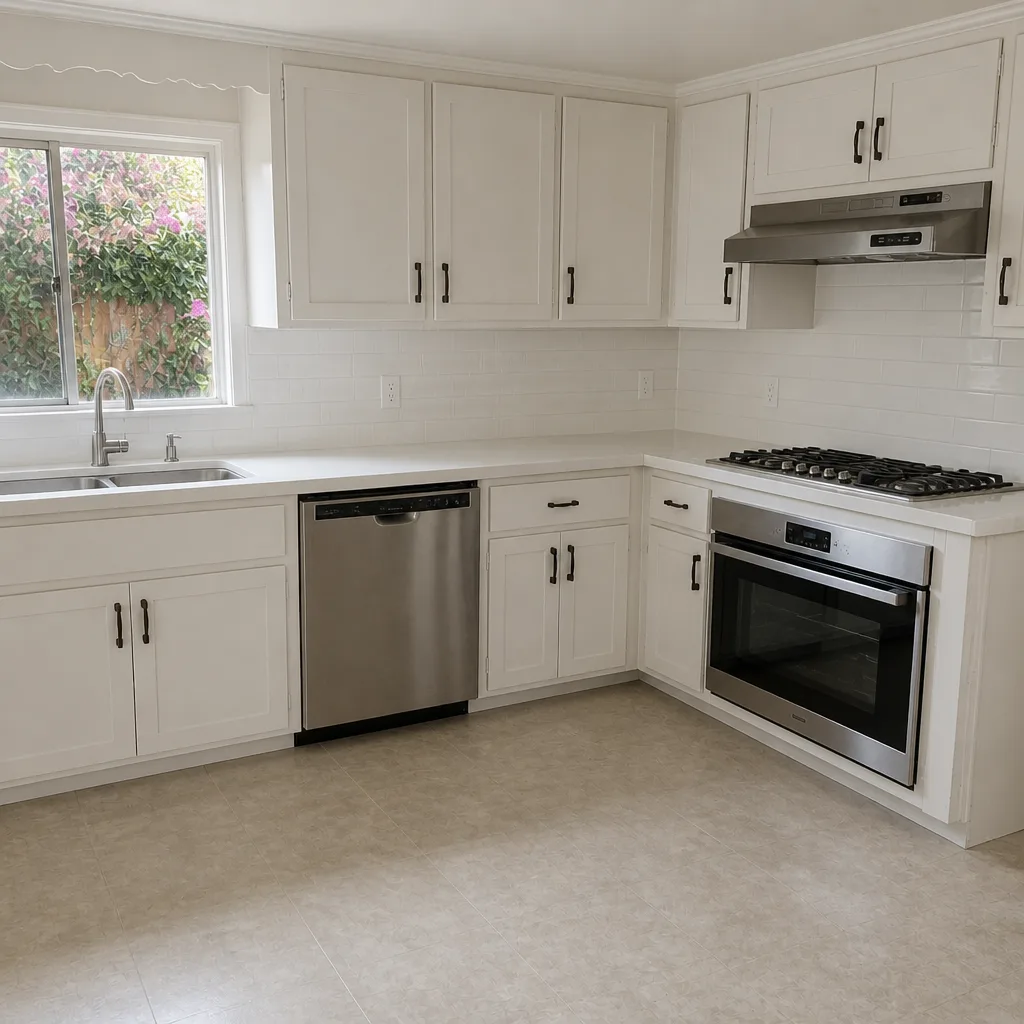 After
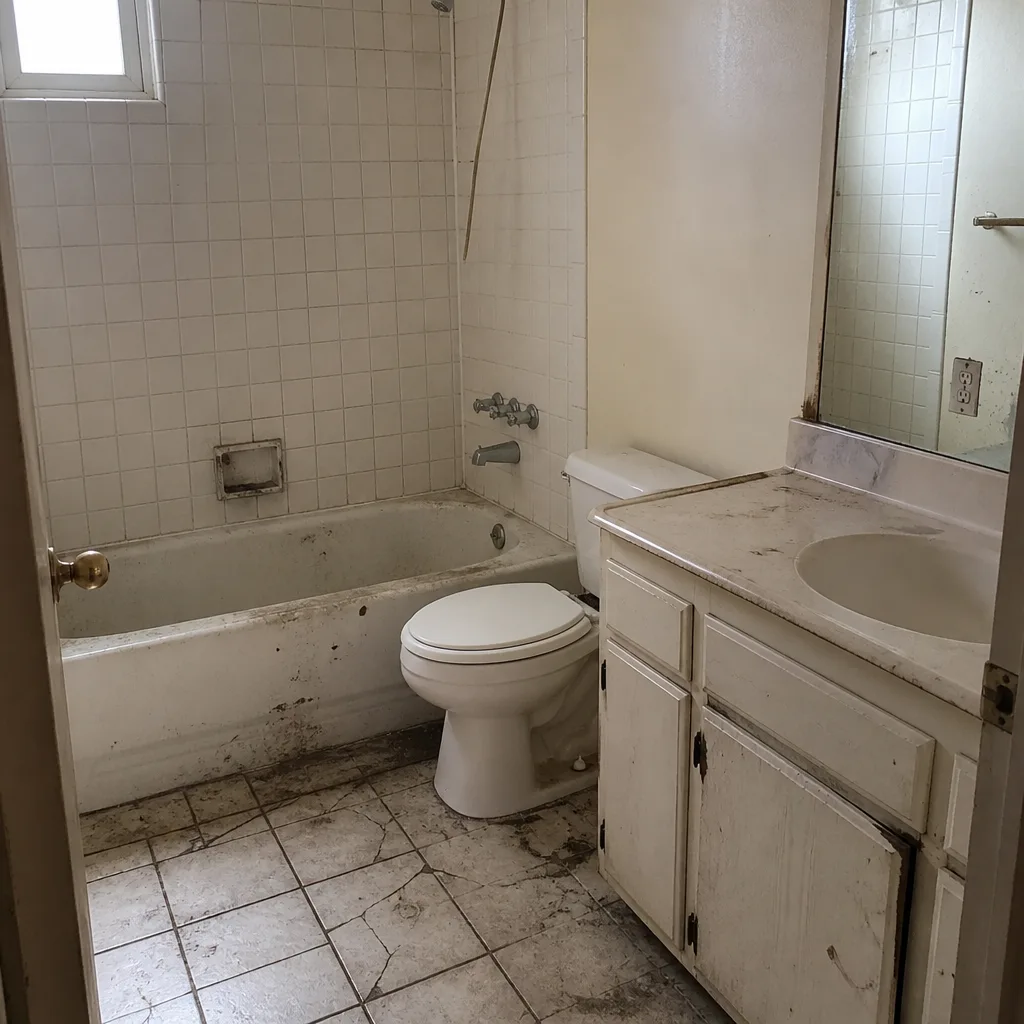 Before
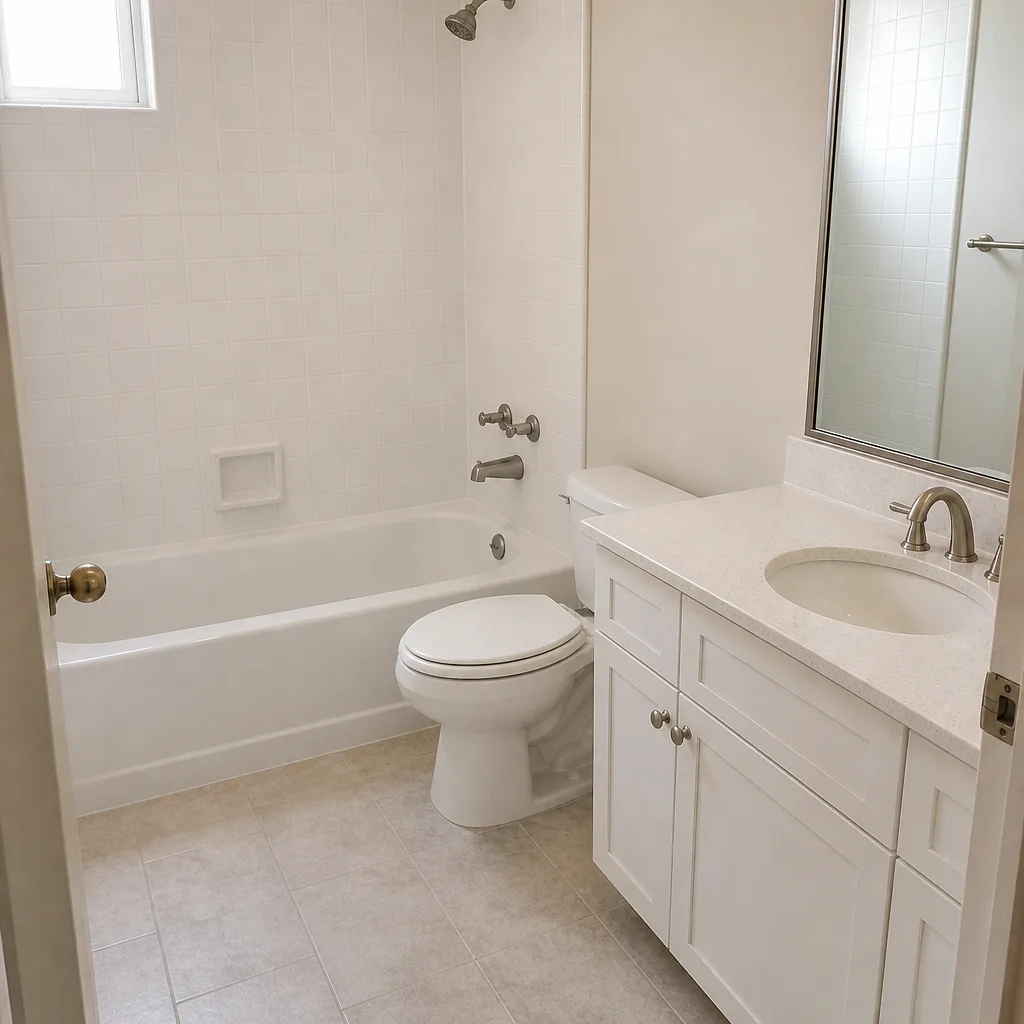 After
When to Call a Professional
Some driveway issues are cosmetic. Others are structural, and a trained eye spots the difference in minutes. Call us if pavers are rocking underfoot, if the joint sand is washing out faster than annual maintenance should require, if the surface is releasing rusty water or efflorescence that won’t clean up, or if a section of driveway has dropped noticeably against the garage apron. Also call if you’re planning any of the triggers above: an HOA-driven replacement, a change to drainage, or a larger exterior project where hardscape is one piece of a bigger picture. Groundwork Construction Co. of Newport Beach offers free estimates in Newport Beach. Call (833) 749-3967 to schedule yours. When you call, a live person answers, day or night.
Frequently Asked Questions
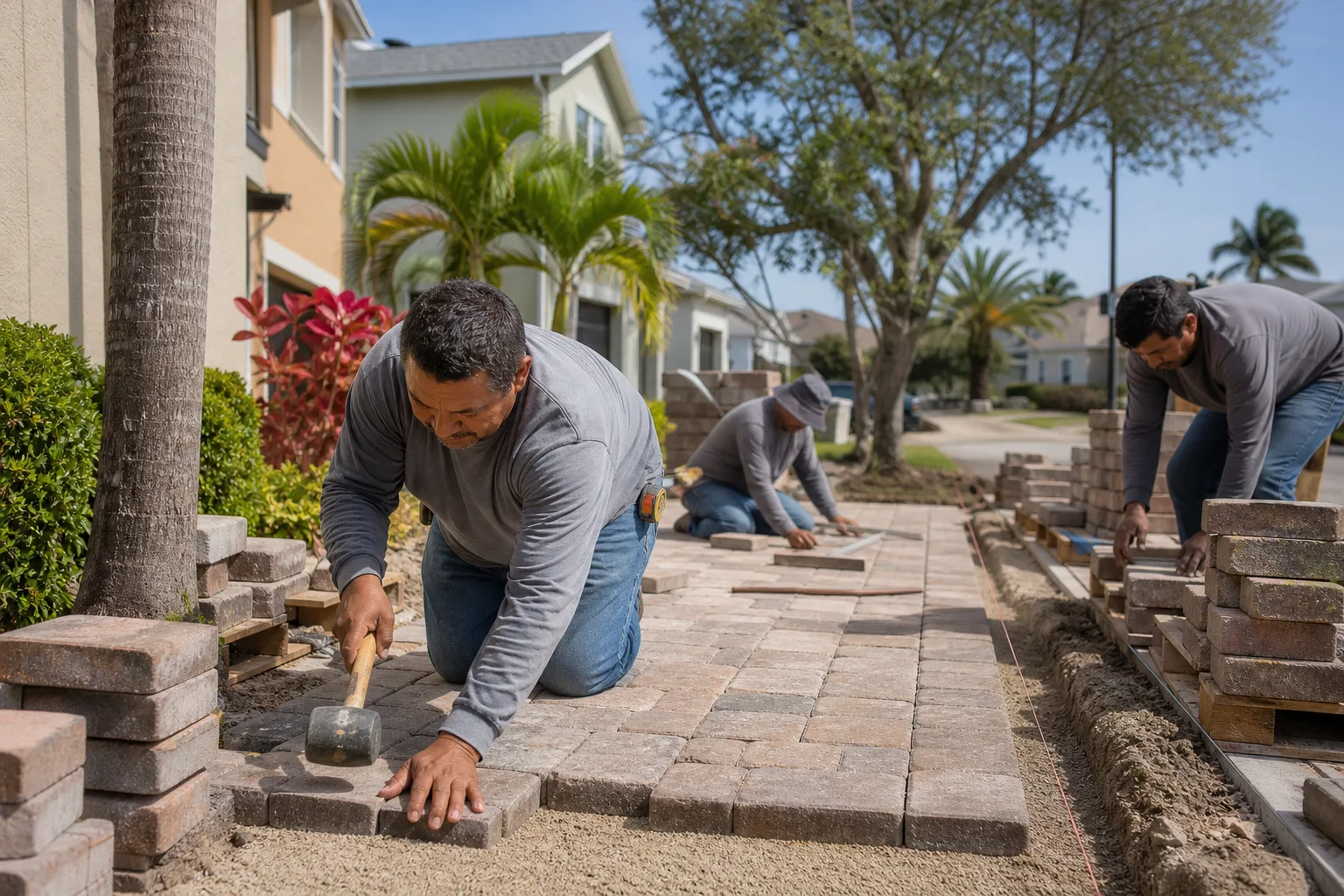
Driveway paver installation in Newport Beach runs roughly $18 to $32 per square foot installed, or $11,000 to $26,000 for a typical two-car driveway, and the high end reflects premium materials, tight access on peninsula properties, and coastal-specific base work. Call (833) 749-3967 for an exact quote on your driveway. Estimates are free and itemized.
Repairs that restore the existing surface usually don’t require a building permit, but full replacements that change slope, footprint, or drainage typically do, and properties in coastal or stormwater management areas face additional review. Your HOA may also require design approval separate from the city. Call (833) 749-3967 and we’ll walk you through what your specific property needs before you commit to anything.
Porcelain and clay pavers hold color and resist salt best, followed by integrally pigmented concrete pavers from established manufacturers. Surface-colored concrete pavers can fade or effloresce within a few seasons in Newport Beach specifically. Call (833) 749-3967 for help picking a material that fits your style, budget, and HOA palette.
Yes, in most cases, and the fix depends on whether the pavers or the base underneath have failed. Rocking pavers usually mean a localized base failure that can be repaired without replacing the whole driveway. Widespread settlement on a driveway installed with a thin or poorly compacted base is usually a full replacement. Call (833) 749-3967 for an assessment. Estimates are free.
Not universally, but they’re increasingly part of the conversation for projects that affect drainage or impervious coverage, and some HOAs and city requirements now push toward them on qualifying properties. Permeable systems also need specific base design to perform correctly on coastal soil. Call (833) 749-3967 to find out whether a permeable system makes sense on your lot.
A properly installed paver driveway on a well-compacted base should last 25 to 30 years or more, even in coastal conditions. The pavers themselves typically outlast the installation. The base is what determines the lifespan. If the base was done right, you’re likely looking at joint sand maintenance and resealing, not replacement. Call (833) 749-3967 for a free inspection if you’re unsure about the condition of yours.
The Bottom Line
Newport Beach driveways are a different animal, and the guides written for inland California miss the point. Base preparation matters more here because the native soil moves more and the fill under older properties is inconsistent. Salt air and UV push material selection toward integrally pigmented pavers, porcelain, or genuine natural stone with a manufacturer’s coastal-exposure statement. HOA design review and City of Newport Beach permit triggers belong in your budget and timeline from day one. Permeable systems are increasingly worth a serious look for the drainage and environmental reasons. And the cost is real: $18 to $32 per square foot installed, not the inland averages. Get the base, materials, and coordination right, and a paver driveway is a 25-year asset. Get them wrong, and you’ll be doing this again in three years.
Groundwork Construction Co. of Newport Beach brings the 730-Day Done Right Promise to every driveway project we take on. If it isn’t done right, we make it right. Background-checked, uniformed technicians on every project. Upfront pricing, no surprises. From foundation to finish line, on a workmanship guarantee built to last, backed in writing.
Ready to get a real number on your Newport Beach driveway? Call (833) 749-3967 to schedule your free estimate and design consult. Projects over $10,000 get $1,000 off, and 0% financing for 18 months is available on qualifying projects. Live person, 24/7. Start with our Groundwork Construction Co. of Newport Beach home page or explore Driveway & Pavers in Newport Beach to see the full scope of what we do.
Written by the team at Groundwork Construction Co. of Newport Beach.