Last updated November 17, 2026



Free written scope consultation - allowances, timeline, and change-order rules on paper before a single trade is scheduled
The Complete Bathroom Remodeling Guide for Newport Beach Homeowners
A bathroom that performs flawlessly in Sacramento will sometimes fail within two years in a Newport Beach home two blocks from the water. The difference usually isn’t the contractor’s skill level. It’s whether anyone on the job understood what marine-layer humidity does to grout, hardware, and ventilation. We’ve walked into Newport Beach bathrooms where the tile looked new but the shower pan was already soft, and we’ve seen chrome faucets pitted like sandpaper after a single summer. Newport Beach sits in a salt-air corridor where the ocean pushes moisture inland every night, and a bathroom is the one room in the house where that moisture never gets to leave. This guide covers what actually holds up here: which materials survive, how the permit process works, what a realistic budget looks like at each scope, and where the money genuinely matters. If you’re planning a bathroom remodel in Newport Beach, read this before you sign anything.
Quick Answer
A bathroom remodel in Newport Beach generally runs from about $18,000 for a cosmetic refresh to $65,000+ for a full gut with a layout change, driven by coastal-grade materials, local permit requirements, and Orange County labor rates. The two things that determine whether it lasts are waterproofing and ventilation: a properly sloped, sealed shower system and an exhaust fan that actually moves coastal humidity out of the room. Everything else – tile choice, fixtures, vanity – should be selected with salt air and year-round moisture in mind, not just the showroom lighting.
Styles & brands we work with
- Kitchen remodeling
- Bathroom remodeling
- Home additions & ADU
- Roofing
- Windows & doors
- Driveway & pavers
- Fence
Table of Contents
- Why Coastal Bathrooms Fail Differently
- Newport Beach Permits: When You Need One and What Triggers Inspection
- What a Bathroom Remodel Costs in Newport Beach by Scope
- Ventilation Standards That Prevent Coastal Mold
- A Material Selection Framework for the Marine Environment
- Waterproofing: Where Generic Standards Fall Short
- The Step-by-Step Process of a Newport Beach Bathroom Remodel
- Common Mistakes to Avoid
- When to Call a Professional
- Frequently Asked Questions
Why Coastal Bathrooms Fail Differently
Newport Beach has a marine layer that parks itself over the coast most mornings from May through September, and it feeds a constant supply of moist air into every home near the water. That moisture doesn’t sit still. It migrates toward the warmest, wettest room in the house, which is almost always the bathroom. Add two to four showers a day and you have a room that stays humid for hours after the fan clicks off.
Salt air adds a second layer of stress. It’s mildly corrosive to standard chrome, zinc-plated hardware, and the thin protective coatings on cheap fixtures. Homes in Corona del Mar and along the Balboa Peninsula show this fastest because they’re closest to the surf zone, but we see the same wear in Newport Heights and Eastbluff, just spread over more years. The salt doesn’t need to reach the bathroom directly. It rides on the prevailing air and deposits a fine film on every surface.
Then there’s what we call the shower pan problem. Standard drywall and green board behind tile can tolerate a small leak for a while. In a bathroom that never fully dries out, that small leak becomes a slow rot that shows up as a soft floor tile or a hairline crack near the drain. By the time a Newport Beach homeowner notices it, the subfloor is often involved.
What this means for your remodel: material selection and waterproofing standards that work inland are a gamble here. The good news is that the fixes are known and predictable once you plan around them. The rest of this guide is about planning around them.
Newport Beach Permits: When You Need One and What Triggers Inspection
Newport Beach requires a building permit for most bathroom remodels that involve moving plumbing, electrical, or walls. Cosmetic-only work – paint, surface tile over existing sound tile, swapping a vanity or a light fixture without touching wiring or the drain – can sometimes proceed without a permit, but “sometimes” is doing a lot of work in that sentence. The safe rule is to ask the city’s building division directly before work starts, and to get the answer in writing.
Here’s the practical breakdown of what triggers a permit and an inspection versus what usually doesn’t:
- Full gut remodel: Permit required. You’re opening walls, replacing the shower system, and often rerouting the drain and supply lines.
- Moving or adding a fixture: Permit required. Relocating a toilet, adding a second sink, or moving the shower valve means new plumbing rough-in, and rough-in always gets inspected before the wall goes back up.
- Changing a tub to a walk-in shower: Permit required in most cases, because the drain location, waterproofing, and often the framing change.
- New exhaust fan or upgraded ventilation: Permit required if new electrical circuits or duct runs through the wall or roof are involved.
- Cosmetic refresh only: Often no permit, provided you’re not altering plumbing, electrical, or structural elements.
The inspection sequence matters, too. In a permitted Newport Beach bathroom remodel, expect a rough-in inspection after framing and plumbing are complete but before anything is closed up, then a final inspection after fixtures and finishes. Skipping or rushing the rough-in is where problems hide. If a crew is pushing back on pulling a permit for a full gut, that’s a red flag worth taking seriously. A permitted job that passes inspection is one you can document when you eventually sell the home, and in Newport Beach real estate, that paperwork matters.
What a Bathroom Remodel Costs in Newport Beach by Scope
Bathroom costs in Newport Beach run higher than the county average because of coastal material requirements and labor availability in a high-demand zip code. Below are realistic ranges we see, broken down by scope. Treat these as planning benchmarks, not a bid – every home is different – but they’re grounded in what actually gets spent here.
| Scope | Typical Range | What’s Included | Timeline |
|---|---|---|---|
| Cosmetic refresh | $18,000 – $32,000 | Paint, new vanity, fixtures, mirror, lighting, refinished or replaced floor tile | 1-2 weeks |
| Mid-scope remodel | $32,000 – $48,000 | New tile shower with proper waterproofing, new floor, vanity, fixtures, ventilation upgrade | 3-4 weeks |
| Full gut, same layout | $48,000 – $65,000 | Gut to studs, new plumbing rough-in, new shower system, all finishes, exhaust upgrade | 4-6 weeks |
| Full gut with layout change | $65,000 – $90,000+ | All of the above plus relocated fixtures, framing changes, possible structural work | 6-9 weeks |
Where the money actually goes, in rough proportion:
- Labor: The single largest line, typically 40-50% of the total in a full gut. Orange County tile setters and plumbers are in demand, and the good ones aren’t cheap.
- Shower system: A properly waterproofed, coastal-rated shower build is often $8,000-$15,000 on its own. This is not where you cut corners.
- Fixtures: A wide range here. Coastal-rated finish sets run from a few thousand dollars to well over ten.
- Ventilation: A proper high-CFM exhaust fan with balanced duct routing is a modest cost relative to the damage it prevents.
- Tile and stone: Natural stone adds cost and requires more sealing in a coastal bathroom. Porcelain performs well and costs less.
- Permits and inspections: Newport Beach permit fees for a bathroom remodel are modest but real, and they’re usually a line item in a straight bid.
Prices climb noticeably in the neighborhoods where access is tricky – the Peninsula and Balboa Island can slow material delivery and dumpster placement – and in homes with older galvanized or cast-iron plumbing that turns a simple swap into a rerouting job. If your home was built before the 1980s, budget a contingency. For a broader look at how we structure pricing across every service line, see the Groundwork Construction Co. of Newport Beach home.
Ventilation Standards That Prevent Coastal Mold
This is the section most remodeling guides skip, and it’s the one that determines whether a Newport Beach bathroom stays clean or turns into a mold farm. A bathroom exhaust fan needs to move a specific volume of air per minute (CFM), and the number depends on the room’s size.
Here’s the standard we build to:
- Size the fan to the room. For bathrooms under 50 square feet, a minimum of 50 CFM. For larger bathrooms, add roughly 1 CFM per square foot above the base. A typical 80-100 square foot Newport Beach master bath needs a 100-120 CFM fan, and a large marina-view master with a soaking tub and a separate shower wants 150 CFM or more.
- Run the fan while showering and for 20-30 minutes after. The moisture is in the air long after the water stops. A fan that clicks off with the light switch leaves that moisture behind.
- Route the duct to the exterior, never into the attic. Short, straight duct runs with as few elbows as possible. Duct that terminates in the attic or a crawlspace pushes moisture into the framing, and in coastal humidity that’s a recipe for trouble.
- Choose a high-quality fan, not builder-grade. Builder-grade fans are loud and underpowered, and homeowners stop using them. A quiet, effective fan gets used, and used fans prevent mold.
- Consider a humidity-sensing fan. These run on a timer or humidity sensor so the moisture clears without anyone remembering to switch them off. In a coastal Newport Beach bathroom, this is one of the highest-value upgrades you can make.
We’ve seen bathrooms in Newport Heights with beautiful tile work and a $60 hardware store fan that grew mold behind the vanity within a season. The ventilation wasn’t an afterthought; it was the whole story. Ventilation is not a place to save money.
A Material Selection Framework for the Marine Environment
Picking finishes for a Newport Beach bathroom is about balancing durability with the look you want. The marine environment will shorten the life of anything cheap, so choose materials that resist corrosion, moisture, and salt. Here’s the framework we use with homeowners, and the specifics that matter.
Fixtures and hardware
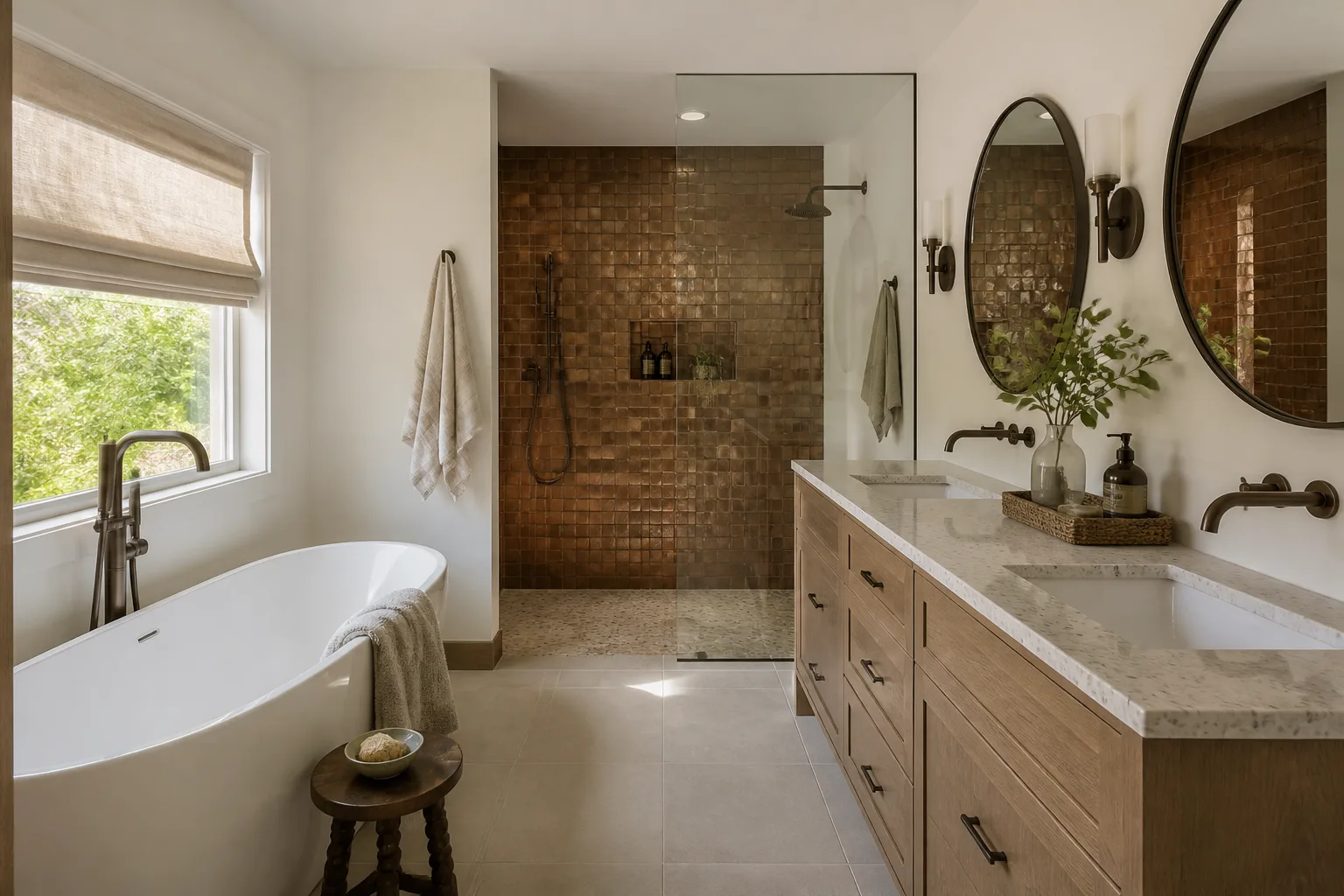
Standard chrome and polished nickel can pit in coastal air over time. PVD finishes and brushed nickel or bronze hold up better, and solid brass bodies outperform plated zinc. Kohler’s PVD-finished lines are a known performer in Orange County coastal homes, and their ceramic cartridges outlast generic imports. Spend the money here. A faucet that fails in year three is a plumbing job, not a cosmetic swap.
Tile and grout
Porcelain tile is the right call for most Newport Beach bathrooms. It’s dense, moisture-resistant, and stands up to salt air better than natural stone. If you love natural stone, marble and travertine need regular sealing and still show wear faster near the coast. The bigger decision is grout: choose an epoxy or high-performance urethane grout formulated for high humidity. Standard cementitious grout in a coastal bathroom absorbs moisture, discolors, and eventually cracks. The grout is doing more work than the tile.
Vanity and cabinetry
Solid wood or high-quality plywood construction with a moisture-resistant finish. Particleboard vanity boxes in a humid bathroom are a two-to-five year decision. KraftMaid offers a range of finishes and materials that perform in coastal climates, and we spec their cabinetry in bathrooms as well as kitchens because the durability story is consistent.
Exterior-facing elements
If your bathroom has an exterior wall or window that takes on weather, the material selection extends outside the room. Window frames in a coastal bathroom need to resist salt and moisture. We install PGT and similar coastal-rated windows and doors on homes near the water, which you can learn more about through our windows and doors work.
Waterproofing: Where Generic Standards Fall Short
Most bathroom failures start at waterproofing, and most waterproofing failures start with the assumption that a moisture barrier and a tiled shower are enough. Near the coast, they aren’t. Here’s what a properly built Newport Beach shower system looks like compared to what we tear out.
What builders often do: install a vapor barrier behind cement board, pack a tiled shower floor over a sloped mortar bed with a pan liner, and caulk the edges. That system can work inland. In a bathroom that stays humid for hours every day, it often doesn’t – water gets trapped between the tile and the pan liner with nowhere to evaporate, and a soap-scum film hides the problem until the floor gives.
What we build:
- Surface-applied waterproof membrane over the entire shower enclosure – walls, curb, and pan – bonded directly under the tile so there’s no void for water to collect in.
- A pre-sloped shower pan so water drains from every inch of the floor toward the drain. No flat spots. No ponding.
- Reinforced corners and seams at every change of plane, because those are the first places conventional waterproofing leaks.
- A flood test – fill the pan and let it sit for 24 hours before tile goes down. If it doesn’t hold, we find out before the tile hides the evidence.
- Avoid a vapor-tight layer on both sides of the wall. You want the assembly to dry in one direction, not trap moisture between two barriers.
This is the single most important part of a coastal bathroom remodel, and it’s invisible when the job’s done. That’s why we document it, and why the work is covered by our 730-Day Done Right Promise – if it’s not done right, we make it right. Waterproofing failures are expensive to fix, and they shouldn’t be the homeowner’s problem.
The Step-by-Step Process of a Newport Beach Bathroom Remodel
A well-run bathroom remodel follows a sequence. Here’s how we move a Newport Beach project from first call to final walkthrough, and what you should expect at each stage.
- Free estimate and design consult. We measure the room, look at the existing plumbing and electrical, and talk through scope and budget. You get a written line-item quote with the scope defined and the price fixed.
- Permit application and scheduling. If the job requires a permit – and a full gut almost always does – we pull it before work starts. The permit defines the inspection sequence, and we don’t skip it.
- Demo and site protection. Dust barriers, floor protection, and daily cleanup. Material for the rest of the project should go on order before demo starts to avoid dead time.
- Rough-in plumbing and electrical. Drain and supply lines, new valve, exhaust fan wiring. This is when the rough-in inspection happens, before the walls close.
- Framing and backer work. New framing where the layout changed, cement board or approved substrate, and the surface waterproofing applied with corners reinforced.
- Flood test. A 24-hour water test on the shower pan. This is the step that separates a serious crew from a fast one.
- Tile and finish work. Tile setting, grout, vanity install, fixtures, lighting, and paint. This is the phase that runs longest, and the one where the details matter most.
- Final inspection and walkthrough. The city inspector signs off, we walk the room with you, and we hand over the warranty and product documentation.
If you’re also updating other parts of the property, we handle those projects with the same standard. Home Additions & ADU in Newport Beach is a natural pairing with bathroom and kitchen work, and Driveway & Pavers in Newport Beach covers the exterior. A bathroom remodel often turns into a larger project once homeowners see what a single well-run crew looks like. That’s a good thing, and we plan for it.
Common Mistakes to Avoid
- Skipping the flood test. A builder who tiles over a shower without flooding the pan first is hoping it holds. In coastal Newport Beach, hope isn’t a waterproofing strategy. Insist on a 24-hour test before tile.
- Installing a builder-grade exhaust fan. The fan is the cheapest line item in the room and the one that prevents the most expensive damage. A 50 CFM fan in a 120 square foot master bath won’t clear coastal humidity, and the mold starts in a season.
- Choosing a finish because it looked good in the showroom. Standard chrome can show salt-air pitting within a few years near the water. Ask about PVD or brushed finishes and solid brass bodies before you commit.
- Rolling the dice on a permit for a full gut. When you sell a Newport Beach home, a permitted, inspected bathroom is a stronger asset than an unpermitted one. A crew that suggests skipping the permit is telling you something about how they work.
- Using standard cementitious grout in a coastal bathroom. Epoxy or high-performance urethane grout costs a little more and holds up dramatically better in a room that’s humid most of the year.
- Not budgeting a contingency for older plumbing. Homes built before the 1980s in Newport Beach often have plumbing that looks fine until the wall opens. A 10-15% contingency prevents surprises mid-project.
- Hiring on price alone. The lowest bid on a coastal bathroom remodel is often the one with the thinnest waterproofing and the cheapest fan. Compare scopes line by line before you compare totals.
When to Call a Professional
Some bathroom updates are safe for a handy homeowner. Swapping a faucet, painting, or installing a new mirror is fine. But if your project touches plumbing rough-in, electrical circuits, shower waterproofing, structural framing, or permits, it belongs with a licensed, insured professional – especially in Newport Beach, where the coastal environment punishes shortcuts and the permit process is real. The scenarios that call for a pro include any shower or tub replacement, any layout change, any bathroom older than thirty years where the plumbing is unknown, and anything that needs a rough-in inspection before the walls close.
Groundwork Construction Co. of Newport Beach offers free estimates in Newport Beach – call (833) 749-3967. Our technicians have up to 12 years of experience, arrive background-checked and in uniform, and answer the phone with a live person around the clock. You get a written line-item quote, a fixed price with no change-order games, and the 730-Day Done Right Promise backing the work.
Frequently Asked Questions
A bathroom remodel in Newport Beach typically costs $18,000 to $65,000 depending on scope – a cosmetic refresh runs $18,000 to $32,000, a mid-scope remodel $32,000 to $48,000, and a full gut with a layout change $65,000 to $90,000+. The biggest variables are the shower system, coastal material choices, and whether plumbing has to be rerouted. Call (833) 749-3967 for an exact quote – estimates are free.
Yes, in most cases. Any bathroom remodel that moves plumbing, electrical, or walls – and any full gut – requires a Newport Beach building permit and inspection. Cosmetic-only work such as paint, surface tile over sound tile, or a vanity swap without wiring changes often doesn’t require a permit. When in doubt, ask the city in writing. We pull and manage permits as part of the job.
A cosmetic refresh takes 1-2 weeks, a mid-scope remodel 3-4 weeks, a full gut with the same layout 4-6 weeks, and a full gut with a layout change 6-9 weeks. Permitted jobs add time at the inspection stages. The one thing that shouldn’t be rushed is the 24-hour flood test on the shower pan before tile goes down.
The fan is usually undersized or the duct is routed into the attic instead of outdoors. A coastal Newport Beach bathroom needs a fan sized to the room – 100-120 CFM for a typical master bath, 150+ CFM for larger ones – and the duct must run to the exterior on a short, straight path. A humidity-sensing fan with a timed run of 20-30 minutes after showers makes a real difference.
Porcelain tile with epoxy or high-performance urethane grout is the most reliable coastal combo. For fixtures, PVD or brushed finishes with solid brass bodies resist salt-air corrosion better than standard chrome or plated zinc. Kohler’s PVD-finished lines and KraftMaid cabinetry are choices we spec for Orange County coastal homes because they perform.
Yes, a mid-scope remodel can replace the shower, floor, vanity, and ventilation without opening the whole room, provided the existing plumbing and framing are sound and no fixtures are moving. A contractor should verify that during the free estimate before committing. In a home older than thirty years, it’s worth opening a small inspection area to confirm before you commit to a partial scope.
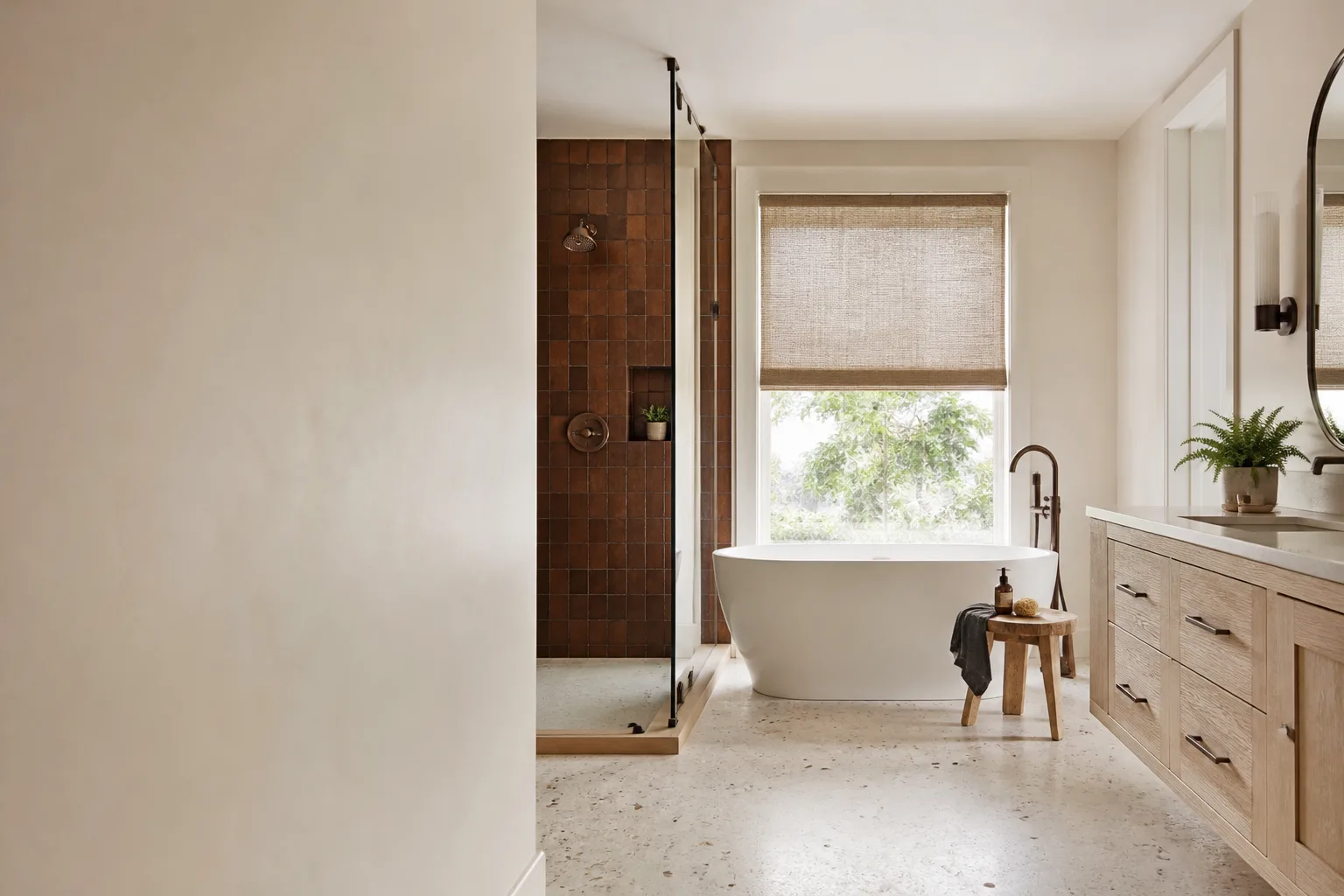
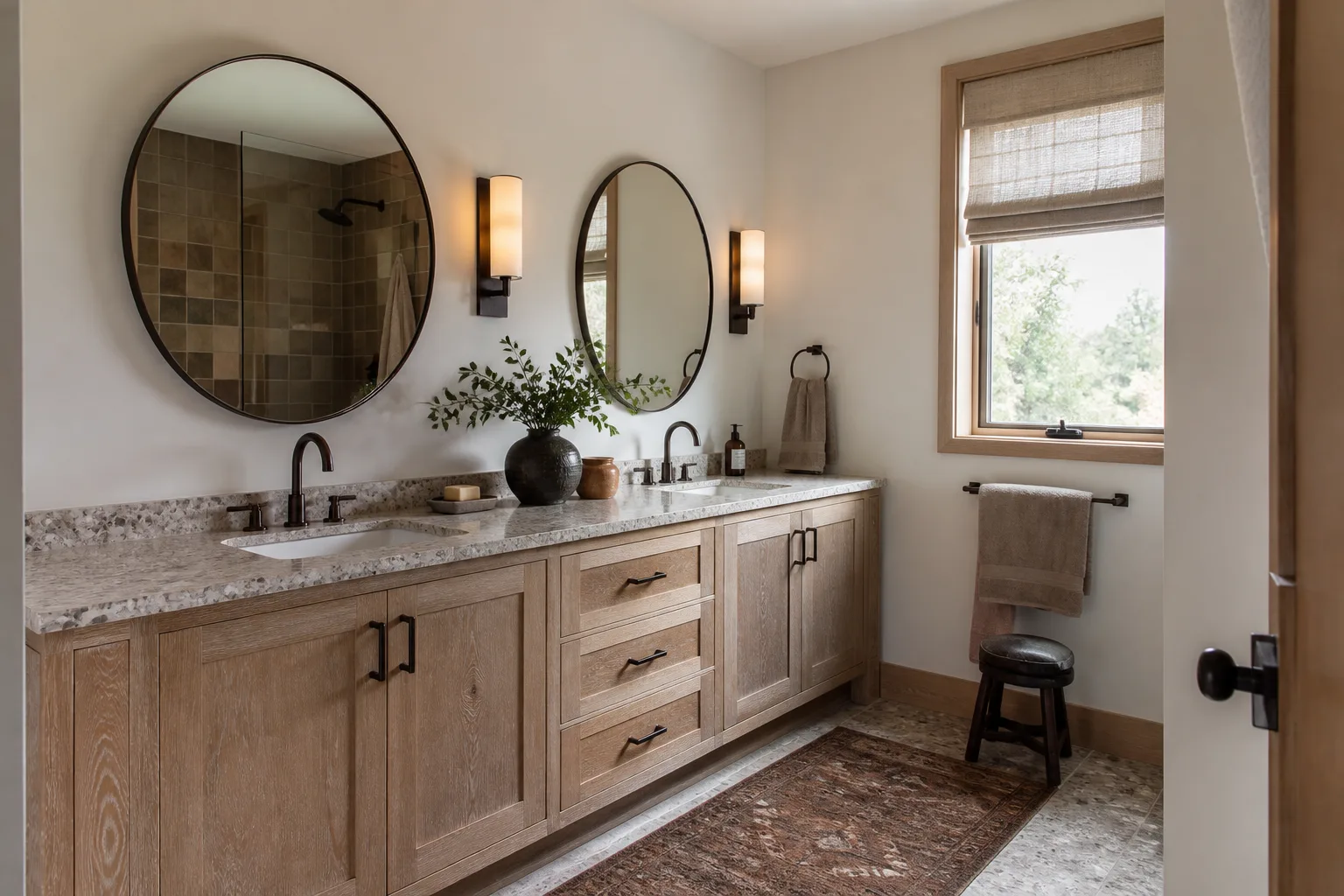
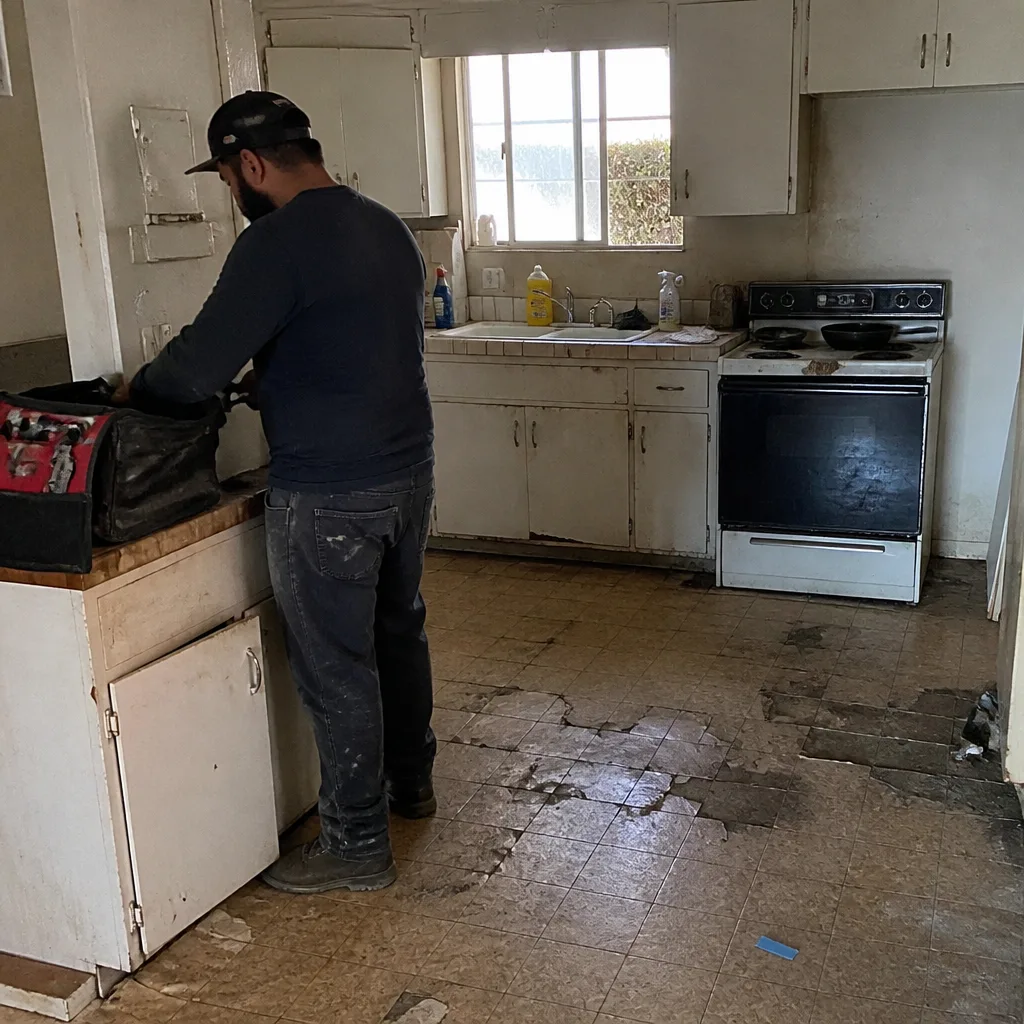
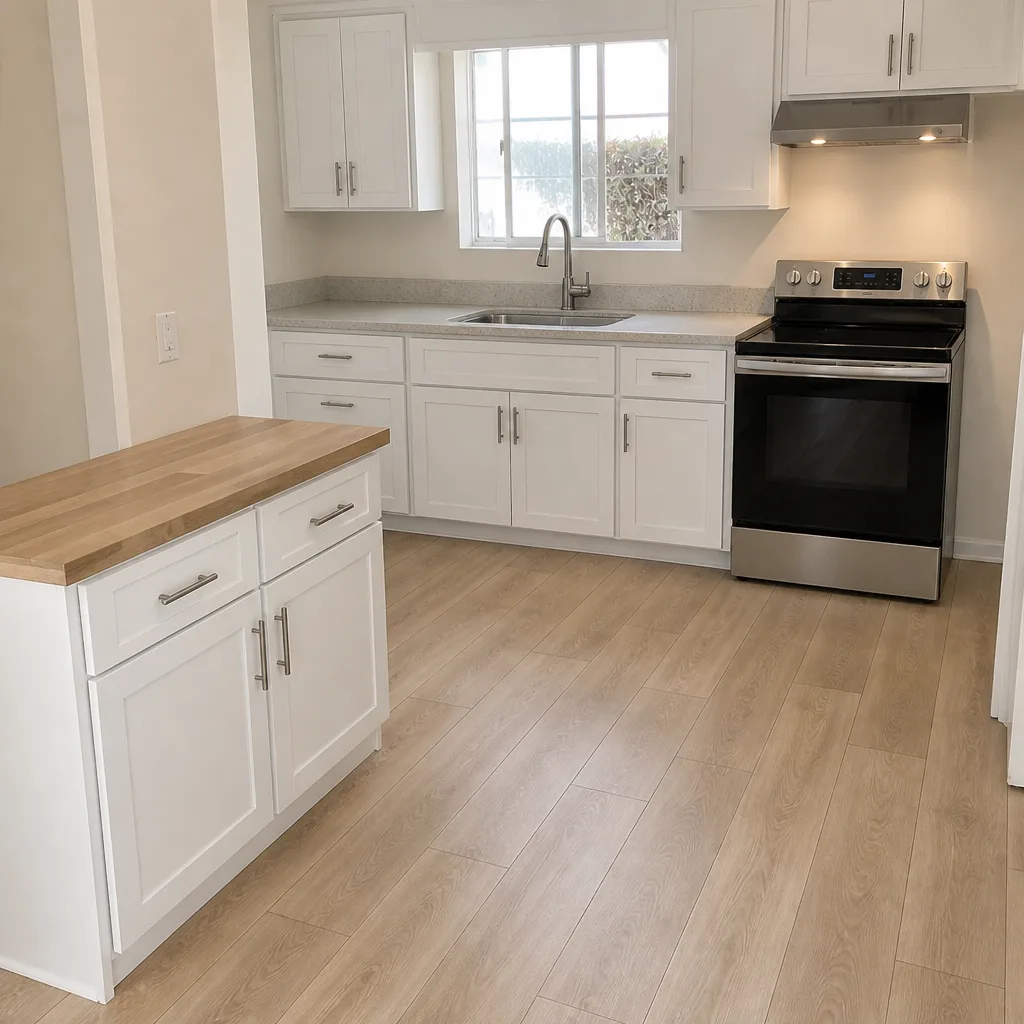
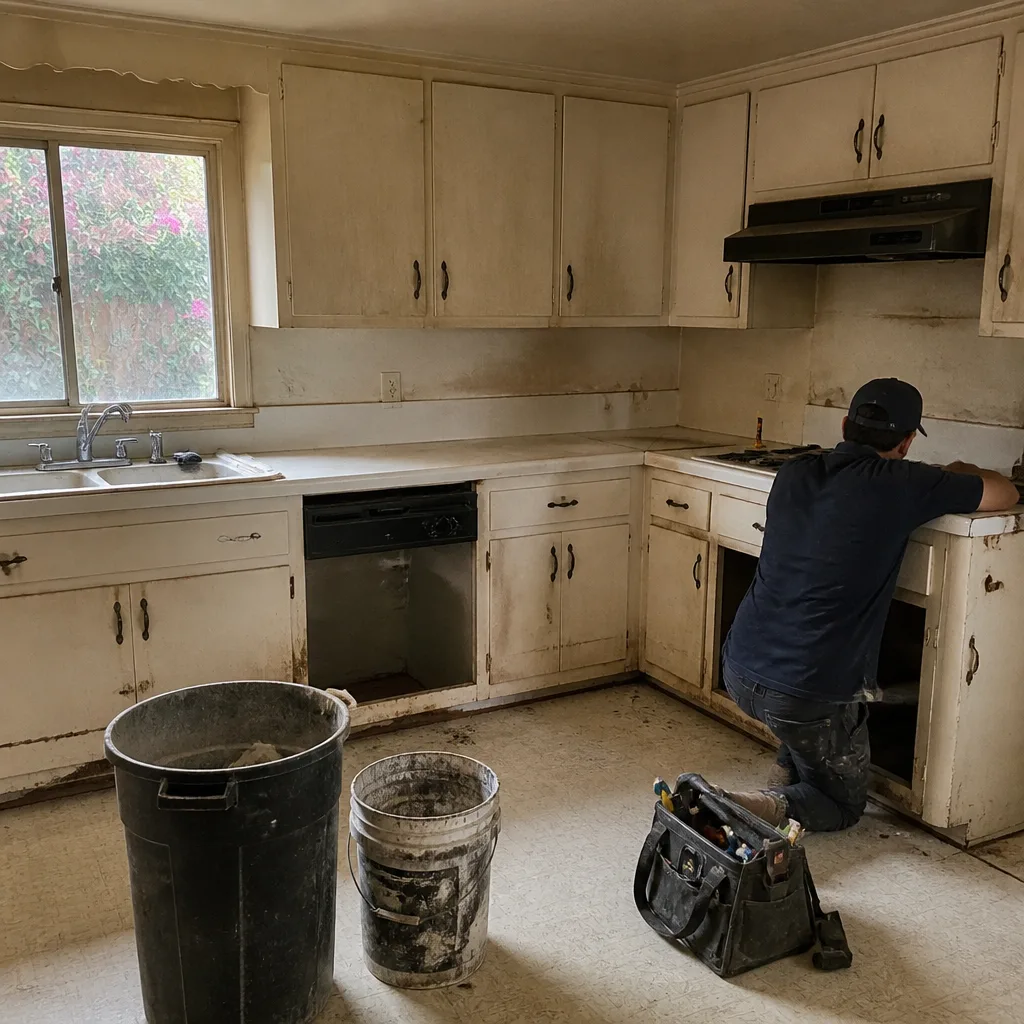
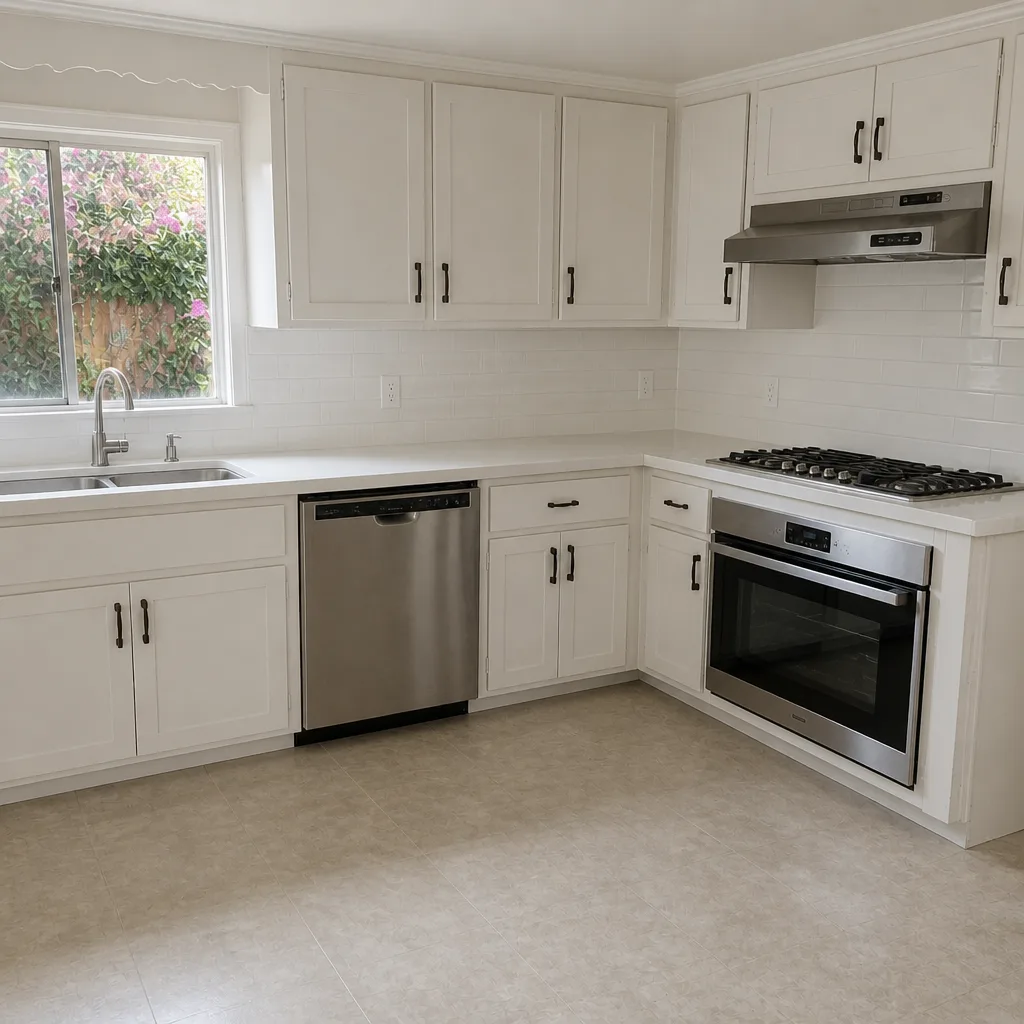
See the difference
 Before
 After
 Before
 After
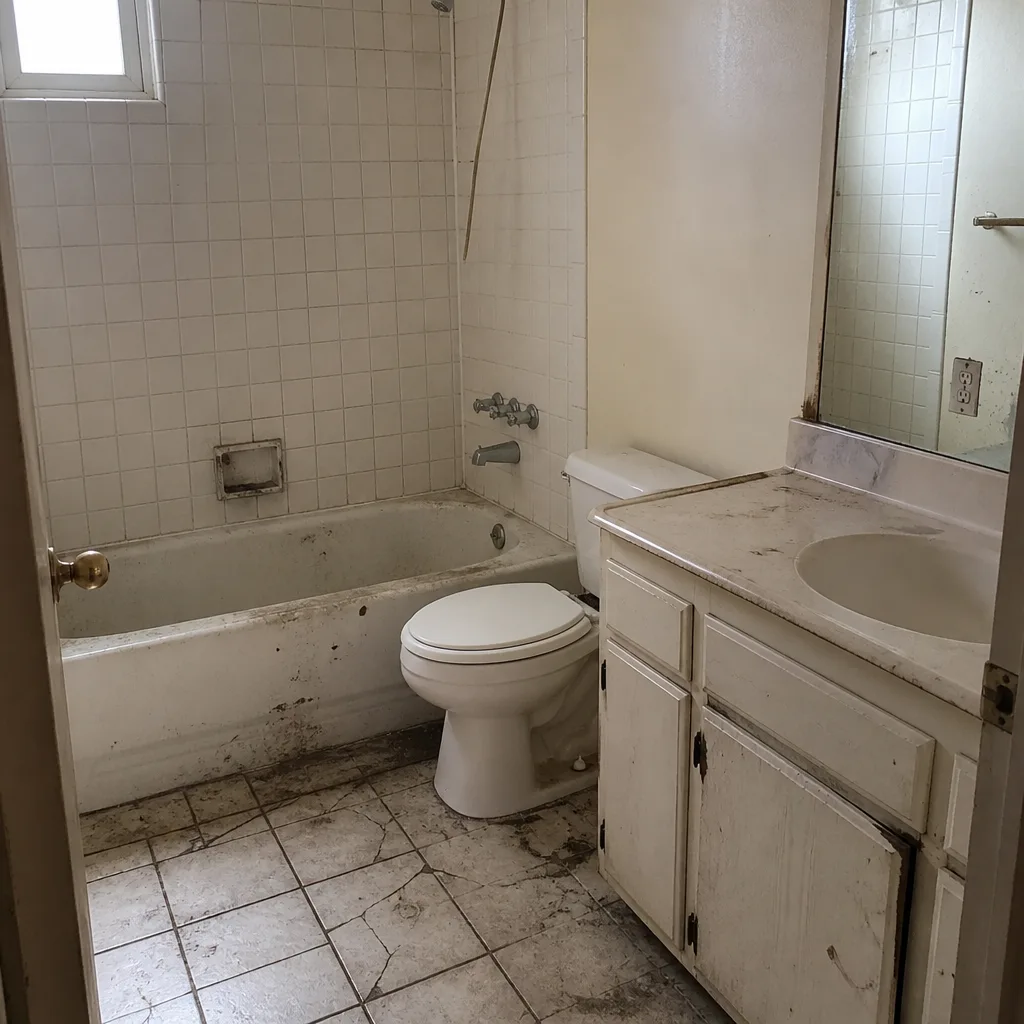 Before
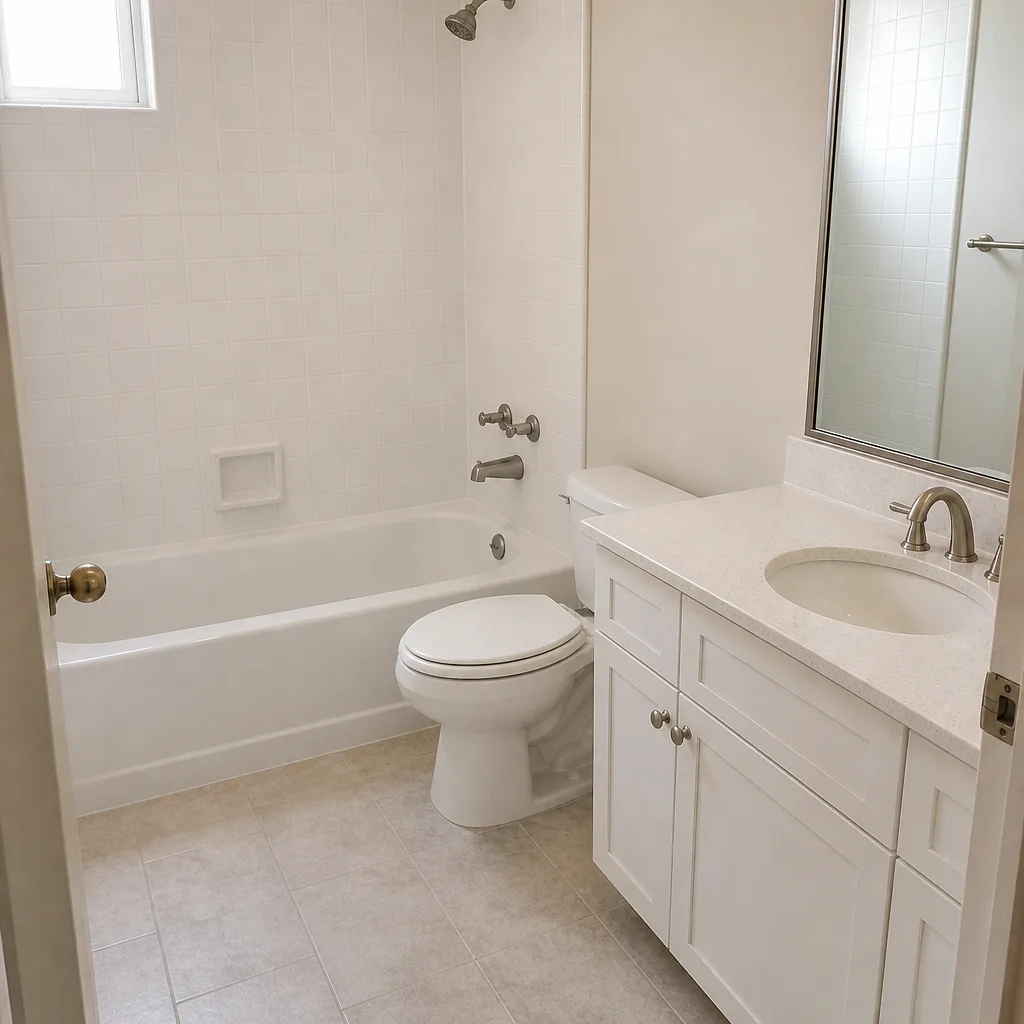 After
The Bottom Line
Newport Beach bathrooms fail for reasons that have nothing to do with the tile style – coastal humidity, salt air, and ventilation systems that were never sized for the marine environment. Get the waterproofing right, size the exhaust to the room, route the duct outdoors, choose materials built for the coast, and pull the permit for anything that touches plumbing or electrical. Those decisions are permanent; the finishes on top can be changed later. If you want the work done once and backed in writing, Groundwork Construction Co. of Newport Beach is ready. Since 2014 we’ve built across our markets with a curated roster of brand partners – GAF, CertainTeed, Andersen, Pella, Belgard, James Hardie, Boral, and dozens more – and every project is covered by the 730-Day Done Right Promise. Calls are answered by a live person, 24/7, and the number you see is the number you pay. From foundation to finish line, one team handles it.
Ready for a Free Estimate?
Call (833) 749-3967 to schedule your free project estimate and design consult. We’ll walk the room, talk through scope and budget, and give you a written line-item quote with no-hassle upfront pricing. If you’re comparing options, ask about our standing offers: $1,000 off projects over $10,000 and 0% financing for 18 months. Whether you’re planning a single bathroom refresh or a larger scope that includes Fence Installation in Newport Beach, we’ll lay it out plainly and put the work in writing, backed by the 730-Day Done Right Promise. Estimates are free, and the call goes to a live person any hour of the day.
Written by the team at Groundwork Construction Co. of Newport Beach.