

Free written scope consultation - allowances, timeline, and change-order rules on paper before a single trade is scheduled
Styles & brands we work with
- Kitchen remodeling
- Bathroom remodeling
- Home additions & ADU
- Roofing
- Windows & doors
- Driveway & pavers
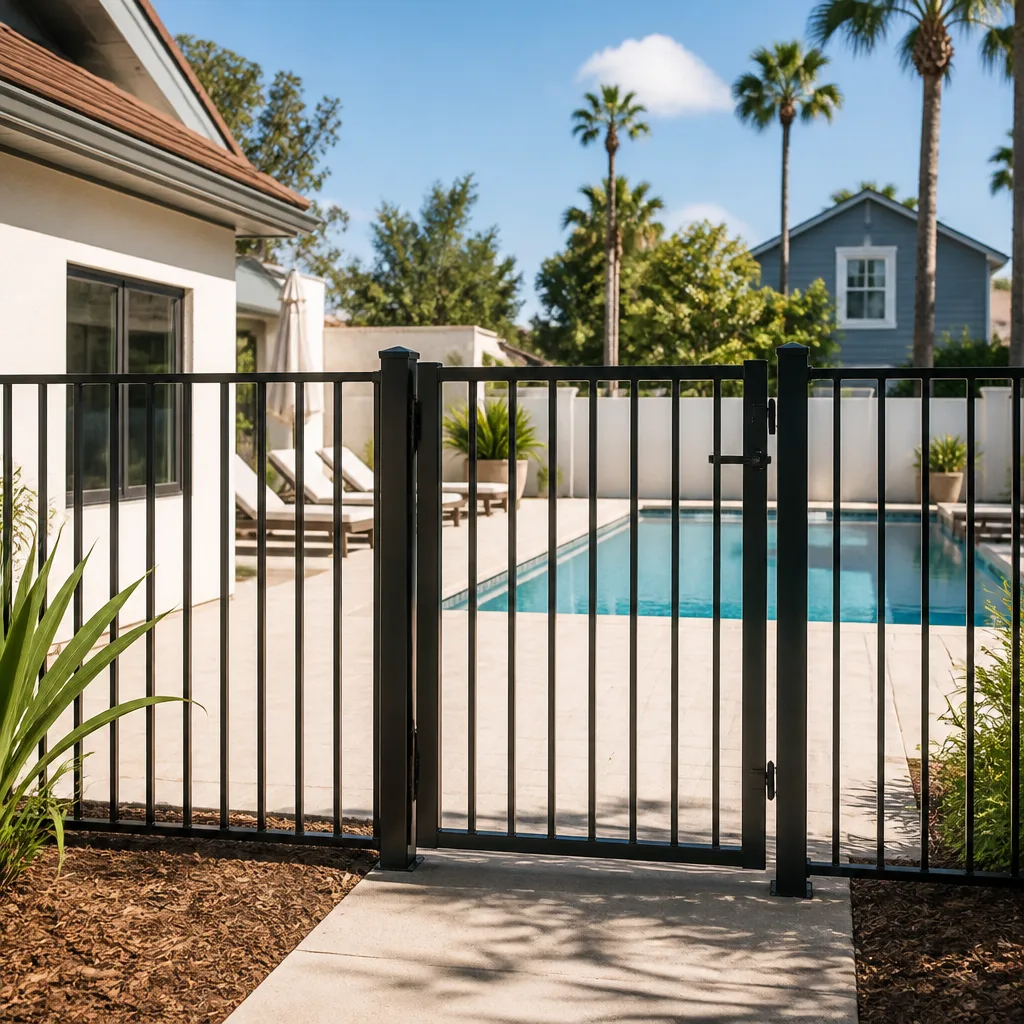
- Fence
See the difference
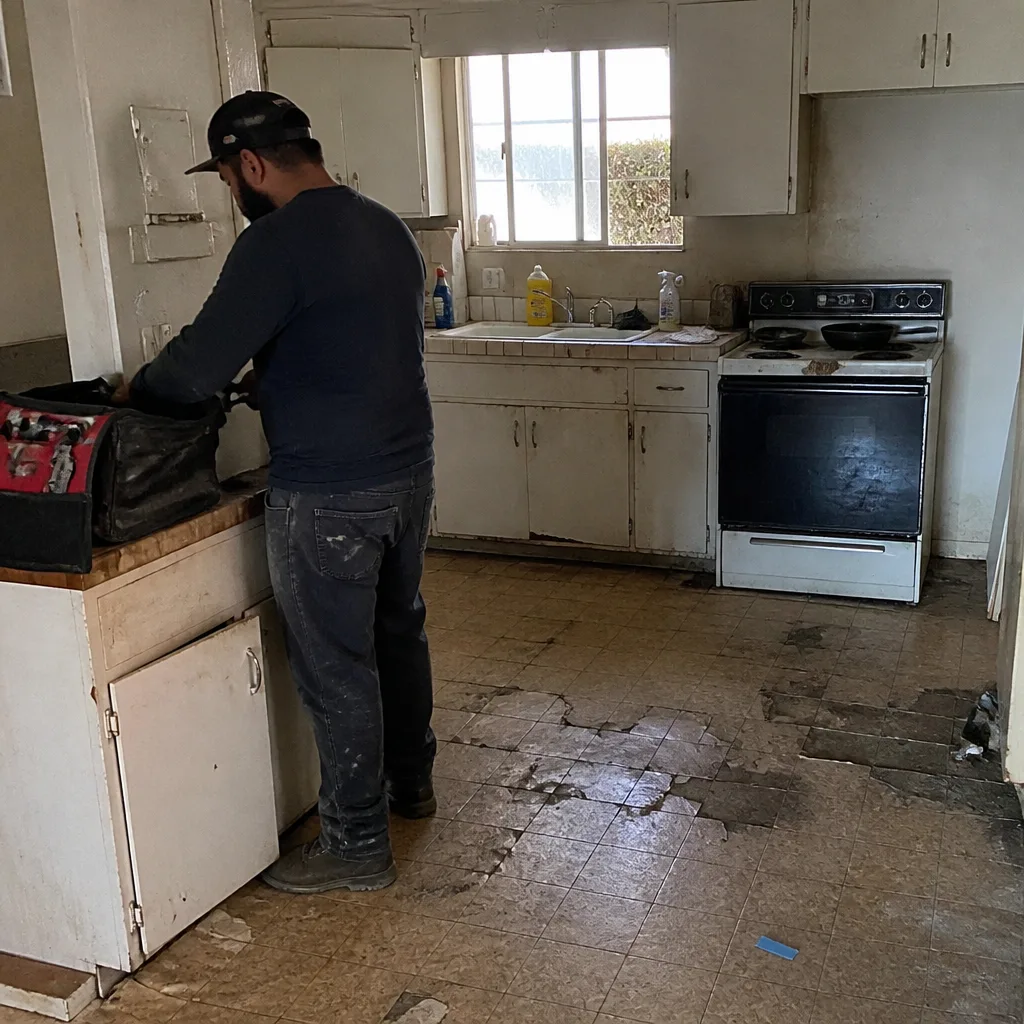 Before
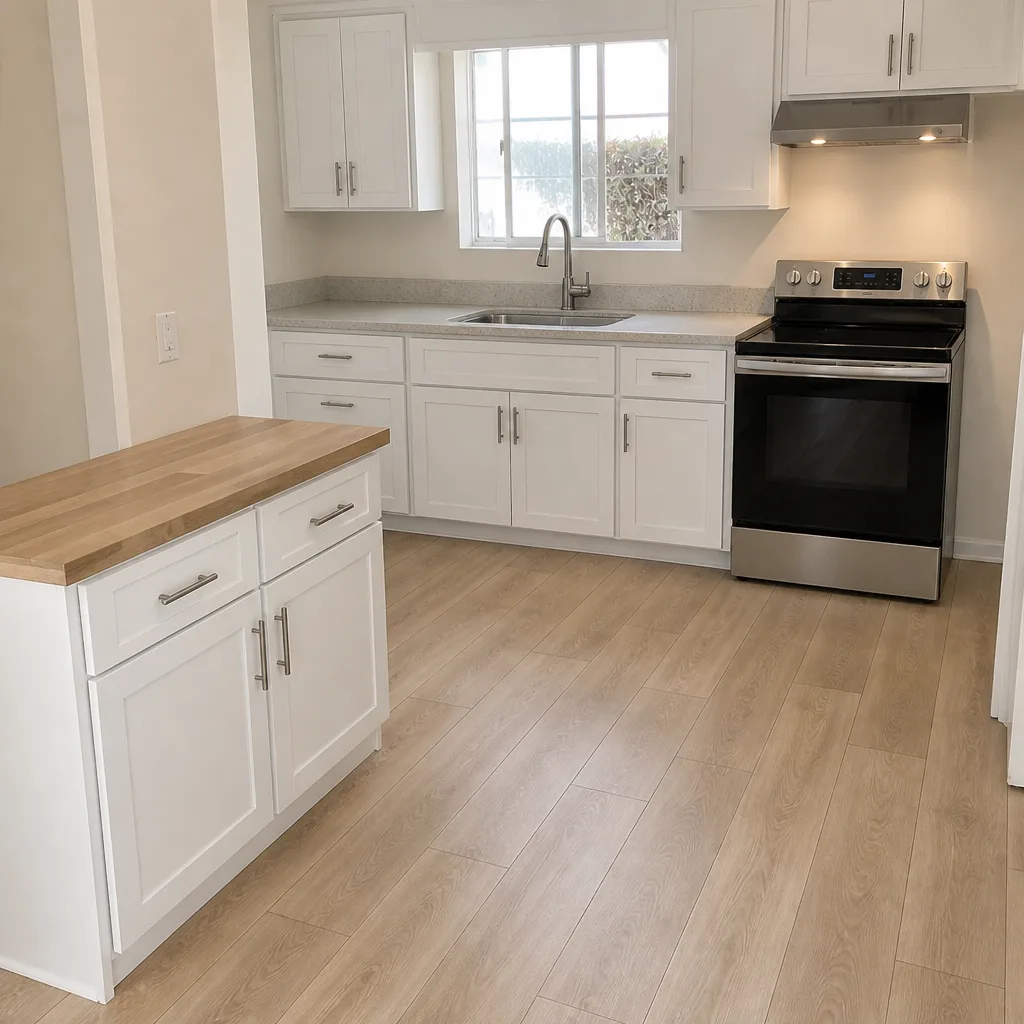 After
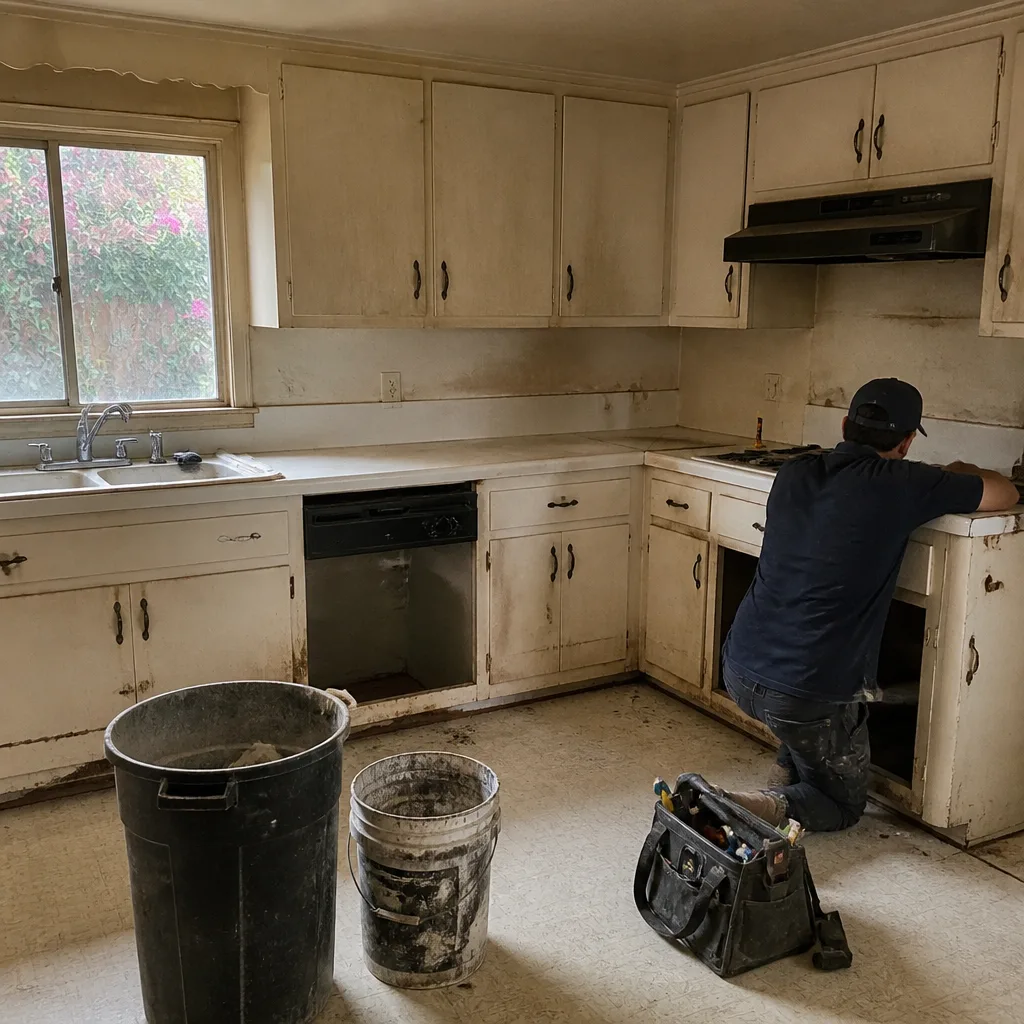 Before
 After
 Before
 After
How to Stain a Wood Fence in Newport Beach, CA (and Why Most Coats Fail in 18 Months)
Staining a wood fence correctly in Newport Beach means picking a penetrating oil-based stain with a marine-grade mildewcide, washing off invisible salt deposits with a phosphoric acid rinse, and applying it in the right temperature window. The product chemistry matters more than the brushwork here. You can prep and apply perfectly, right temperature, clean wood, two coats with the grain, and still watch it peel and grey out in 18 months if the stain wasn’t built for this coast. If you’d rather not gamble on a finish that fails before the warranty does, call us at (833) 749-3967 for a free estimate.
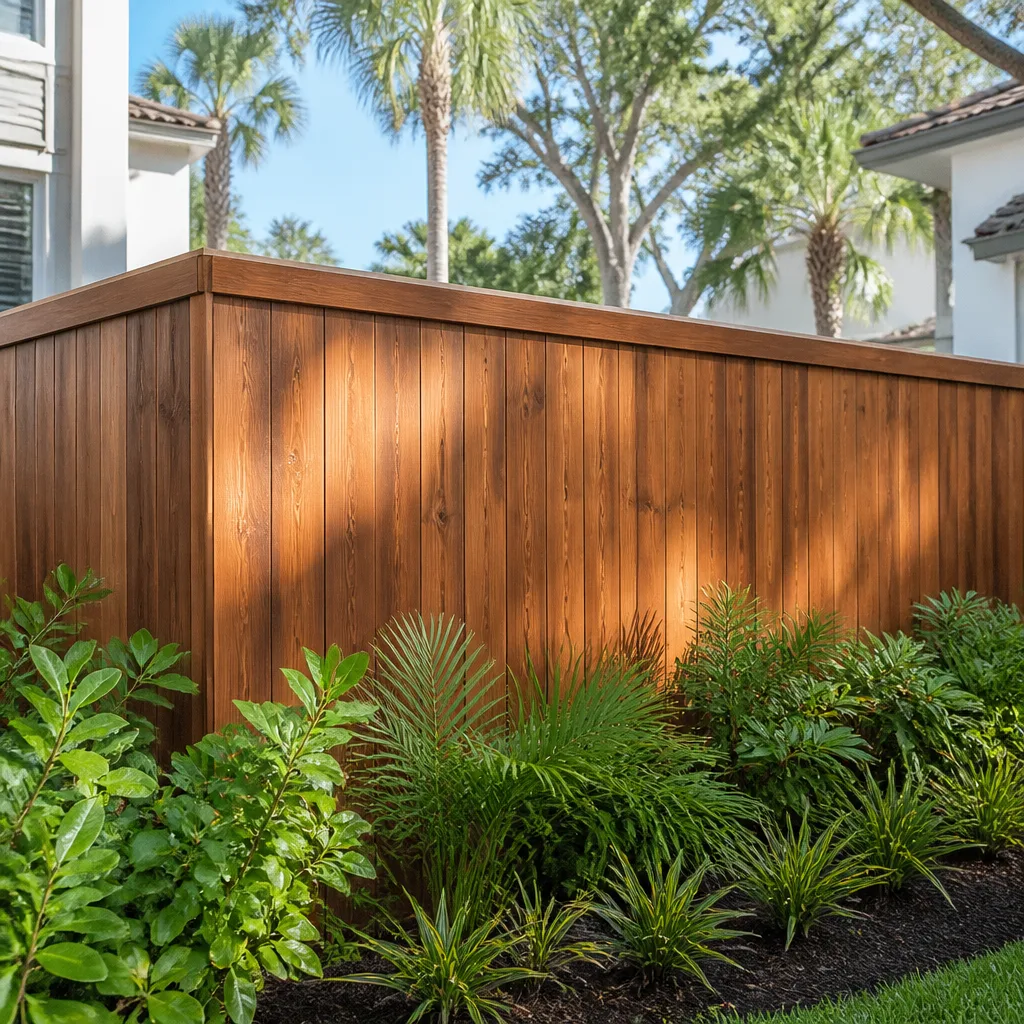
Why Newport Beach Eats Fence Stain for Breakfast
Newport Beach runs a high UV index almost every month of the year, and the morning marine layer keeps surface humidity elevated daily. That combination is the quiet killer of wood finishes. Film-forming stains fail two ways at once: ultraviolet light breaks down the resin at the top of the film, and moisture cycles underneath it every single morning. The film delaminates from the wood before the coating itself has worn out. In a purely dry climate, the UV attack is slow. In a purely wet climate, the moisture damage is slower because the wood stays saturated. Newport Beach gives you both stresses on a daily loop.
Hardware-store stains are formulated to a national average, which means they’re compromised for both. On salt-air-exposed surfaces, the fence pickets on the bay side of the peninsula and the blufftop properties near Dover Shores, most of them fail within 18 months regardless of how carefully they’re applied. That’s the number we see over and over.
- UV degradation – constant, year-round, breaks down the film’s resin.
- Moisture cycling – the marine layer rehydrates the wood every morning, stressing adhesion.
- Salt-air aerosol – deposits build invisibly, even several blocks inland, and sit under the finish.
Penetrating Oil vs. Film-Forming Water-Based: The Choice That Decides Lifespan
Penetrating oil-based stains with a marine-grade mildewcide additive outperform water-based film-formers on the coast by a wide margin, and it’s the single biggest determinant of how long your stain lasts. A penetrating oil soaks into the wood fiber and protects from the inside. It doesn’t sit on top as a skin, so there’s no film to delaminate when the marine layer does its daily thing. A water-based film-former creates that skin, and on salt-air-exposed wood the skin fails first. The mildewcide matters too, because a wet-dry coastal cycle is a mildew nursery.
Generic guides skip this distinction entirely. They walk you through sanding, cleaning, and two coats of “exterior stain” as if all stains were interchangeable. In Newport Beach, they aren’t.
Salt Deposits: The Step Almost Every Guide Misses
Salt-air deposits on fence surfaces, invisible but present even several blocks from the water, have to be neutralized with a phosphoric acid wash before staining. Skip it and salt crystals sit beneath the finish, and they cause adhesion failure ahead of schedule. This is why some fences in Newport Beach fail at 12 months while an identical fence a few blocks away holds for three years. It isn’t the product alone; it’s the prep the product never asked for.
After the acid wash, let the wood dry to a moisture reading below 15%, then apply. We don’t stain over damp wood; we wait. That’s a good rule no matter who does the work.
Cedar and Redwood Tannins: A Newport Beach Species Problem
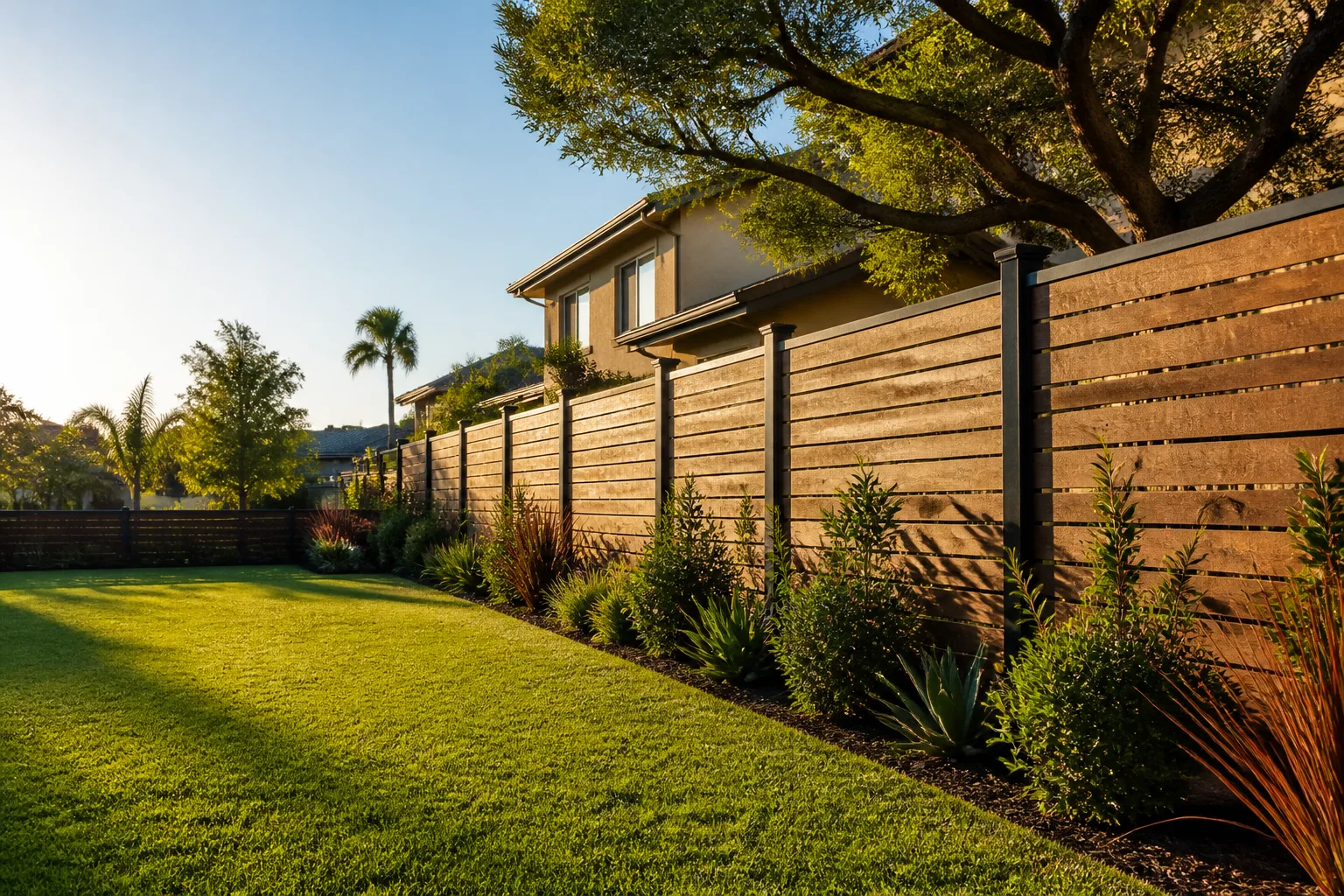
Cedar and redwood fences are common on the peninsula’s 1960s ranch homes, and both species carry natural tannins that bleed through lighter-colored stains if the wood isn’t pre-treated with a tannin blocker. Skip the blocker and a light grey or driftwood finish turns blotchy brown within a season. It’s a failure mode tied to the species and this climate together. The fix is a tannin-blocking primer coat before the stain, and it’s not optional on cedar or redwood.
A Reputable Finish, Spec’d Like the Roof
Groundwork Construction Co. of Newport Beach specifies marine-grade exterior finishes from our curated brand portfolio across every trade. The same material discipline we apply to a GAF roof or Andersen windows applies to exterior wood finishes, so the spec isn’t driven by what’s cheapest or easiest to source. If your fence finish is installed or maintained as part of a wider project, the whole scope falls under our Fence Installation service, and every job is covered by the 730-Day Done Right Promise: if it’s not done right, we make it right. Our technicians have up to 12 years of experience, and calls are answered by a live person, 24/7.
One local wrinkle worth knowing: on the harborfront and blufftop properties, finish specs and fence replacements sometimes bump against the California Coastal Commission’s coastal development permit conditions, and the city’s Bayfront and Oceanfront zoning overlays can pull design review into what looks like a simple exterior job. Know before you stain.
What Staining Costs in Newport Beach
Professional wood fence staining in Newport Beach typically runs $3,500-$9,000 for a full property, depending on linear footage, prep condition, and whether tannin blocking and salt neutralization are needed. Here’s how the line items break down:
| Scope | Typical Price Range |
|---|---|
| Full fence staining (standard prep, oil-based) | $3,500-$6,000 |
| Full fence staining with salt wash + tannin blocker | $4,800-$9,000 |
| Fence repair and re-stain (post, rail, picket) | $1,200-$3,500 |
| Full fence replacement with finish | $4,500-$9,000 |
Pricing is upfront, no surprises. Financing is available at 0% for 18 months, and projects over $10,000 get $1,000 off.
FAQs
Professional wood fence staining in Newport Beach typically costs $3,500-$9,000 for a full property, depending on square footage and prep needs. The higher end reflects salt neutralization and tannin blocking on cedar or redwood. Call (833) 749-3967 for a free, exact quote.
A penetrating oil-based stain with a marine-grade mildewcide works best here, not a water-based film-former. The marine layer and constant UV break down film-forming stains within 18 months on salt-exposed wood. Call us for a product spec that matches your fence’s species and exposure.
Yes, you do - specifically a phosphoric acid wash to neutralize invisible salt deposits before any stain goes on. Skipping this step is the top reason coastal fence stains fail ahead of schedule. Call (833) 749-3967 and we’ll assess your fence’s condition free of charge.
Peeling after a year or two almost always means either a film-forming water-based stain, unneutralized salt deposits, or tannin bleed on cedar and redwood. The film fails under daily moisture cycling while UV breaks it down from above. Call us and we’ll diagnose the cause before recommending a fix.
Get It Done Right the First Time
If you’d rather have it looked at, Groundwork Construction Co. of Newport Beach offers a no-pressure assessment in Newport Beach. We’ll spec a finish for your fence’s species, exposure, and prep needs, and back the work with our 730-Day Done Right Promise. Call (833) 749-3967 for a free estimate and design consult. From foundation to finish line, built to last, backed in writing.
Written by the team at Groundwork Construction Co. of Newport Beach, serving Newport Beach, CA.