Last updated November 17, 2026



Free written scope consultation - allowances, timeline, and change-order rules on paper before a single trade is scheduled
Driveway & Pavers Maintenance Checklist for Newport Beach Homeowners
We’ve watched paver driveways in Newport Beach fail in a way most sealer labels never warn you about. A standard acrylic sealer applied by the book can start showing whitening, bubbling, and patchy adhesion failure within 18 months on the coast – not because the product is bad, but because marine humidity got left out of the product selection. Salt fog, year-round UV, and the morning marine layer attack travertine, concrete, clay brick, and porcelain on very different schedules than they do inland. Here’s the checklist we’d hand a homeowner in Newport Beach: what each material does here, how to spot jointing sand washout before it becomes a re-set, how to pick a sealer that won’t trap moisture, and the seaside calendar that actually fits our climate. Mention Newport Beach and this is what we’re talking about.
Quick Answer
In Newport Beach, your paver driveway needs re-sanding when jointing sand drops below about a half inch from the surface, a vapor-permeable sealer rather than a film-forming acrylic in salt-air zones, and a rinse every few weeks to remove salt film and pollen. The biggest risks aren’t cracks – they’re sealed-in moisture that spalls the surface and sand washout at the edges that slowly undermines the sub-base.
Styles & brands we work with
- Kitchen remodeling
- Bathroom remodeling
- Home additions & ADU
- Roofing
- Windows & doors
- Driveway & pavers
- Fence
Table of Contents
- What Newport Beach’s Coastal Climate Does to Pavers
- Material-by-Material Vulnerability Guide
- How to Tell Jointing Sand Washout from Normal Settling
- Choosing a Sealer for Coastal Exposure
- Seasonal Maintenance Calendar for Newport Beach
- Early Signs of Sub-Base Failure That Look Like Surface Problems
- Drainage, Roof Runoff, and Water Path Management
- Cleaning, Staining, and Salt Film Removal
What Newport Beach’s Coastal Climate Does to Pavers
Newport Beach sits in a marine microclimate that inland paver guides never account for. The salt fog rolls in most mornings, the relative humidity stays high through the night, and UV bounces off the water and glass in a way that ages hardscape faster than direct sun alone would suggest. Three forces are doing the damage:
- Salt fog and chloride attack – windborne salt crystals settle on the surface and work into the joints. On concrete pavers and mortared travertine, chloride accelerates surface breakdown and efflorescence (white salt bloom). On clay brick, salt attacks the firing skin and softens any factory “sealed” layer faster than expected.
- Marine layer moisture cycling – overnight dew and high humidity mean the paver surface is damp for hours every night. Any trapped moisture below a film-forming sealer is now in steady contact with the stone. That’s the mechanism that produces the whitening and bubbling in a standard acrylic within a couple of seasons.
- High-angle UV, year-round – UV degrades polymer sealers, polyurethane joint sand binders, and factory color tints. In Newport Beach, UV load doesn’t really take winter off; the sun is working on your driveway in February as effectively as in June.
Layer those with salt-laden winter rain running off a steeply pitched roof or a bay-adjacent grade, and you get an environment that eats standard maintenance schedules. Our technicians have up to 12 years of experience in coastal construction, and one of the first conversations we have with a homeowner is about what “driveway & pavers in Newport Beach” actually means in this microclimate.
Material-by-Material Vulnerability Guide
Not all paver materials fail the same way in Newport Beach. What you’re working with dictates your maintenance rhythm – and what you should be worried about first.
Travertine
- Vulnerability: Travertine is calcium carbonate. Salt fog and coastal acid rain attack it chemically, not just mechanically. Within 2-3 seasons, unsealed travertine near the surf line can develop pitting, “sugaring” surface texture, and color loss.
- Maintenance: Use a breathable penetrating sealer, not a film-forming sealer. Travertine is the material we most often see in trouble from a bad local sealer choice. Plan for a re-seal every 24-36 months max, not the 3-5 years an inland schedule would predict.
Concrete Pavers
- Vulnerability: The most forgiving coastal material you can choose, but the surface can still fail from chloride attack on lower-quality pavers or from efflorescence when moisture stays trapped. Pitting and salt bloom are the two most common calls.
- Maintenance: A breathable penetrating sealer applied every 2-3 years keeps the surface clean and stops joint sand from washing out as fast. Concrete pavers near the bay or within a few blocks of the surf get the tighter end of that window.
Clay Brick
- Vulnerability: Clay brick handles salt better than travertine, but it’s still vulnerable to the freeze-adjacent effect of salt: chloride works into micro-cracks and creates spalling at the corners. Factory sealers will break down in the marine layer before the brick itself does.
- Maintenance: Re-seal every 24-36 months, and spot-clean salt bloom with a mild acid wash rather than a pressure blast. Clay brick near the water is also a frequent zone for mortar joint erosion.
Porcelain
- Vulnerability: Porcelain is the best coastal material for salt and UV resilience – it’s dense, absorbs nearly zero water, and holds color. The only real vulnerability is the jointing sand around it and any edge where the panel was cut.
- Maintenance: The lowest-maintenance choice in Newport Beach. Re-sand joints as needed, use a mild pH-neutral cleaner, and check edge pieces each year. Porcelain pavers can go 4+ years without a re-seal if the joints are properly filled.
How to Tell Jointing Sand Washout from Normal Settling
Jointing sand washout is the single most common problem we get called about from Newport Beach driveways, and it’s also the one most often misdiagnosed. The key question is where the sand is going. Run this 3-step check:
- Do the thumb test at 4-6 spots. Press your thumb (gently) into the joint sand between pavers. If the sand is more than about 1/2 inch below the top of the paver, or if you feel hard “bottom” under your thumb, you have a real loss problem.
- Look at where the sand accumulates. A small amount of sand in the low corner of the driveway after a rain could just be settling. A continuous line of sand at the base of a slope, in front of a garage door, or at the street edge after every storm means the joint has lost enough material for wind and runoff to keep harvesting it.
- Check the edges first. Coastal wind-driven rain always does the worst damage on exposed edges (side yard, street-facing edge). If edges are running low and the interior joints are fine, you likely have washout from a sealing gap at the perimeter. Re-sand the perimeter and check sealer coverage before you re-sand the whole field.
If the sand is low across the whole driveway within about 12 months of a fresh install, that’s usually a joint-sand specification problem, not just weather. In Newport Beach we routinely see fine-grain sand specified because it flows into joints fast, and it’s the first thing to wash out. Coarser graded joint sand (ASTM C144 grading or a stiffer polymeric option) holds up much better against both wind spray and direct rain.
Choosing a Sealer for Coastal Exposure
The sealer you choose in Newport Beach is the most consequential maintenance decision you’ll make. Get it wrong and you can accelerate failure instead of prevent it.
- Vapor-permeable (penetrating) sealers: These soak into the paver surface and leave a breathable barrier. They allow vapor to escape and don’t trap moisture. Solvent-based siloxane and water-based silane/siloxane blends are the standard coastal choice. They don’t leave a glossy finish – most of them don’t change the color much.
- Film-forming (topical) sealers: These sit on the surface. Standard acrylic sealers look gorgeous on day one and are the right call only when the paver choice and the drying pattern support them. On a coastal Newport Beach driveway where the surface stays damp overnight, a film-forming acrylic creates a moisture trap. You see whitening and bubbling starting within 18 months on some jobs; by year 3, adhesion failure shows up as white flakes peeling off in the sun.
- What to look for on the label: vapor transmission rating, UV inhibitors, and compatibility with your paver type. Silent on any of those three = walk. In coastal zones, we treat UV stability and vapor permeability as non-negotiable.
- What to avoid: any acrylic or film-forming sealer sold primarily for “wet look” on a coastal driveway, unless your installer has specifically checked the paver’s drying pattern and the joint sand is breathable. And never re-coat without a full clean-and-strip of the old film.
Sealer application timing matters as much as sealer choice. In Newport Beach, the best window is late spring after the last real rain and before the UV peaks in July and August. Sealing in the fall sounds intuitive, but humidity at that time of year is high enough that some sealers take too long to cure and never fully lock in.
Seasonal Maintenance Calendar for Newport Beach
Generic four-season maintenance templates don’t fit coastal California. Your driveway is dealing with wind, salt, and moisture in patterns that don’t line up with “spring cleaning” and “winterization.” Here’s the calendar we use for Newport Beach properties.
Late Winter (January – February): Pre-rain inspection
- Walk the perimeter and look for washed-out joints before the bigger rain systems.
- Clear debris from the drain grates and channel drains so winter rain has somewhere to go.
- Re-sand any obvious low joints; winter rain will test the work immediately.
Spring (March – April): Post-rain deep clean and re-sand
- Pressure-wash (light pressure, wide tip – never blast salt-stained travertine or clay brick with high pressure).
- Re-sand all joints that are below the thumb-test threshold. This is the highest-return maintenance window in Newport Beach because it’s after the rainy season and before UV peaking.
- Inspect for any spalling, whitening, or new cracks from winter.
Late Spring (May – June): Sealer window
- Apply penetrating sealer when the forecast is dry for 48+ hours and daytime temps sit in the 65-80°F band. Newport Beach’s marine layer can push that window later than inland; wait until morning dew stops showing up before you seal.
- Re-seal on a 2-3 year cycle for concrete and clay brick, tighter for travertine near the water, looser for porcelain.
Summer (July – September): Salt film and pollen
- Bi-weekly rinse with a hose to knock down salt film and pollen. Skip the pressure washer for this – a low-flow rinse is better for joint sand.
- Watch the edges for wind-driven sand loss; touch up as needed. Don’t wait for fall.
Fall (October – November): Pre-wet-season check
- Check that channel drains and grading still direct water away from the garage slab. A paver driveway that was draining fine in April can be pooling water by October.
- Look for joint sand loss on the uphill side. Wind-driven fall rain exposes the weak edges first.
Early Signs of Sub-Base Failure That Look Like Surface Problems
Here in Newport Beach, some of the most expensive driveway fixes start with what looks like a cosmetic problem. Clay-heavy lots and bay-adjacent property (parts of Balboa, Lido, and homes near Upper Newport Bay) are high-risk zones for sub-base shifting under a paver surface. What you see on the surface is a symptom.
Watch for these early signs:
- Rocking pavers in a pattern. A single loose paver can be a re-sand issue. Three or more pavers rocking in a continuous line is usually a sub-base signal.
- Low spots that keep re-forming. If you’ve re-sanded the same joint three times in 18 months and it keeps running low, the base is settling under that joint, not the sand disappearing.
- Joint sand washout in a new location each season. Sand migrating toward the same low area is one thing. Sand finding a different path every year is a sign the base is losing compaction.
- Lippage (one paver sitting higher than the neighbor). Small lippage is normal up to about 1/8 inch. Any visible lip greater than 1/4 inch means either the base settled or the bedding layer failed locally.
- Water pooling in a recessed area of the driveway instead of draining. New pooling where you didn’t have any before is the highest-priority warning sign, especially in clay-heavy zones.
If you see two or more of those together, stop re-sanding and get eyes on the base. Resetting the pavers without addressing the sub-base is money spent twice. For a lot with a real settling problem, a proper re-set is a construction job, not a maintenance job.
Drainage, Roof Runoff, and Water Path Management
Water is the enemy of every driveway, and Newport Beach properties have a specific challenge: many of them were built up the hillside (Newport Coast, Corona del Mar, parts of Pelican Hill), and the roof runoff from above is aimed at the driveway by grade. Handling runoff is the single most reliable way to extend driveway life.
- Confirm the fall. Your driveway should drain at roughly 1-2% away from the garage. If water pools near the garage door or at a low point mid-drive, that’s a drainage failure, not a maintenance issue.
- Catch the roof water. Downspouts should discharge to a splash block or direct-run to a softscape area away from the pavers, never straight onto the driveway surface. A single unmanaged downspout will erode joint sand faster than a season of wind.
- Keep the channel drains clean. Every April and October, clear leaves and debris from any trench or channel drain. A clogged drain in Newport Beach in a winter storm means water sheeting across the drive for hours.
- Watch the transition at the street. The apron at the street is the hardest-working part of the driveway. If it’s washing out, a paver-edge re-set or a small concrete transition strip solves it before it becomes a base problem.
If the water situation calls for a bigger fix – regrading, buried drainage, a new retaining wall – that lands in our home additions & ADU in Newport Beach project planning, because the driveway, grade, and structure are one system. It’s the kind of “bigger picture” call that keeps a driveway alive for decades instead of years.
Cleaning, Staining, and Salt Film Removal
Cleaning a Newport Beach driveway properly is different from cleaning one inland. The main rule: gentle frequency beats aggressive intensity.
- Salt film: a low-pressure rinse every 2-3 weeks in summer. Never pressure-wash salt film off travertine; the pressure will dig into the softened surface.
- Efflorescence (white bloom): a gentle acid wash (properly diluted, properly neutralized) – this is a professional job if you haven’t done it before. Repeated efflorescence usually means moisture is trapped beneath the pavers, which is a sealer or drainage issue, not a cleaning issue.
- Oil stains (especially near the garage door): poultice with a pH-neutral or slightly alkaline cleaner, let it sit, lift with a wet vac. Aggressive solvents on a sealer will strip the protection and leave a patchy sheen.
- Pollen film: simple garden-hose rinse every few weeks in spring. Cheaper than letting it bake on under UV.
- What to avoid: bleach on travertine (it etches), high-pressure sprays on any coastal paver, muriatic acid unless properly diluted and rinsed (it can leave its own salt bloom).
A clean driveway also lets you see the early signs of every problem we’ve covered earlier – lippage, washout, whitening, spalling. A coated-over-a-dirty-driveway sealer hides all of those for a season and hides the fix for a decade.
Common Mistakes to Avoid
- Choosing a “wet look” film-forming acrylic because it looks best on day one. In Newport Beach humidity, that film traps moisture and accelerates whitening and spalling. It’s the most expensive cheap decision we see.
- Re-sanding with fine grain sand. Fine sand is easy to install and washes out in one storm. Specify a graded joint sand and you’ll solve most of your repeated washout in one fix.
- Pressure-washing travertine. Travertine near the coast has already been softened by salt and acid rain. High pressure opens a pitting problem instead of closing it. Low pressure, wide tip, gentle cleaner.
- Treating a re-occurring joint as a re-sand problem. Three re-sands of the same joint in 18 months means the base is settling, not the sand. Stop re-sanding and inspect the sub-base.
- Letting one downspout discharge straight onto the driveway. A single unmanaged downspout on a Corona del Mar or Newport Coast hillside lot will erode joint sand faster than the rest of the driveway combined.
- Sealing without checking the forecast or the marine layer. Sealing in morning humidity, or right before a Newport Beach dew cycle, traps moisture under the film and causes exactly the bubbling that the sealer was supposed to prevent.
- Waiting for a “real” crack before calling. The most expensive pavers to fix are the ones that look fine from the street until the base has gone. Two of the sub-base symptoms above (rocking pavers in a pattern, low spots that keep re-forming) mean it’s time for eyes on the project.
See the difference
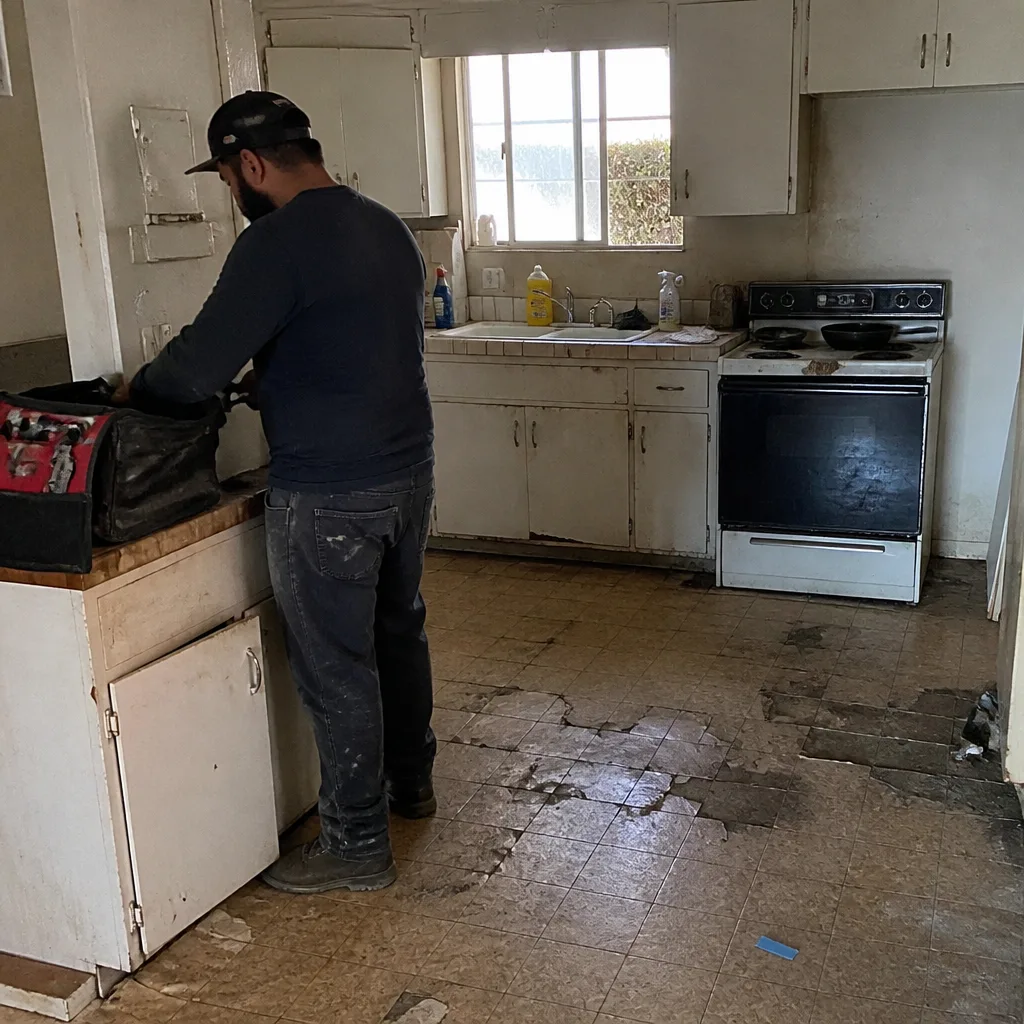 Before
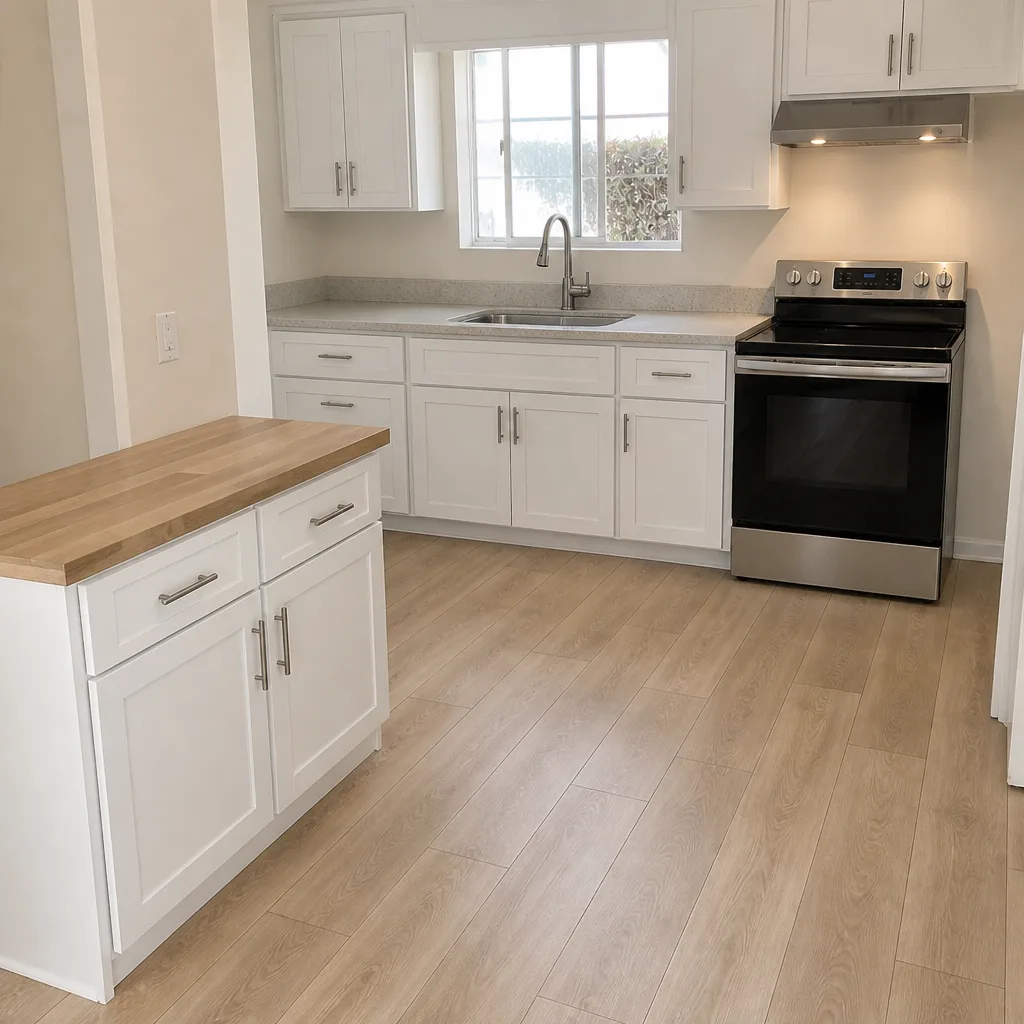 After
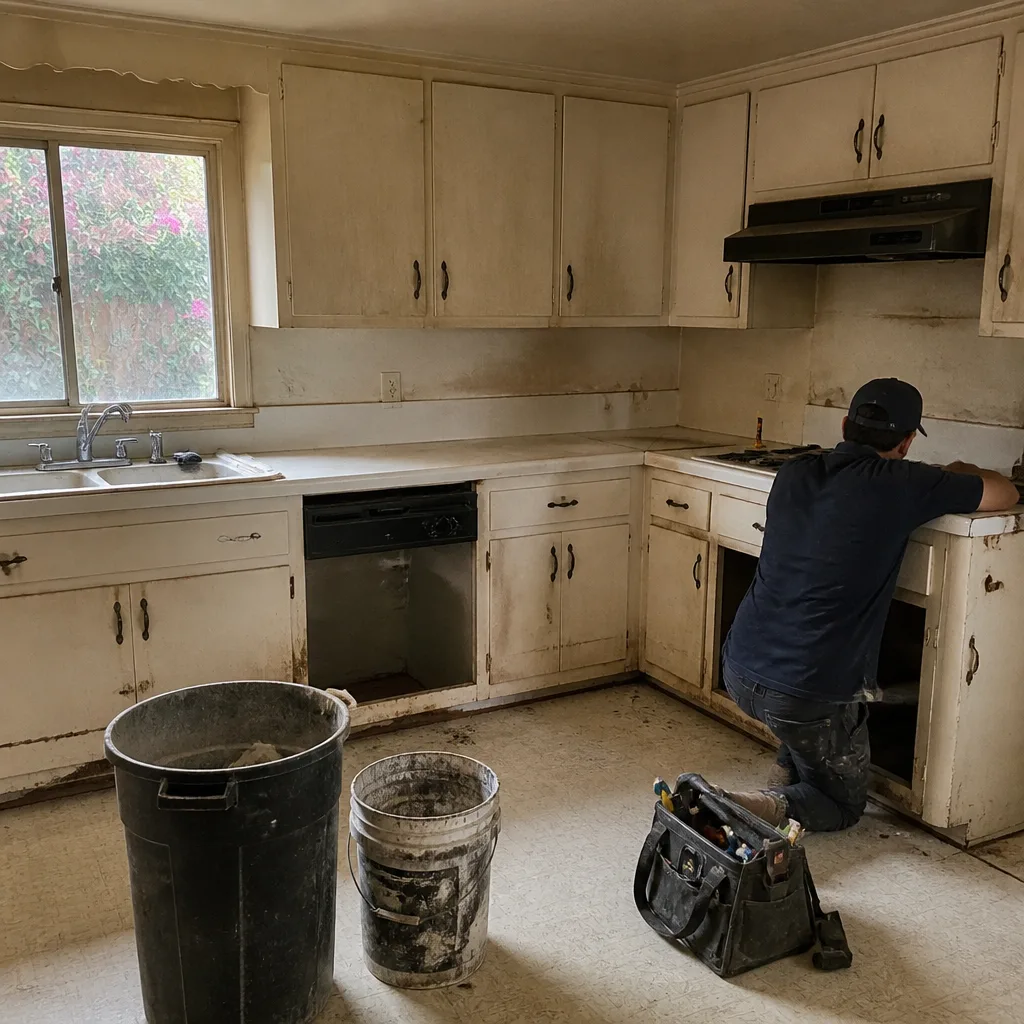 Before
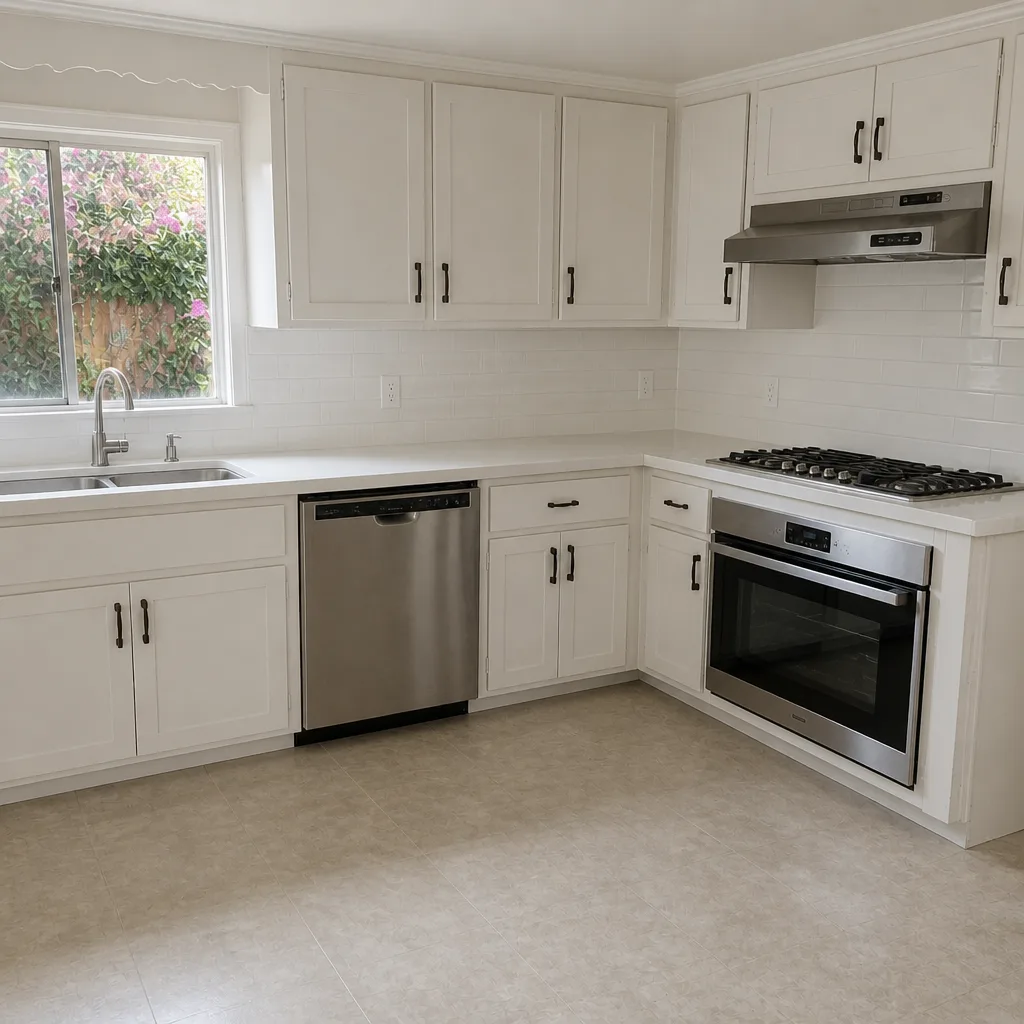 After
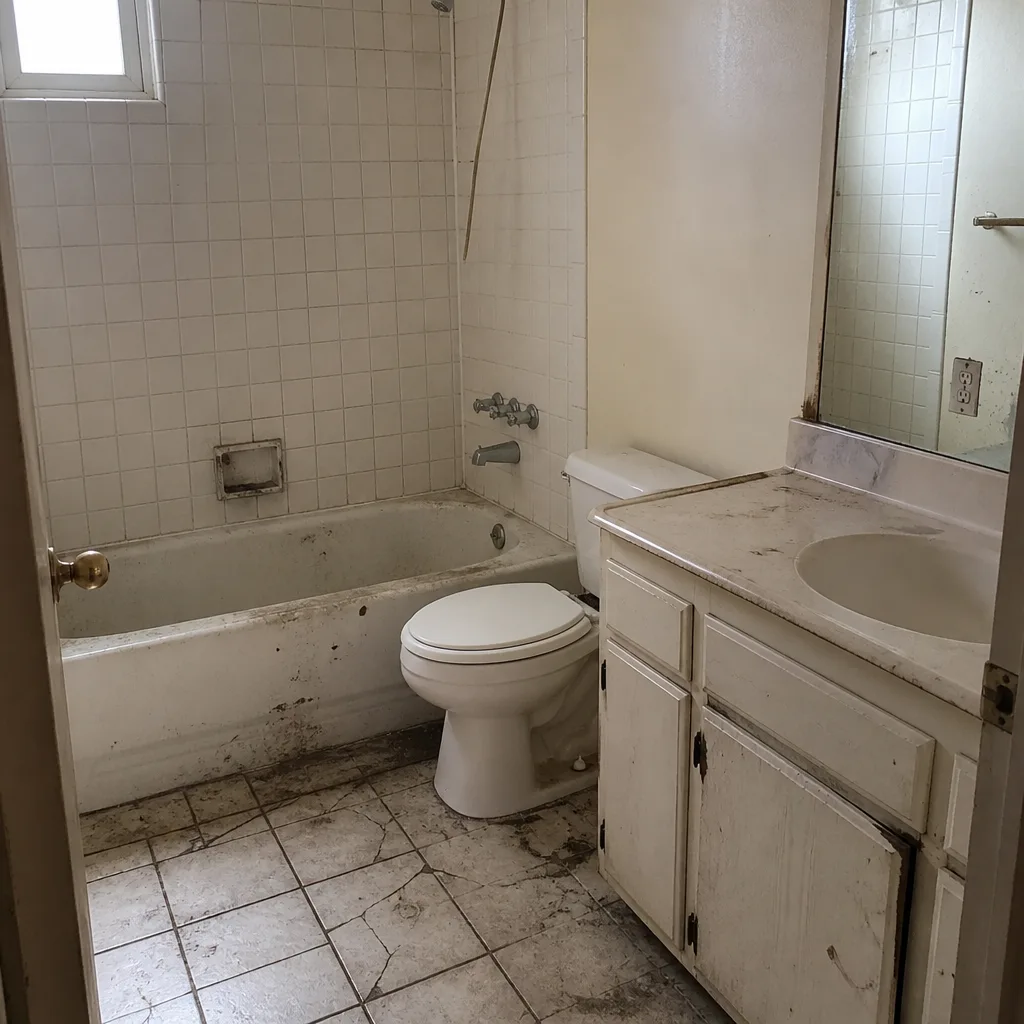 Before
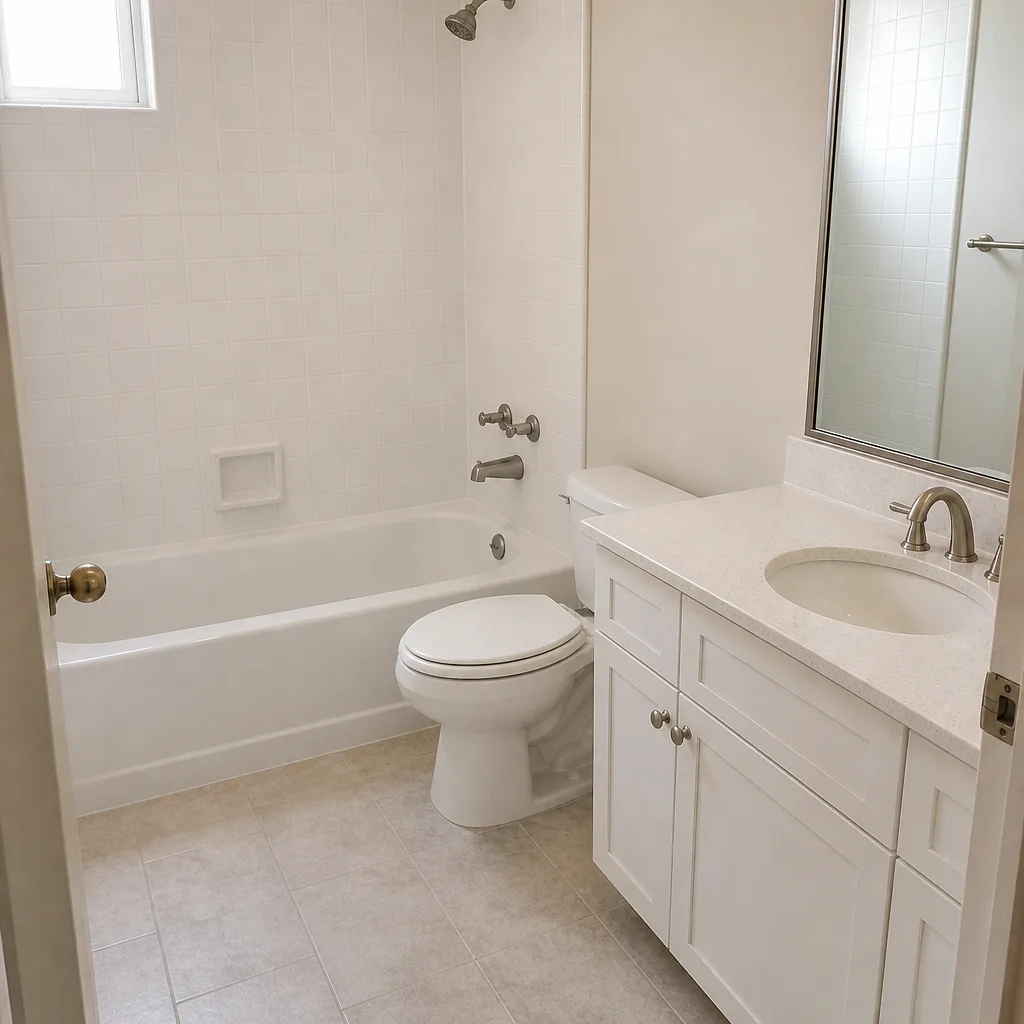 After
When to Call a Professional
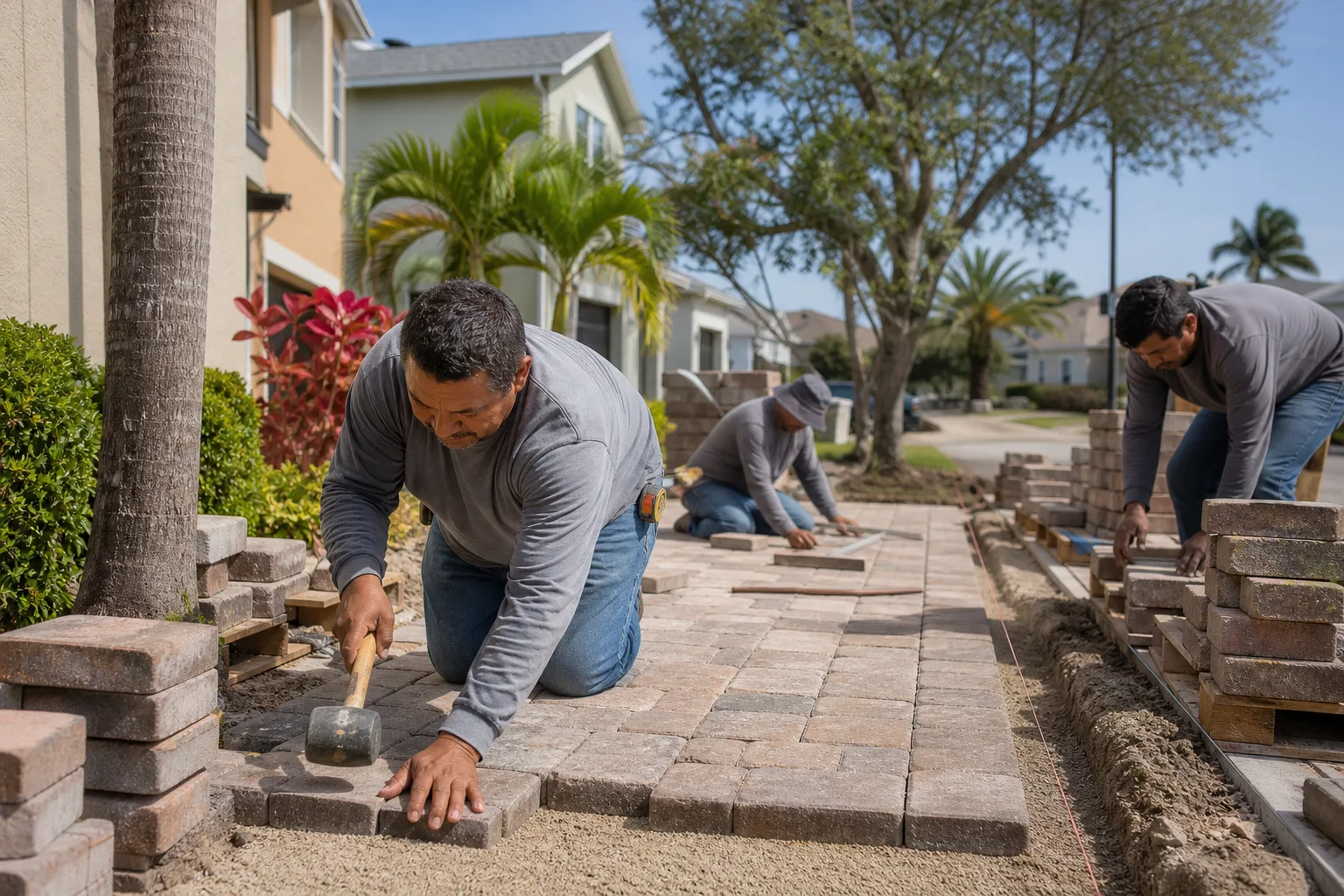
Most of this checklist is homeowner work: rinsing, monitoring joints, cleaning, and watching for signs. A few things we’d never recommend handling without help: any resetting that involves lifting pavers to inspect or repair the base, a driveway re-slope or drainage regrade, a strip-and-reseal on a failing film-forming sealer, and any layout with lippage over 1/4 inch. Those aren’t dangerous in the way that electrical or gas work is dangerous, but doing them wrong is expensive – you spend the money twice and you inherit the problem the second time.
Groundwork Construction Co. of Newport Beach offers free estimates in Newport Beach. Our technicians have up to 12 years of experience and every project is covered by the 730-Day Done Right Promise: if it’s not done right, we make it right. Call (833) 749-3967 to schedule a free estimate and a walk of the driveway. Through our Groundwork Construction Co. of Newport Beach home page, you can also see the full scope of what we build – the driveway work sits alongside our fence installation in Newport Beach and every other trade we run. When a driveway becomes a bigger hardscape project, we handle it from foundation to finish line, backed in writing.
Frequently Asked Questions
Paver maintenance in Newport Beach typically runs $250-$650 for a full clean and re-sand on a two-car driveway, and $600-$1,400 for a strip, clean, and reseal depending on square footage and sealer type. Costs go up in salt-heavy zones (Lido, Balboa, parts of Corona del Mar) because prep takes longer when there’s salt bloom or old film to strip. Call (833) 749-3967 for an exact quote – estimates are free and we price up front with no surprises.
Expect to re-sand most Newport Beach driveways every 12-18 months, tighter than the 2-3 year inland schedule. The coastal wind plus roof runoff plus winter rain strips the joints faster than the general building code design assumptions. Homes within a few blocks of the water may need the tighter end of that window; homes inland of the bay can usually push toward 24 months.
A vapor-permeable penetrating sealer (silane or siloxane-based) is the right call for almost every Newport Beach driveway. A standard acrylic film-forming sealer can start to whiten and bubble within 18 months in coastal humidity. Ask any contractor for the vapor transmission rating before they quote a sealer, and skip any “wet look” acrylic unless the paver and joint system have been specifically checked for drying.
Usually, yes. A handful of rocking pavers in a defined spot can be lifted, re-bedded, and re-set with matching pavers in a single visit. If the rocking is spread across the driveway or the low spots keep re-forming after re-sanding, that’s a base issue and a partial replacement of that section is the right answer. Either way, the sooner it’s looked at, the smaller the repair.
Wait at least 60-90 days after installation to let the pavers cure fully, then seal. In Newport Beach, seal in late spring – after the last real rain, before the July and August UV peak, and after the morning marine layer has stopped leaving the surface damp. Sealing too early traps manufacturing moisture in the paver; sealing in high humidity traps ambient moisture in the film.
Treat the cause, not the bloom. Salt bloom returning means moisture or salt is being fed into the pavers from below or from a failing sealer. Fix the drainage, strip any failing film-forming sealer, and reseal with a breathable penetrating sealer. A light clean will remove the visible bloom for a season; the drainage and sealer fix stops it from recurring. Call (833) 749-3967 and we’ll walk the driveway and quote what actually needs to be done.
The Bottom Line
Newport Beach itself drives the maintenance schedule for your driveway, not a generic four-season template. Penetrating sealer over film-forming in salt air. Re-sand on the coastal clock, not the inland one. Graded joint sand, gentle pressure, and a drainage plan that sends roof runoff away from the pavers. Watch for lippage, re-forming low spots, and directional sand washout – those are the early signs of sub-base failure that look cosmetic. Handle the seasonal tasks, and any project that needs re-bedding, regrading, or a full reset, our team can quote. Call (833) 749-3967 for a free estimate, ask for the same upfront pricing and 730-Day Done Right Promise that covers every job we run, and we’ll walk the driveway with you.
Written by the team at Groundwork Construction Co. of Newport Beach.