Last updated November 17, 2026





Free written scope consultation - allowances, timeline, and change-order rules on paper before a single trade is scheduled
Windows & Doors Warning Signs Every Homeowner Should Know
A door that sticks in winter and swings free in summer is telling you something about your foundation or framing. A window that’s hard to lock is telling you the frame has racked. Neither one fixes itself. Most homeowners write these off as “old house quirks” and keep going, and that’s exactly when the trouble compounds: a small gap at the perimeter lets water in, water finds the wall cavity, and eighteen months later you’re looking at rotted sheathing instead of a sticky lock. In this guide you’ll learn the five signs that mean installation failure rather than product wear, how to decode condensation patterns, what door behavior says about your structure, and which coastal clues matter most in Newport Beach.
Quick Answer
The most important window and door warning signs are: a door or window that binds in one season and frees up in another (frame racking), condensation between the panes (failed seal unit) versus condensation on the interior glass (humidity problem) versus condensation at the frame edge (installation or flashing leak), latches that no longer line up, and finish chalk or hardware corrosion that has crossed from maintenance territory into replacement territory. Any of these that show up alongside soft wood, daylight at the corners, or a rising utility bill usually points to an installation defect rather than normal product wear, and it’s worth having it looked at before the wall behind it gets wet.
Styles & brands we work with
- Kitchen remodeling
- Bathroom remodeling
- Home additions & ADU
- Roofing
- Windows & doors
- Driveway & pavers
- Fence
Table of Contents
- The Five Physical Signs of Installation Failure
- Condensation Patterns Decoded
- Door Behavior as a Diagnostic Tool
- Coastal Warning Signs: Oxidation, Corrosion, and Frame Chalk
- Warning Signs in a Window or Door Estimate
- A Step-by-Step Inspection You Can Do This Weekend
- Common Mistakes to Avoid
- When to Call a Professional
- Frequently Asked Questions
The Five Physical Signs of Installation Failure
Product wear and installation failure look almost identical to a homeowner standing in the room. They don’t look identical to the structure behind the wall. Here are the five signs we treat as installation-failure indicators, not maintenance items.
- Daylight or a draft at a corner, not along an edge. A draft running evenly along the bottom of a door is often a worn sweep. Daylight peeking in at a top corner means the opening or the unit is out of square.
- A consistent “wet spot” pattern at the interior trim. Paint blistering or trim swell in the same spot every rainy season points to a flashing or weather-resistive barrier (WRB) problem at the perimeter, not to the sash or glass.
- One sticky corner and one loose corner on the same unit. That diagonal pattern is the signature of racking – the frame is twisted in the wall, and no amount of lubrication fixes a twist.
- Screws that back out of a hinge or strike plate. Hinge screws that won’t hold after you’ve tightened them usually mean the wood has been wet long enough to soften, which points back to the perimeter seal.
- A sill that slopes toward the house. On a sliding door, water pooling at the interior track after a rain means the sill has settled or was set flat. Standing water on a sill is a countdown clock for the floor beneath it.
In our experience, three or more of these on the same unit is a replacement conversation, not a repair conversation. One sign alone gets investigated first. The whole point is to catch it before water has had a full rainy season to work into the wall – and in Newport Beach, where marine air keeps surfaces damp far longer than inland, that season arrives fast.
Condensation Patterns Decoded
Where moisture shows up on a window tells you where the problem is. This is the single most misread signal in the home, mostly because every window gets condensation sometimes and homeowners learn to ignore all of it.
Condensation between the panes
Fog or droplets sealed inside the glass unit mean the insulated glass unit (IGU) has lost its seal. The window still blocks water – this isn’t a leak – but the unit has lost its insulating gas and you’re now paying to heat and cool the outdoors. Single failed units can sometimes be reglazed without replacing the whole window if the frame is sound.
Condensation on the interior glass, running in sheets
Water beads or sheets on the room-side surface while other windows in the same house stay dry. That’s a humidity and ventilation issue, not a window defect. A cooking exhaust or bath fan that vents into the attic instead of outdoors is a common culprit in older Newport Beach homes.
Condensation or staining at the frame edge and trim
This is the one that matters most. Moisture at the perimeter of the glass, staining on the interior trim, or a damp spot on the drywall within a few inches of the frame points to a leak at the installation: missing or incorrectly lapped flashing, a WRB that was cut and never repaired, or a sealant joint that was applied over dirty wood. That water is inside the wall assembly, and it’s the pattern that leads to rot and mold behind the drywall.
If you can’t tell which pattern you’re looking at, note where the moisture appears, photograph it after the next rain, and have someone look at it before you caulk anything.
Door Behavior as a Diagnostic Tool
Doors are the cheapest diagnostic tool in the house because they move. Wood and vinyl expand and contract with the seasons, but a door that has stopped closing cleanly is usually reporting on something other than the door itself. Here’s how specific movement patterns map to causes.
- Binding at the top corner opposite the hinges. The frame has racked or the wall is out of plumb. On an exterior door this often follows foundation movement or a settling header; on an interior door it can follow a remodel that removed more structural support than expected.
- Dragging at the bottom, striking the threshold or floor. Either the door has sagged on its hinges or the threshold has settled. If tightening or replacing hinge screws (not driving longer ones) doesn’t lift the door back to a consistent gap, the slab or the frame is out of alignment.
- Latch misses the strike plate, high or low. The door and the frame are no longer meeting in the same plane – racking again – or the hinge leaves are wearing. A latch that only catches when you lift or push the door is a warning, not a tolerance.
- Sticks in winter, swings free in summer. Seasonal binding is a frame-to-wall relationship problem. If a door that bound every winter stops binding after a wet spring, that’s movement, not the weather being kind.
- Door swings open or closed on its own. The frame is out of level. On a front door, this is worth investigating because it can point to settlement under the threshold.
We look at door behavior the same way a mechanic looks at tire wear. The symptom is small; the information it carries is not.
Coastal Warning Signs: Oxidation, Corrosion, and Frame Chalk
Households within a few miles of the water – which covers most of Newport Beach, from Balboa Island to Corona del Mar to the peninsula – live in a corrosion environment. Salt air and marine humidity attack finishes and hardware on a timeline you can actually read, and once a window or door crosses from maintenance territory into replacement territory, patching it only buys months.
What to look for on hardware
- Stage 1 – surface dulling. Door handles, locksets, and sliding door rollers lose their shine and start to pit. Normal; clean and wax.
- Stage 2 – pitting and white or green bloom. Plated or low-grade hardware is breaking down. Replace the hardware before it seizes; a stuck multipoint lock on a sliding door is a safety issue as much as a convenience one.
- Stage 3 – hardware won’t operate smoothly even after cleaning. Rollers drag, latches catch, locks need force. At this stage the window or door is a replacement candidate, especially on a sliding door where a failed roller can mean the panel drops.
What to look for on finishes
Paint or stain that has gone chalky (a powdery film that rubs off on your hand) is oxidized finish. On wood windows near the coast we start seeing this on south and west exposures sooner than on shaded sides. Once the finish has chalked, water is no longer beading on the surface and is soaking into the wood below, and the next stage is checking and splitting at the joints. It’s the moment to get a professional assessment, because refinishing a chalking window buys time while refinishing a checking one is a false economy.
Aluminum frames, common in mid-century Newport Beach homes, show the same warning: a white powdery bloom followed by pitting. If you’re seeing pitting on the frame face, the anodized coating is gone and you’re on borrowed time.
Warning Signs in a Window or Door Estimate
The most expensive warning sign in this whole guide isn’t on your house – it’s in the paperwork. Here’s what tells us a competitor’s estimate for window or door replacement is going to become a problem.
- No measurement on the visit. A real quote requires actual field measurements of the rough opening, not the size stamped on the old unit. Bids built off a tape you provided are bids that change once the crew arrives.
- No mention of flashing, WRB repair, or sill pans. Window replacement involves the perimeter as much as the glass. An estimate that lists windows and labor but nothing about flashing, weather-resistive barrier, or sill pan is an estimate that assumes your wall is already correct. It usually isn’t.
- No site visit at all. Phone or online-only quotes are fine for a ballpark, never for a contract. If nobody has been inside and outside the house, they can’t see racking, rot, or the state of the opening.
- One lump-sum number with no line items. You can’t compare bids or plan around a single figure. Ask for a written, line-item quote: units, labor, flashing, trim, disposal, permits if required.
- “We’ll handle permits later” or no mention of permits. Exterior door changes and structural modifications typically require a permit, and windows in some cases do as well. A contractor who treats permitting as an afterthought is a contractor you’ll be calling back.
- No written warranty terms. Ask to see the workmanship warranty in writing before you sign. A 730-Day Done Right Promise in writing is a document you can hold someone to. A verbal “we stand behind our work” is not.
An honest estimate will also tell you when you don’t need new windows – a reglaze or a hardware replacement may be the right answer for a single failed unit in a sound frame. If every visit produces a full-house quote, that’s information too.
A Step-by-Step Inspection You Can Do This Weekend
You don’t need to climb a ladder or remove trim. This is a 30-minute walk-through that will tell you whether to call someone.
- Walk every exterior door and open and close it fully. Note any drag, catch, lift, or push needed to latch. Write down which season it’s worse in.
- Close and lock every window, then check the lock alignment from the inside. Note any window that requires pushing or lifting to lock.
- Look at the interior trim on every window, especially the bottom corners and the sill. Look for paint blistering, staining, soft wood, or a musty smell. A pencil mark on the wall at the level of any stain helps you check if it’s growing.
- After the next rain, walk the interior perimeter with a flashlight. Look for damp spots or droplets you didn’t see before. Photograph with your phone.
- Check the exterior hardware and finish by hand. Rub a paper towel on painted trim; if it comes away with white powder, that trim is chalking. Test every handle, lock, and sliding door roller for smooth movement.
- Compare your utility bills year over year. A steady climb in heating and cooling costs with no other change often traces back to failed glass units and perimeter air leaks.
- Write it all down with dates. A pattern across seasons is more useful to whoever you call than a single observation, and it’s a strong record if you ever need to invoke a workmanship warranty.
If any window or door fails the “will not latch or lock” test, treat it as urgent. A door or window that won’t close and latch is a security and water-intrusion issue, not a comfort one.
How can you tell whether a window problem is a seal failure or an installation failure?
If the fog is trapped between the panes, the glass seal has failed; if moisture appears at the trim, frame, or wall near the opening, the installation perimeter is letting water in. The first is a glass unit replacement, the second is a leak into the wall assembly that needs to be opened up and corrected. They’re often mistaken for each other because both look like “a wet window.” The tell is location: inside the glass versus at the edge of the frame.
Common Mistakes to Avoid
- Caulking over a leak instead of fixing the flashing. Sealant applied over wet wood or a missing WRB traps water in the wall. It looks fixed for one season and rots everything behind it.
- Waxing or oiling a door that’s binding because the frame is out of square. Lubrication is a maintenance step, not a structural fix. If the door binds at one corner and loosens at the other, the frame is the problem.
- Replacing one failed glass unit on a racked frame. New glass on a twisted frame will fail again, doubly so in a coastal house where the perimeter was the original culprit.
- Choosing windows on price per unit alone. The unit price in Newport Beach is a fraction of the job cost. Flashing, trim, disposal, rotted framing repair, and permits are where the number moves – so compare final installed prices, not glass prices.
- Ignoring door behavior because “it’s always been like that.” A door that has swung free every summer for a decade is a door that has been signaling the same problem for a decade. Foundation and framing movement rarely resolves itself.
- Skipping the site visit because the phone quote was cheaper. Phone quotes that come in under the competition are the ones that get adjusted on day one when the crew opens the wall.
- Waiting for “one more season.” A full rainy season is enough to turn a $40 trim repair into a $4,000 framing repair. When the warning signs are pointing at water, the clock is not in your favor.
When to Call a Professional
Some of these calls you can make on your own – wax a chalking window, tighten a hinge screw, replace a seized lock. Bring in a professional when you see any of the following: daylight or a draft at a window or door corner; a window that won’t latch or lock; water staining or soft trim at the interior perimeter; fog between the panes on more than one unit; hardware that won’t operate smoothly after cleaning; or a door that has changed its swing and stayed changed. Any of these deserves a proper look before you spend another season on it. Groundwork Construction Co. of Newport Beach offers free estimates in Newport Beach and throughout the surrounding coastal communities, with written line-item quotes, upfront pricing with no change orders, and the 730-Day Done Right Promise on the work. We use verified brand partners including Andersen and Marvin for windows, and every job is backed in writing. Call (833) 749-3967 to schedule your free estimate – a live person answers, 24/7.
How much does window replacement cost in Newport Beach?
Window replacement in Newport Beach typically runs roughly $650 to $1,400 per installed unit depending on window size, material (vinyl, fiberglass, wood-clad), and whether the opening needs flashing or framing repair; a full-house replacement of 15 to 20 windows commonly lands in the $12,000 to $25,000 range. Coastal exposure and single-story versus two-story access move the number, and failed perimeter flashing is the most common reason a quote goes up after opening the wall. Call (833) 749-3967 for an exact quote – estimates are free and come with a written line-item breakdown.
Can you fix a door that sticks, or does it need replacement?
Most sticky doors can be fixed if the problem is hinge wear, a sagging slab, or a misaligned strike plate; if the frame itself has racked or the wall has moved, the right fix is structural, not door replacement. The way to tell is to watch the gap around the door as it swings – if it pinches at one corner and widens at the other, the frame is out of square and a new door won’t solve it. Call (833) 749-3967 to have the opening looked at before you buy a new door.
See the difference
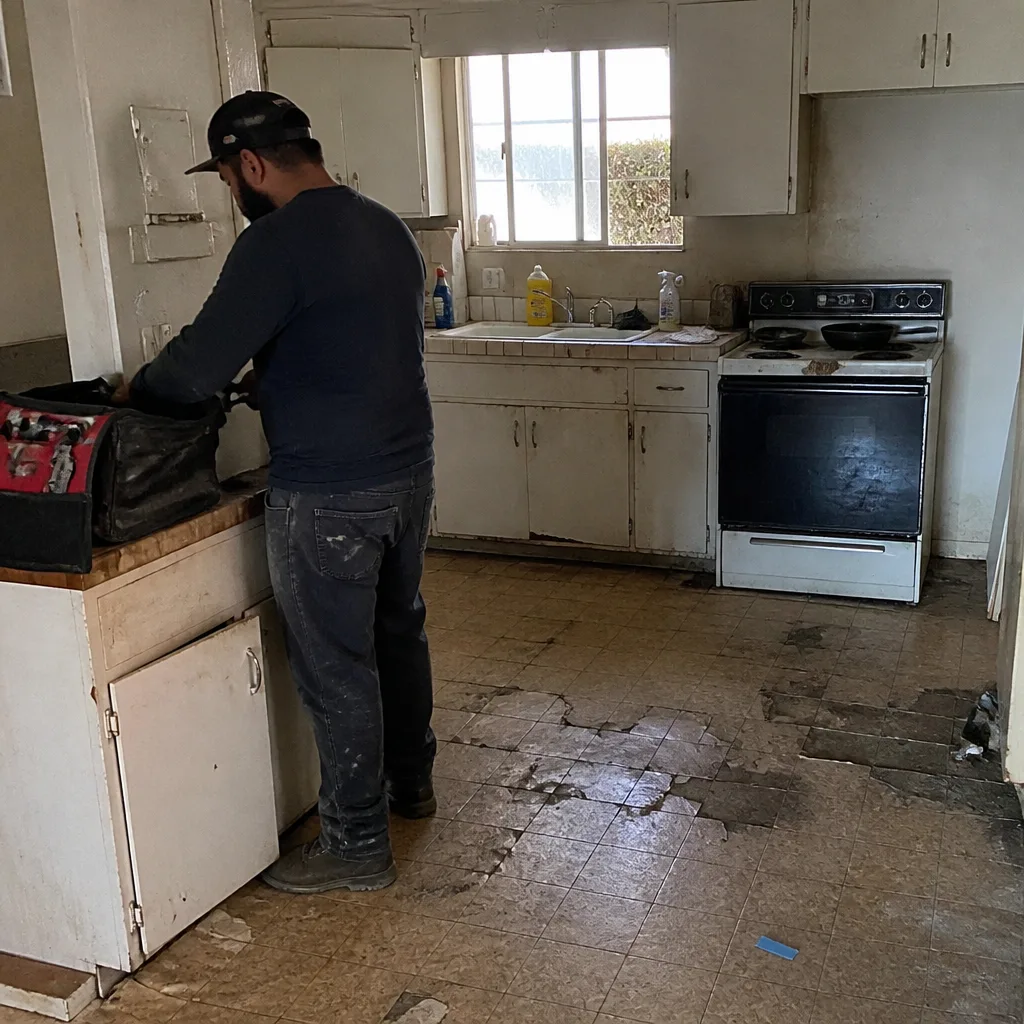 Before
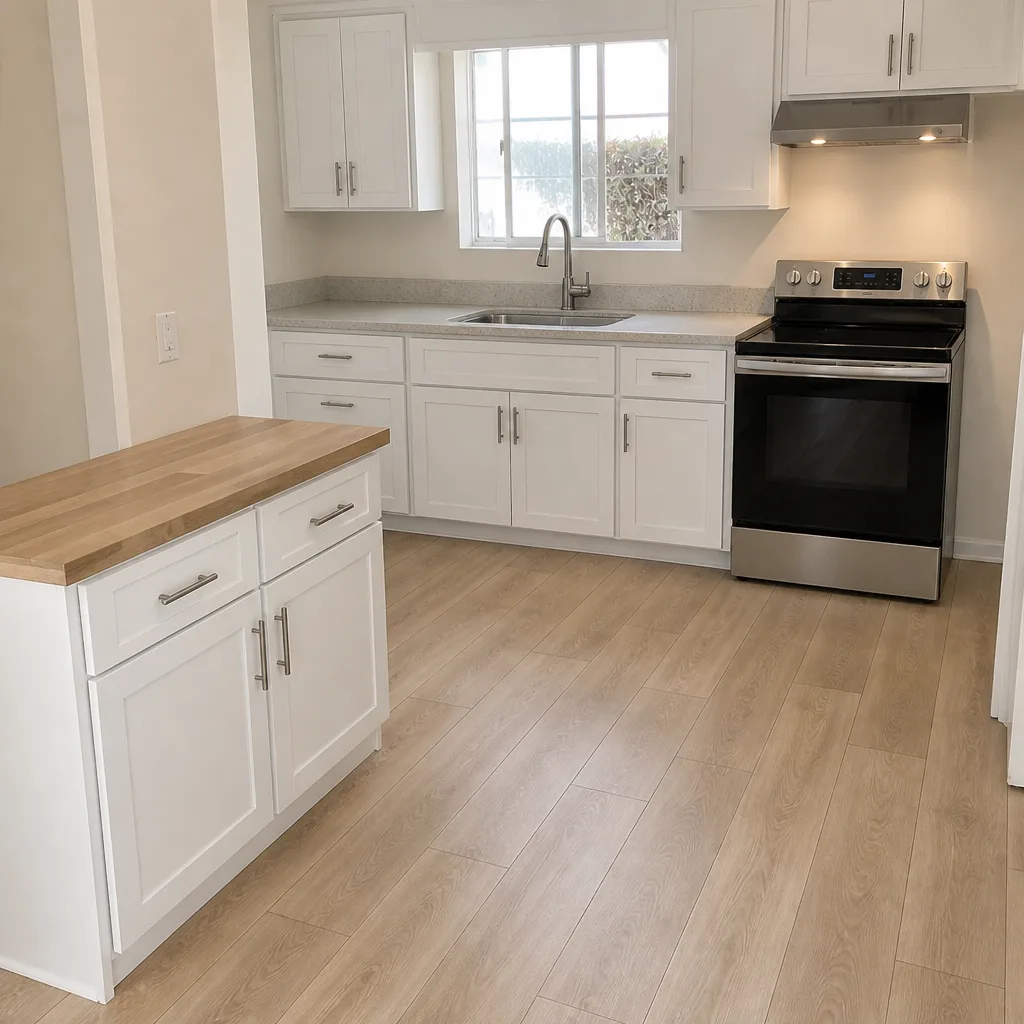 After
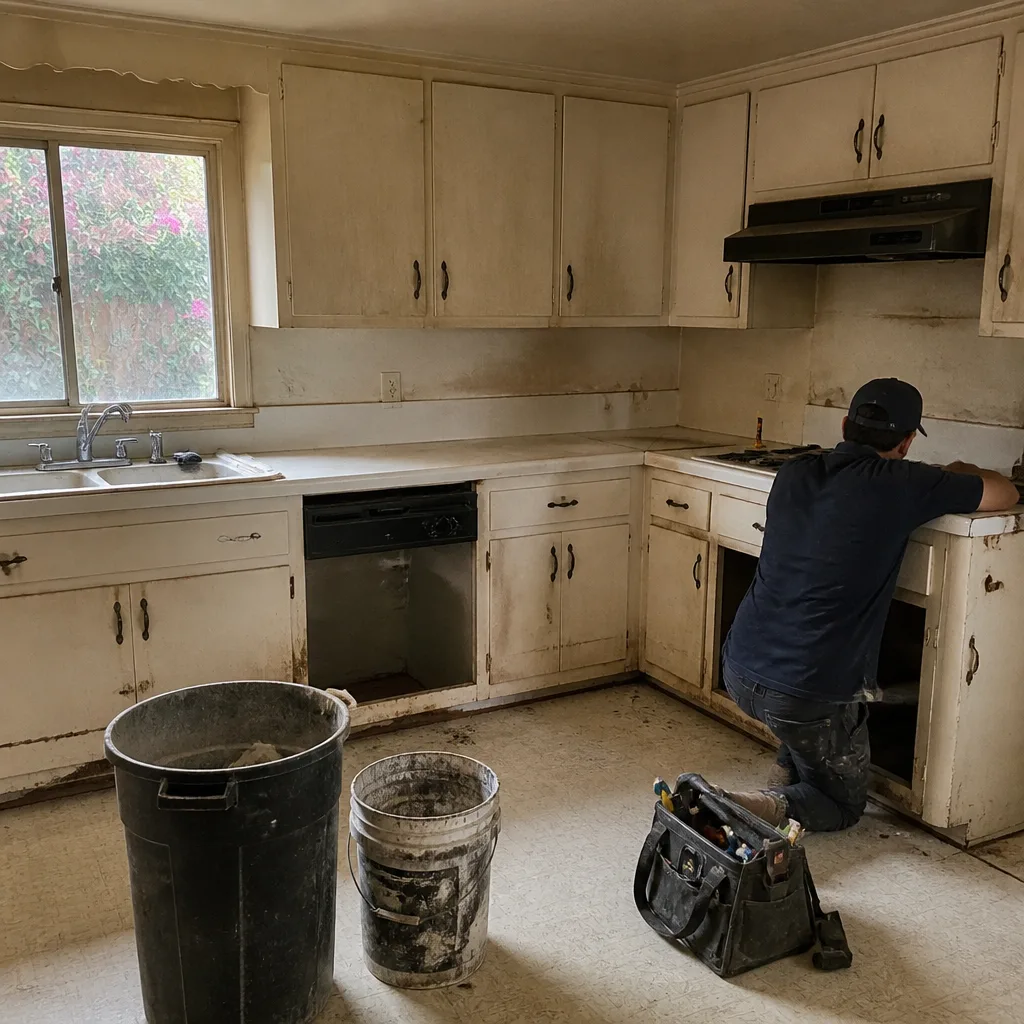 Before
 After
 Before
 After
Will the price change once work starts?
With upfront pricing, the number in the written quote is the number you pay – and the quote should be built from actual field measurements and a site visit, so there’s nothing left to discover on day one. Change orders should only appear if you change the scope or if concealed damage is found, and both should be priced and approved in writing before any work continues. Call (833) 749-3967 for a free estimate with no-hassle upfront pricing.
Do you pull permits for window and door replacement in Newport Beach?
Permits depend on the scope: like-for-like window replacements often don’t require one, while installing a new exterior door opening, changing a door or window size, or altering structure typically does. Either way, permits should be pulled and inspections passed when required, and the cost should appear in your written quote. Call (833) 749-3967 and we’ll tell you what your project needs before you commit.
How long does window and door replacement take?
A single door replacement is usually a one-day job, and a full set of windows on a typical Newport Beach home is typically a few days to a week or two depending on how many units, the material, and whether framing or flashing repair is involved. Most simple replacements are completed in a single visit per opening, however, and the crew should give you a written schedule up front. Call (833) 749-3967 to schedule a free estimate and get a realistic timeline for your house.
What’s the most important sign that a window needs to be replaced rather than repaired?
Water at the interior perimeter – staining, soft trim, or dampness at the frame edge – is the sign that moves a window from repair to replacement, because it means the wall assembly is wet and the perimeter seal has failed. Fog between the panes alone is a repair (reglaze) if the frame is solid, but rot, racking, or repeated leaks mean the unit needs to come out. Call (833) 749-3967 for a free assessment before the next rainy season.
The Bottom Line

Windows and doors report on your house before anything else does. The five installation-failure signs – corner daylight, interior trim wet spots, diagonal sticking patterns, backing-out hinge screws, and sills that pool water – are the ones that matter most, and they all tend to lead to the same place: water in the wall. Decode your condensation by location, read your doors as diagnostic tools, watch the coastal clock on hardware and finishes, and treat a sloppy estimate as a warning in itself. If several signs line up, don’t wait for one more season. The 730-Day Done Right Promise, live-person 24/7 answering, and background-checked, uniformed technicians are what you should expect from whoever you call – so call (833) 749-3967 for a free estimate in Newport Beach and get a straight answer in writing. From foundation to finish line, we’d rather tell you the truth about your windows today than sell you a full replacement you don’t need.
Written by the team at Groundwork Construction Co. of Newport Beach.